
Education
Report: PA school districts facing budget, mental health and special education challenges
Fiscal pressures, rising needs around student mental health and special education, are the key takeaways in the Pennsylvania School Boards Association’s 2026 State of Education report.
JGI/Jamie Grill/Getty Images

Budget pressures – especially from rising healthcare and special education costs – remain a top concern for the state’s public schools, along with sagging math scores and growing needs around student mental health.
That’s according to the 10th annual State of Education report from the Pennsylvania School Boards Association, which represents the vast majority of the leadership for the state’s 500 public-school districts. The 2026 report, released on Monday, includes data from 230, or 46%, of those districts, highlighting schools’ most pressing challenges and overall trends.
Chief among these was the persistently rising proportion of students requiring costly and labor-intensive special education – now 1 in 5 pupils, a 28% increase over the past decade. The report noted that while special education expenses have more than doubled since the 2009-10 school year, state and federal special education funding has risen only 21% during that time.
Mandated tuition payments for district students who opt for charter schools – especially cyber charters – have long been a major source of stress on public school budgets. But while the report identifies charter tuition as the top budget strain, the survey was conducted prior to the passage of the most recent state budget, which updated the cyber charter funding formula to dramatically reduce the amount that public districts pay for online schools.
Andy Christ, PSBA’s senior director for education policy, noted that virtually all of the top challenges cited in the report were related to budget pressures amid a volatile fiscal environment. “We had the five-month state budget impasse (last year),” he noted, “and there’s still a lot of uncertainty at the federal level, not just with funding but also policy.
“School leaders are trying to navigate developing a financial plan when they don’t always have a clear picture of what their revenues are going to be.”
While the cost of healthcare has been spiraling at rates far exceeding inflation for years, Christ said that this year’s cost increases hit districts particularly hard – and that prescription drug costs, especially for pricey GLP-1 weight-loss medications, could be a key factor.
Meanwhile, districts reported ongoing workforce shortages across the commonwealth, with particular difficulty in staffing special education and high-school math and science positions, as well as substitute teachers.
Math education is a topic of ongoing concern among educators, with standardized test scores trending persistently downward in the commonwealth and nationally. Fewer than half of students scored at proficiency level on the most recent eighth-grade math PSSAs, according to the report; math scores also reflect the largest proficiency gaps between affluent and low-income students.
On a positive note, reading scores were substantially higher than math scores, reflecting national trends. Districts also reported a steady upward trend in graduation rates.
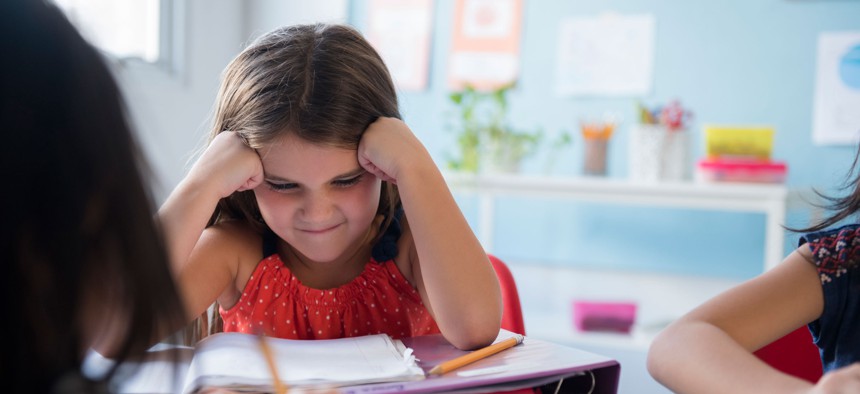
The top instructional challenge cited by educators was student mental health issues; most school districts reported that upwards of 30% of their students have mental health needs.
The Pennsylvania State Education Association, the union representing the majority of public-school educators, declined to comment on the report overall, as did state Sen. Lynda Schlegel Culver, who chairs the Senate Education Committee; she said she had not yet had a chance to review the report.
One relatively novel item in this year’s report was artificial intelligence, which was hardly on educators’ radar just a few years ago. Slightly more than half of responding school districts reported that they had integrated AI into their classrooms and programs – but while 80% have provided training on AI, only 70% have developed policies around its use.
Despite ongoing challenges, “our public schools are still doing a good job providing a quality education,” said Christ. “That gets lost sometimes where we tend to look at one or two issues … Public school leaders are dealing with a lot of issues right now, but they’re doing the best they can, and they’re still putting out well-rounded, highly educated kids.”