

Philadelphia
Pennsylvania Prison Society celebrates return and expansion of prison bus program
State lawmakers approved $600,000 for the program, which makes family visits at remote state prisons possible
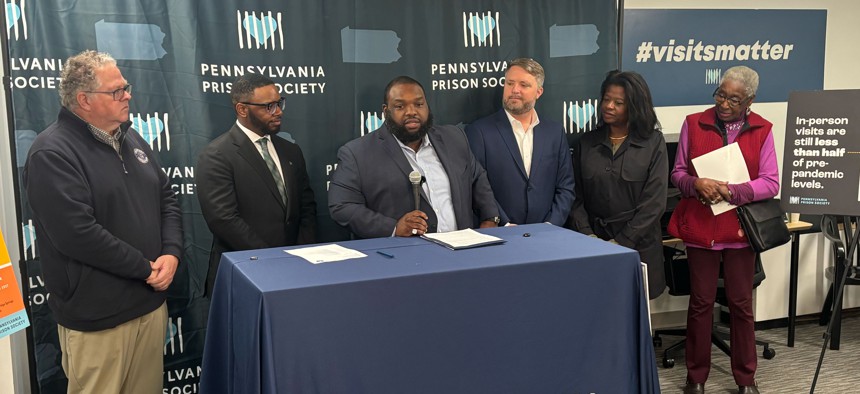
State lawmakers speak at the Pennsylvania Prison Society’s press conference on Monday, October 26, 2026 to announce bus program funding Harrison Cann

The wheels on the bus are going around the state once again.
On Monday, the Pennsylvania Prison Society and state legislators celebrated the restoration – and upcoming expansion – of a prison bus program that allows relatives to visit prisons scattered across remote parts of the commonwealth.
The Pennsylvania Prison Society is “an intricate part of the criminal justice apparatus here in the commonwealth,” state Rep. and House Appropriations Chair Jordan Harris said at a Monday press conference in Philadelphia about the program. “Prisons are not necessarily placed in the epicenter of our population … It could take a whole day’s journey to go and see your loved one.”
The Prison Society and Wesley Family Services have provided transportation services for nearly two decades, helping relatives in Philadelphia and Pittsburgh reach state correctional institutions across the state, many of which are hundreds of miles from Pennsylvania’s two most populous cities.
The bus program bridged that gap, providing affordable bus trips before visitations – and state funding – came to a halt during the COVID-19 pandemic.
But now, with $600,000 from the state budget passed in July, the bus program has resumed trips to nine SCIs and is in the process of expanding the routes it offers.
Virginia Hammond, a Philadelphia volunteer and bus rider, said the bus program has been a “lifeline” for her family and allows her to regularly visit her son, who’s currently being held at SCI Albion in Erie County – a distance that can easily take eight hours by car.
“For an affordable event by the Prison Society, I’m eternally grateful, and my son is eternally grateful,” Hammond said Monday. “We would not have been able to maintain the level of relationship that we have been (because of the bus program).”
“Eventually, that person is going to come back to the community,” Hammond added. “In what state will they come back? Will they come back connected or will they come back disconnected? And we know what happens to disconnected people.”
Kirstin Cornnell, chief program director with the Pennsylvania Prison Society, said the bus program resumed within days of the state budget passing in July – and added 18 new trips to its service routes. Bus tickets are $20 roundtrip and free for anyone under 18.
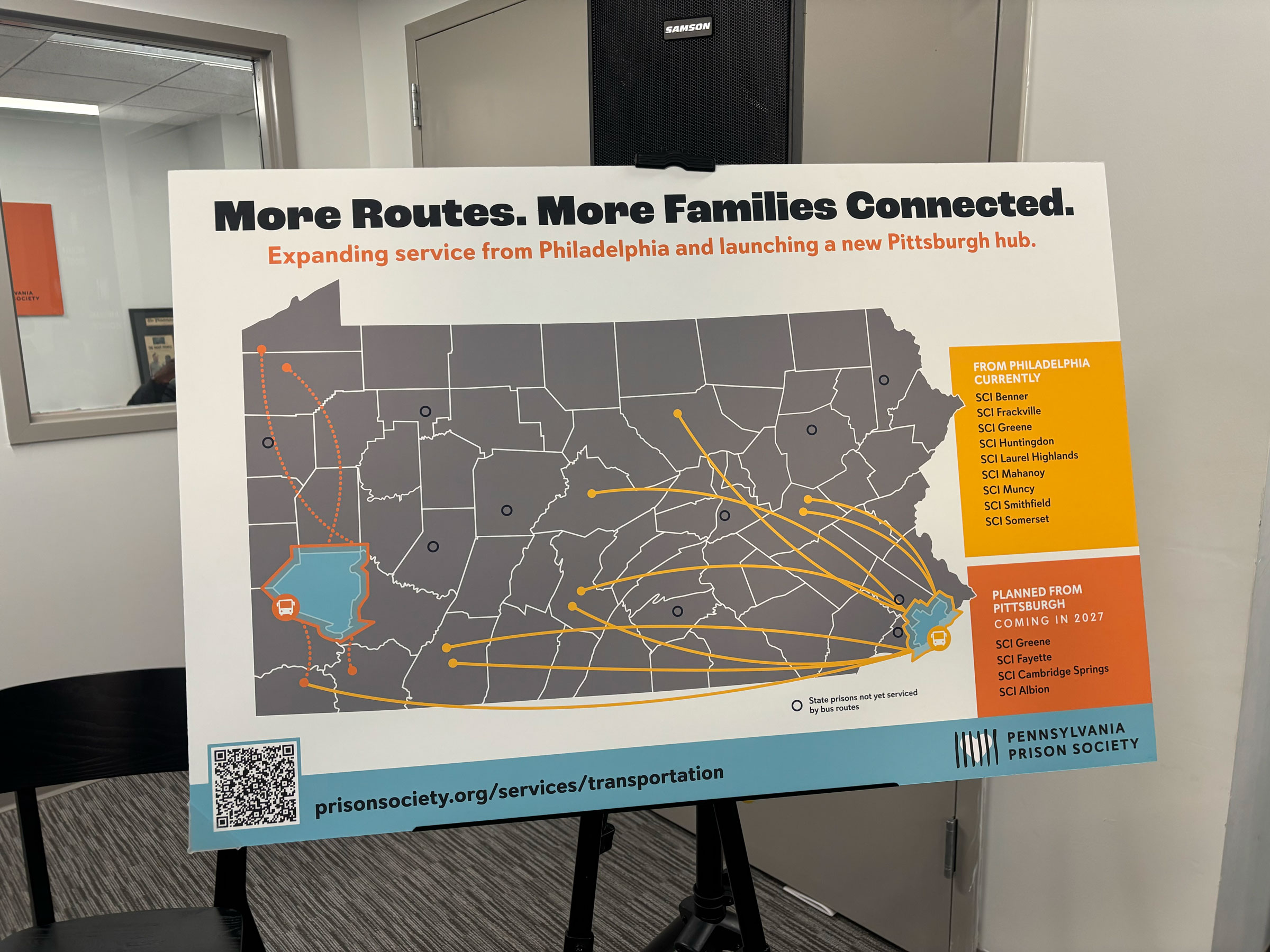
And with the funds secured for the fiscal year, the program is moving forward with plans to include routes to all 23 SCIs in the commonwealth.
“It’s a real partnership with the Department of Corrections and a lot of coordination with their staff,” Cornnell said. “Every quarter we’re rolling out another three or four facilities” to become part of the program’s routes.
Lawmakers and advocates stressed the importance of family visitation for incarcerated individuals, during both their time behind bars and their transition when returning home.
State Rep. Andre Carroll, standing next to his father, spoke about maintaining their relationship despite his father spending 20 years in prison.
“The only thing that connected me and my father was a phone call, and it was because my father was located three hours away in a county I’ve never been to: Union County,” Carroll said Monday. “Because of the Prison Society, (we’re) going to make sure that barrier doesn’t exist for other families.”
Carroll’s fellow Philadelphia state Rep. Ben Waxman said individuals “do better both on the inside and also on the outside when they are released” if they are still connected to family and friends.
“Since the vast majority of our folks who are incarcerated will one day be released back into our communities, it makes sense to do everything we can to make sure that we do that in a way that leads to good outcomes for everyone,” Waxman said.
Harris emphasized that recidivism rates drop dramatically for individuals who have maintained relationships with their families.
“What does that mean for the everyday person? What does that mean for the taxpayer? It means that we’re spending less money incarcerating folks … Because when they come home, they’re able to integrate back into our community.”
Carroll said his father’s connection with himself and his younger sister played a “huge part” in his father's return to the community.
“I understand the importance of making sure that people that are behind the wall have access to their family,” he said, “and I want them to have the same outcome I’ve been fortunate enough to have with my father.”