

Politics
PA lawmakers must do more to protect residents from data centers
Ballooning energy bills, negative environmental impact and more fallout are on the horizon if legislators don’t take action now.
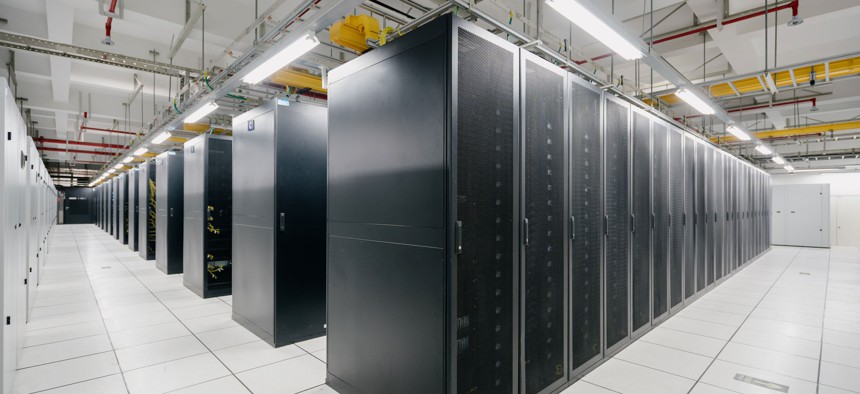
sinology/Getty Images

Data centers are an economic and environmental threat to Pennsylvanians. They are inadequately regulated, drive up electricity prices for households, worsen global climate disruption, and have an outsized negative impact on the communities where they are built. We must demand that lawmakers take commonsense steps to better understand the effects of data centers – and protect residents from the costs and public health impacts.
At the moment, Pennsylvania has no significant safeguards in place to prevent or even limit the economic, environmental, public health and community threats posed by data centers. Gov. Josh Shapiro has proposed some “principles” for data center development that will require legislation to actually have an impact. But he has also been a cheerleader for the industry, promising to speed up permitting and provide access to incentives like a state sales tax exemption on computer equipment that will cost our cash-strapped state $2 billion (or more) in revenue by 2031, according to the Governor’s office.
Data centers process, store and distribute vast amounts of data and develop artificial intelligence tools for a wide and growing variety of businesses and industries, including social media and cryptocurrency. Some data centers are built and operated by the wealthiest corporations on Earth – Google, Amazon, Meta and Microsoft. Others are being proposed by developers hoping to cash in on the artificial intelligence boom and the drive to utilize AI in companies and businesses of all kinds.
Data centers use immense amounts of electricity. The largest ones can use as much as an entire city. They’re adding so much electricity demand that PJM, which manages the electric grid in all or part of 13 states (including Pennsylvania) and the District of Columbia, is not keeping up. “PJM expects power demand to grow by 4.8% a year, on average, for the next decade – an astonishing pace for a system that hasn’t had substantial demand growth in years,” the Wall Street Journal reported.
PJM has been notoriously slow in adding new generation capacity and, worse yet, in approving new clean energy generation. In the last two years, PJM’s procurement process to secure the generation needed to meet expected demand – most of it driven by data center growth – has resulted in unprecedented price spikes, which are being passed on to all electricity consumers. Indeed, PJM’s latest auction in December failed to secure adequate generation supplies, which will not only raise prices further, but also threatens power shortages for the 67 million people in PJM’s service territory as soon as next year.
And it’s not just data centers’ demand for electricity that’s raising prices for all of us. Data centers often require new transmission lines – whose development sometimes involves the use of eminent domain against unwilling landowners – and other new infrastructure like substations. There are no rules yet to require data centers to pay for their own infrastructure, so the billions of dollars of these costs will raise household electricity prices as well.
PJM and state regulators have also failed to put in place other protections against consumer price spikes from data center development, like requiring data centers to be flexible with their demand or to rely on battery storage when grid stress is highest. PJM hasn’t deployed other tools like batteries, virtual power plants, and grid-enhancing technologies that could accommodate data center demand by making more efficient use of existing generation and transmission resources. This failure also pushes prices higher for all electricity consumers.
And all of this is on top of PJM’s continued over-reliance on expensive, highly polluting fossil-fuel power plants, which is costing us a habitable climate.
The environmental impacts of data centers go beyond the energy grid. Data centers consume huge tracts of land – hundreds and even thousands of acres of farmland, forests or open space. They use immense amounts of water for cooling their equipment. They produce severe, constant noise and light pollution. Most are backed up by large numbers of diesel or natural gas-fired emergency generators that spew tons of air pollution and greenhouse gases, and more noise pollution, when they kick on.
Communities that are being besieged by proposed data centers need to get answers and have full transparency from developers and state regulators on how the developments will impact them. Too often, those answers don’t come during planning processes – or at all.
How much water will the data center use? Where will it come from? What will be the impacts to aquatic life and ecosystems?
How much air pollution will be released from the facility? How will it impact people living, working, or going to school near the data center? How much noise will be generated? How much farmland, forest, or open space will be paved over and built upon? How will the community prepare for fires and other emergencies in such huge buildings?
Will the facility be receiving local or state tax breaks? Even if data centers pay property and other local taxes, the revenues to local governments won’t reduce the air and noise pollution, water stress and other impacts.
Despite all of this, a number of states, including Pennsylvania, are rolling out the red carpet for data centers with tax breaks, subsidies, and promises of expedited permitting that disempower local communities and ignore the impacts on them.
At the very least, our elected leaders must not allow any more data centers to come to Pennsylvania until laws and regulations are fully implemented that protect electricity consumers and limit public health impacts and environmental damage. We must unite to block new data centers and do everything we can to ensure that existing data centers are made to reduce the harm they cause – especially to underserved communities that don’t have the resources to push back.
Joseph Minott is the retired executive director and chief counsel of the Clean Air Council and the retired resident of the Clean Air Action Fund.
NEXT STORY: 2026 offers the ideal opportunity for bipartisan civics legislation