

Technology
Power plays: The battle over data centers in PA
Inside the $100 billion rush to turn Pennsylvania into the nation’s AI engine – and the local efforts trying to stop it.
SERGII IAREMENKO/SCIENCE PHOTO LIBRARY

While the world’s tech giants are actively seeking primacy in the artificial intelligence economy, Big Tech seems to agree on one thing: Pennsylvania is a key location on the road to AI dominance, as evidenced by the flood of private investments into the commonwealth to build out data centers and other AI-related infrastructure.
But as the likes of Amazon and Google move to build data centers and infrastructure here to power the nation’s AI revolution, Pennsylvania residents haven’t been as quick to welcome them as their public officials have.
In the last year alone, leading tech, energy and investment companies have announced more than $100 billion in private sector investments specific to Pennsylvania – investments that have been championed by state and federal elected leaders.
Joined by Gov. Josh Shapiro, Amazon announced last June that it would invest $20 billion to build two data center campuses in Luzerne and Bucks counties, news that seemed to open the floodgates. Less than a month later, U.S. Sen. Dave McCormick announced more than $90 billion in private investments for AI and energy-related projects across the state at his inaugural Energy and Innovation Summit.

Both Shapiro and McCormick have said that Pennsylvania is uniquely suited to lead in the new AI economy thanks to the state’s diverse energy sources, leading research institutions, and regulatory and permitting environment – all of which have helped position the state to reap the benefits of the data center boom.
Data centers – the facilities that house the computing machines, servers, storage devices and other IT infrastructure needed to process and store vast amounts of data – are essential to the digital economy, whether it be generative AI tools like ChatGPT and Claude, or the cloud computing networks that so many businesses rely on. According to an analysis by McKinsey & Company, by 2030, data centers will need $6.7 trillion in worldwide investment to keep pace with demand for computing power; the same report estimates that 70% of the projected demand for data center capacity will come from AI-based workloads.
“Consumers and businesses are going to generate twice as much data in the next five years as we did in the previous 10,” said Dan Diorio, the vice president of state policy for the Data Center Coalition, a membership association for the data center industry that counts Amazon Web Services, Google, Microsoft, OpenAI and Anthropic among its members.
“The average household has 21 connected devices … all that requires digital infrastructure. When you get to the heart of it – data centers and digital infrastructure – it’s the heart of the 21st-century economy,” he told City & State in an interview.
Pennsylvania’s emergence as a new market for data centers didn’t happen by accident. Diorio noted that the availability of energy sources, power, land, a business-friendly tax and regulatory environment, and access to skilled labor are key factors that tech companies and data centers consider when choosing where to locate a facility.
“All of those factors, I think, have converged to help Pennsylvania emerge as a leading and really strong and growing market throughout the country,” Diorio said.
The Joint State Government Commission has estimated that there are 101 active data centers in the state – and with more being proposed in communities across the state, communities are beginning to push back.
Data center proposals are working their way through municipal planning and zoning processes in nearly every corner of the state, and residents are showing up en masse at local government meetings and organizing through Facebook groups to oppose projects in their communities.
A recent survey of 836 Pennsylvania voters by Quinnipiac University found that a majority of respondents oppose building a data center in their neighborhoods, with opposition to data center development coming from both Democrats and Republicans.
According to the poll, 68% of Pennsylvanians would oppose building an AI data center in their community, compared with 20% who would support it. When broken down by party, 53% of Republicans said they would oppose a data center in their community, 81% of Democrats said they would oppose it, and 67% of independents said they would oppose a data center where they live.
Ginny Marcille-Kerslake, a Chester County resident and senior organizer with Food & Water Watch, said opposition is evident at the community level.
“They are all drawing unprecedented community opposition. This is something that I have never seen in my 10 years of organizing – such an incredible turnout from community members to township meetings night after night,” Marcille-Kerslake told City & State in an interview. “They’re filling meeting rooms to standing-room-only, or overflowing to the point where meetings have to be adjourned and rescheduled in larger facilities.”
Marcille-Kerslake said community organizing has already halted several projects across Pennsylvania, including an effort to add data centers as an allowable use in an office park district in Hampden Township, Cumberland County, as well as another attempt to rezone land for a data center in Montour County. Additionally, last November, supervisors in Hazle Township, Luzerne County denied an application for a 15-building data center campus known as “Project Hazelnut”; that decision is now being appealed in court.
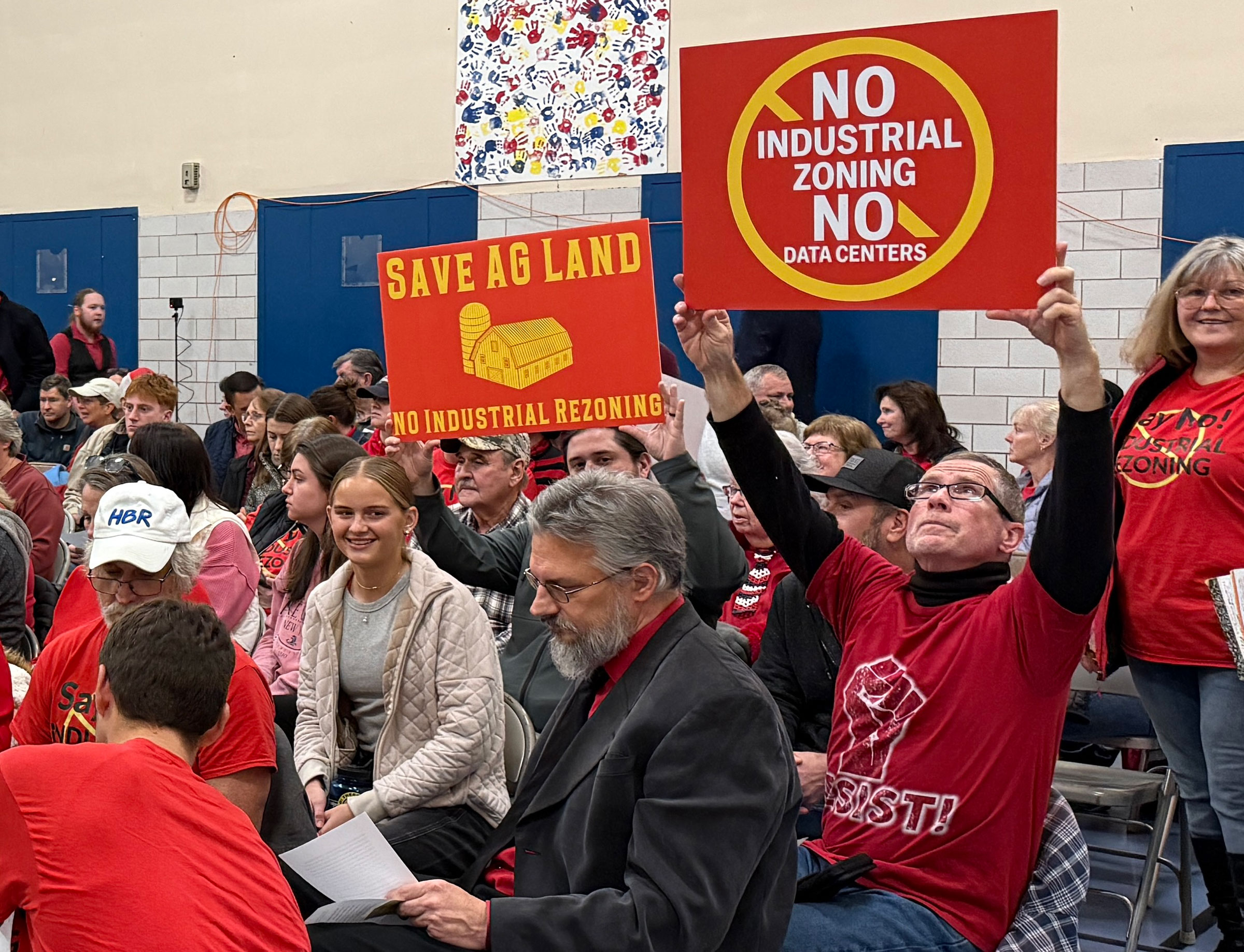
Concerns from residents with data center proposals in their communities range from light and noise pollution – including a humming noise from data centers and their associated transmission lines – to increasing electricity bills and decreasing property values, Marcille-Kerslake said.
Community concerns haven’t fallen on deaf ears. In his February budget address, Shapiro acknowledged that while data centers have the potential to bring new jobs and new tax revenue to the state, Pennsylvania residents “have real concerns about these data centers and the impact they could have on our communities, our utility bills, and our environment.”
He went on to outline a set of development guidelines – the Governor’s Responsible Infrastructure Development, or GRID, standards – designed to hold data center developers accountable at the risk of losing permits and tax credits.
“If companies adhere to these principles, they will unlock benefits from the Commonwealth, including speed and certainty in permitting and available tax credits,” Shapiro said. “I know everyone in this room wants to see our economy grow and create more jobs and more opportunity. But I also know this is uncharted territory – so let’s come together, codify these principles, and take advantage of this opportunity.”
Lawmakers in the General Assembly have also introduced legislation seeking to address the rapid development of data centers occurring across the commonwealth. Some are seeking to boost transparency around proposed data center projects and limit the types of land on which developers can construct data centers, while others are seeking to halt development entirely – albeit temporarily.
Lawmakers in at least 12 states have introduced bills to establish a moratorium on data center construction, ranging from New Hampshire, New York and Vermont to Georgia, South Carolina and Virginia – even as far west as Oklahoma.
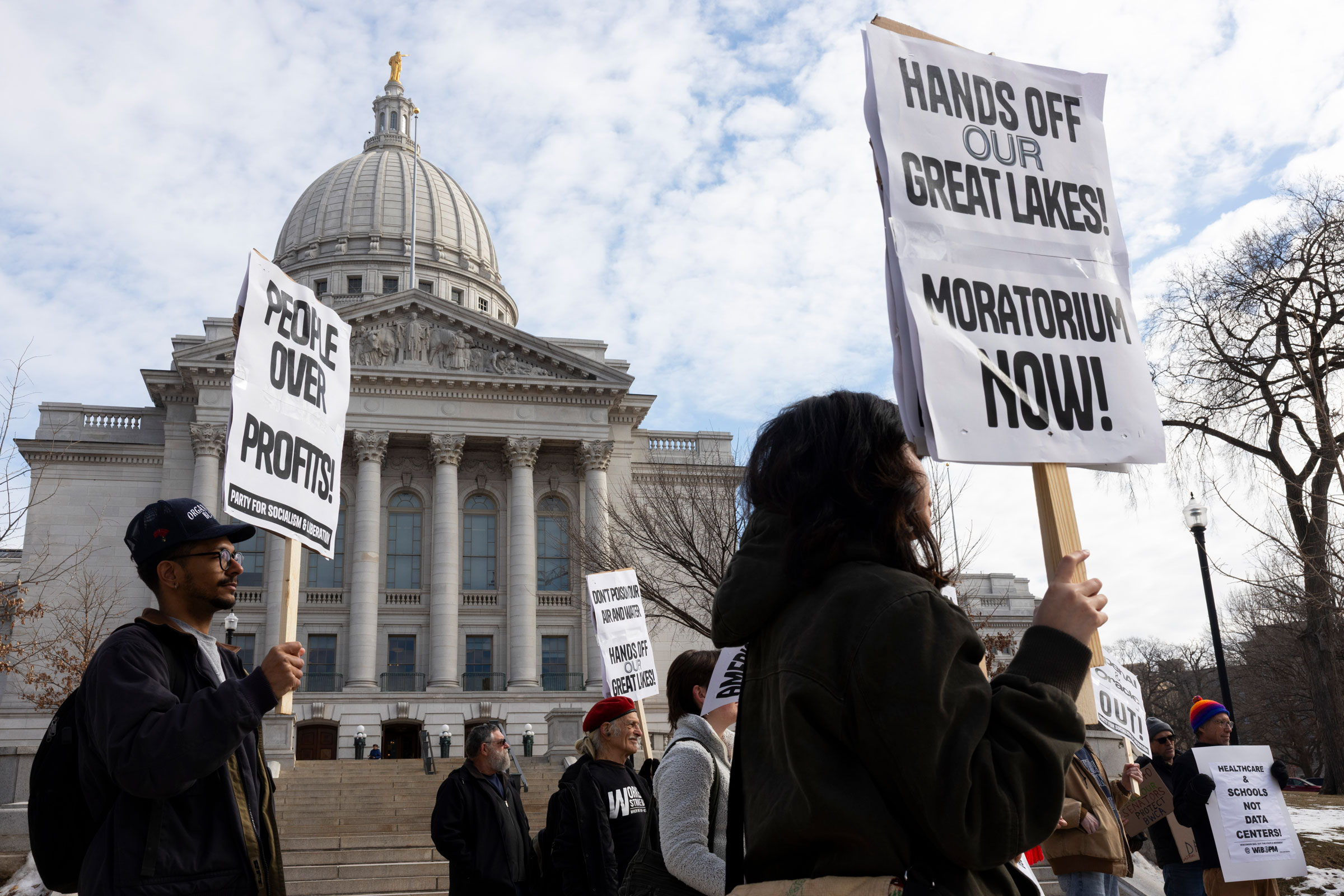
State Sen. Katie Muth, a Democrat who represents parts of Berks, Chester and Montgomery counties, plans to introduce legislation that would establish a statewide three-year moratorium on data center development in Pennsylvania. She wrote in a co-sponsorship memo that elected officials “need more time to evaluate risk, enact protective ordinances, update their zoning regulations, and other critical measures to ensure public safety and well-being.”
Muth’s legislation, which has yet to be formally introduced, would place a three-year pause on hyperscale data center development, and also include new power-generating facilities and utility transmission infrastructure needed to power them.
“By enacting a three-year moratorium, this legislation would require Pennsylvania decision-makers to take time to do meaningful research and planning that should have been done before this data center development rush began,” Muth’s memo reads. She added that a moratorium on development would give local governments and emergency response personnel time to assess the impact of data centers and establish protections for residents and communities.
Food & Water Watch supports both a statewide and nationwide moratorium on the construction of new AI-driven data centers. “The three-year moratorium would allow time for municipalities to add this new use to their zoning ordinances and put the protections in place for their residents and the environment,” Marcille-Kerslake said. “Right now, they're scrambling to do that.”
Republican state Sen. Rosemary Brown, who represents Lackawanna, Monroe and Wayne counties, is one of several co-sponsors of Muth’s moratorium legislation. She told City & State she backed the bill because it would give residents and decision-makers time to better understand the ramifications of data center development.
“The reason for me signing on to the moratorium is basically making the statement that I still have questions, that people still have questions, and answers need to still be given so that we do the right thing,” she said.
Brown is also sponsoring her own “Residents First” legislative package that seeks to limit large-scale data center development to land that’s zoned for industrial use and require data center proposals to include a third-party analysis of the development’s anticipated water usage.
As part of the package, she’s also sponsoring legislation that would direct the Pennsylvania Legislative Budget and Finance Committee to study the long-term validity and viability of data center facilities.
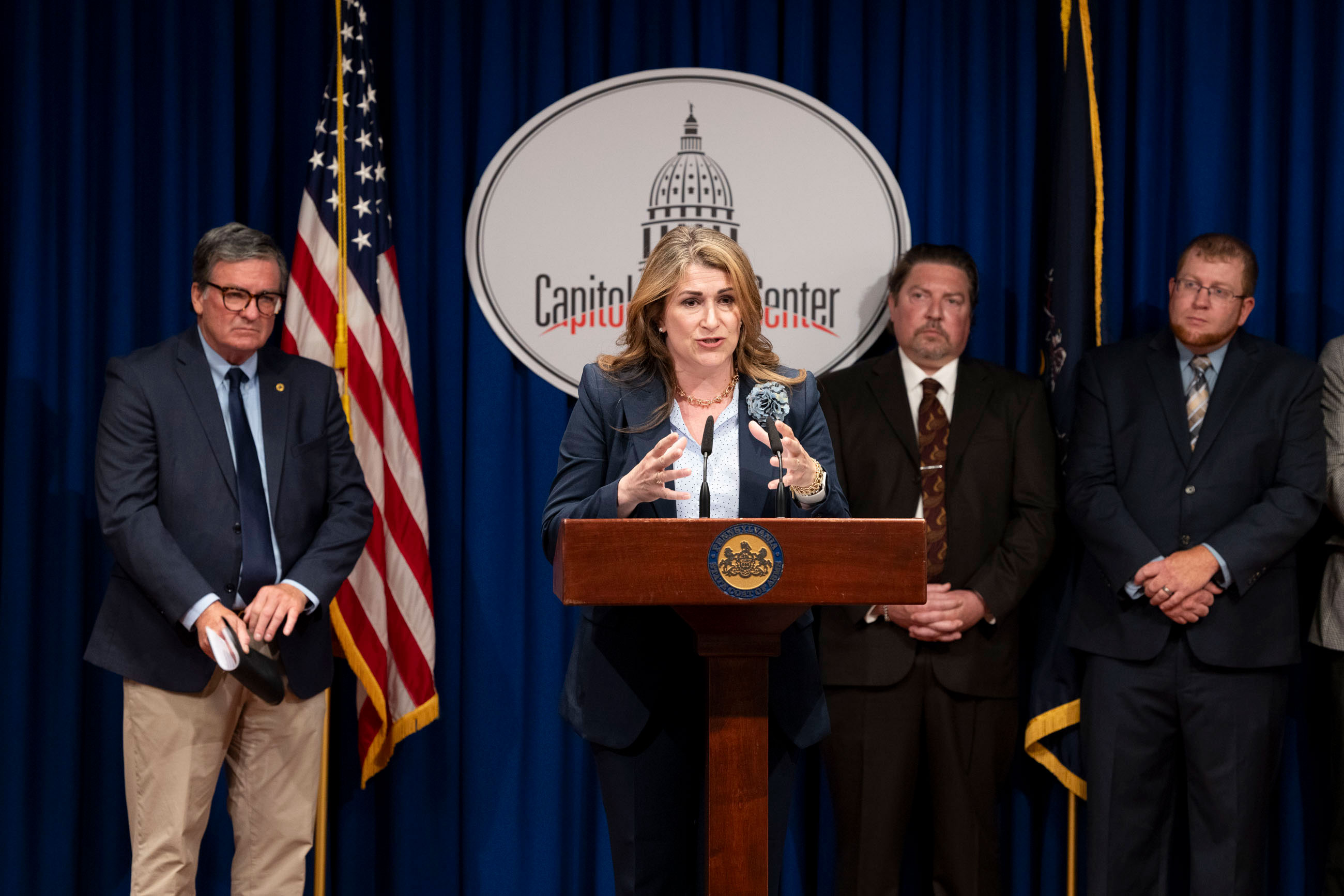
Brown said it’s crucial that the state not rush to develop data centers but rather take a responsible, measured approach. “You have to do this type of development right,” she said.
A report released by the General Assembly’s Joint State Government Commission may also provide a roadmap for lawmakers. Released in January, it explored the adoption and use of AI in Pennsylvania, as well as the impact of data centers, which, the report said, “can exert a large pressure on the environment, public health, and natural resources through the manufacturing of their hardware, construction, and operations.”
The report made several recommendations on data center development, suggesting that the state ensure Pennsylvania municipalities “have the authority to engage in municipal planning and zoning activities that protect local community interests” when deciding on the location and environmental impact of data centers.
The advisory committee also recommended that data centers annually report their electricity and water usage to the state’s Public Utility Commission and Department of Environmental Protection, respectively.
Lawmakers at the federal level have also waded into the conversation surrounding data centers, with legislators in states spanning from New Jersey to Texas introducing bills to require data centers to generate their own renewable energy and push the federal government to collect data on environmental impacts and energy consumption.
However, others have said AI development in the U.S. is key to national security. U.S. Sen. John Fetterman recently pushed back against efforts to enact a nationwide moratorium on data center construction. “I refuse to help hand the lead in AI to China,” Fetterman said in a post on X responding to a moratorium bill sponsored by U.S. Sen. Bernie Sanders. “The AI chassis can either come from China or the USA. That’s an easy choice.”
President Donald Trump has also sought to address the energy demands of data centers and the ramifications for electricity rates. He announced in March that some of the world’s biggest tech companies – Amazon, Google, Meta, Microsoft, OpenAI, Oracle, and xAI – signed a non-binding agreement to cover the cost of power generation for data centers.
“Big Tech companies are committing to fully cover the cost of increased electricity production required for AI data centers – and that would mean prices for American communities will not go up, but in many cases, will actually come down,” Trump said.
Regarding concerns raised by residents in Pennsylvania and beyond, Diorio said that data centers are efficient water users, citing a 2024 report from Virginia’s Joint Legislative Audit & Review Commission concluded that while “some data centers use substantial amounts of water, most use similar or less than other large commercial and industrial water users.”
The data center industry, for its part, wants to be a good neighbor to Pennsylvania residents, regardless of the location, Diorio said.
“I think it is up to local leaders to determine what’s the best fit for their community when it comes to economic development projects – data centers strive to be that best fit,” he said. “Data centers look to support local priorities and ensure that they are building up the community, whether it be workforce development or other ways.”
“They’ve always done that, and they will continue to do that.”
This story has been updated to reflect that commissioners in Hampden Township, Cumberland County voted against a proposal to allow data centers in office park districts.