

Environment
Philly’s new Tree Coalition is leading the street tree-planting movement – and cooling neighborhoods in the process
The local tree tending trend is now under a new public/private partnership seeking to speed progress and save lives.
Pennsylvania Horticultural Society

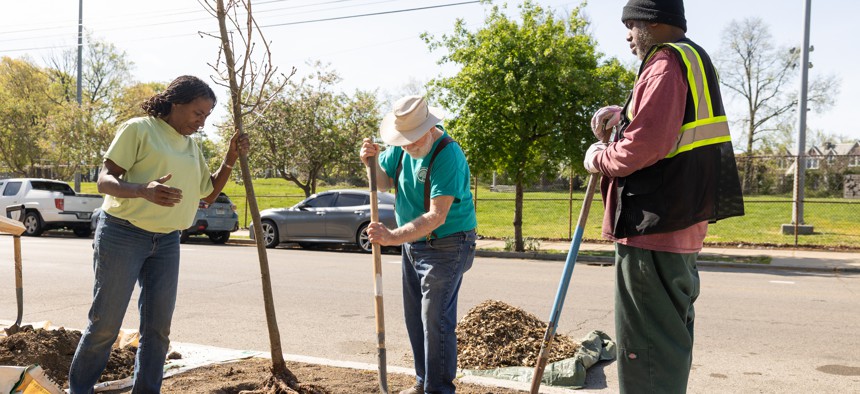
For the sake of both the dogs and the volunteers walking them at Philadelphia’s Animal Care and Control Team’s headquarters in the city’s Hunting Park section, Jesse Familetti knew something had to be done about the burning-hot concrete expanses surrounding the facility. And she knew just where to go for a solution: a tree-planting program run by the Pennsylvania Horticultural Society.
Familetti, ACCT’s director of strategic programs and initiatives, already knew she was barking up the right tree: PHS had previously planted a tree outside of her own Northeast Philadelphia home.
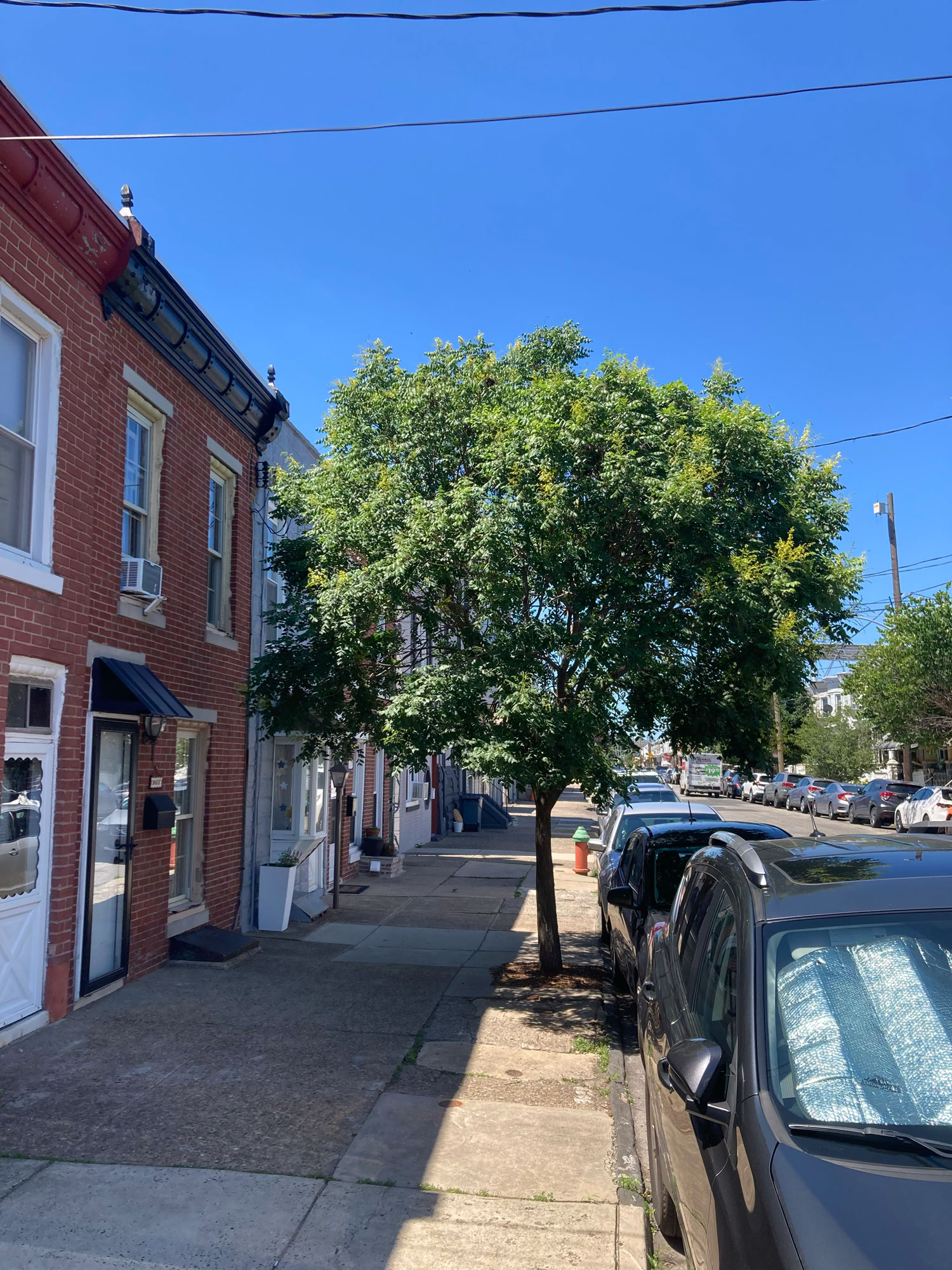
“Our tree is now huge – we've probably only had it for about five years – and the difference that it made in the cooling inside our house is really amazing,” Familetti told City & State. “We actually had neighbors coming up to us and asking us about it because there's so many people who, unfortunately, don't know about the program.”
The term “urban forest” may sound like an oxymoron, but it’s not. For cities like Philadelphia, these sylvan environments are as existentially important as the Amazon - providing oxygen, removing carbon dioxide and, just as importantly, cooling streets, buildings and humans with their canopies.
In Philadelphia, according to data from the U.S. Forest Service, the city's parklands constitute 9.3 percent of the total land area; harbor an estimated 1.1 million trees, providing a 64-percent canopy cover; and account for 38.8 percent of carbon storage and 34.8 percent of air-pollution removal thanks to the city's urban forest.
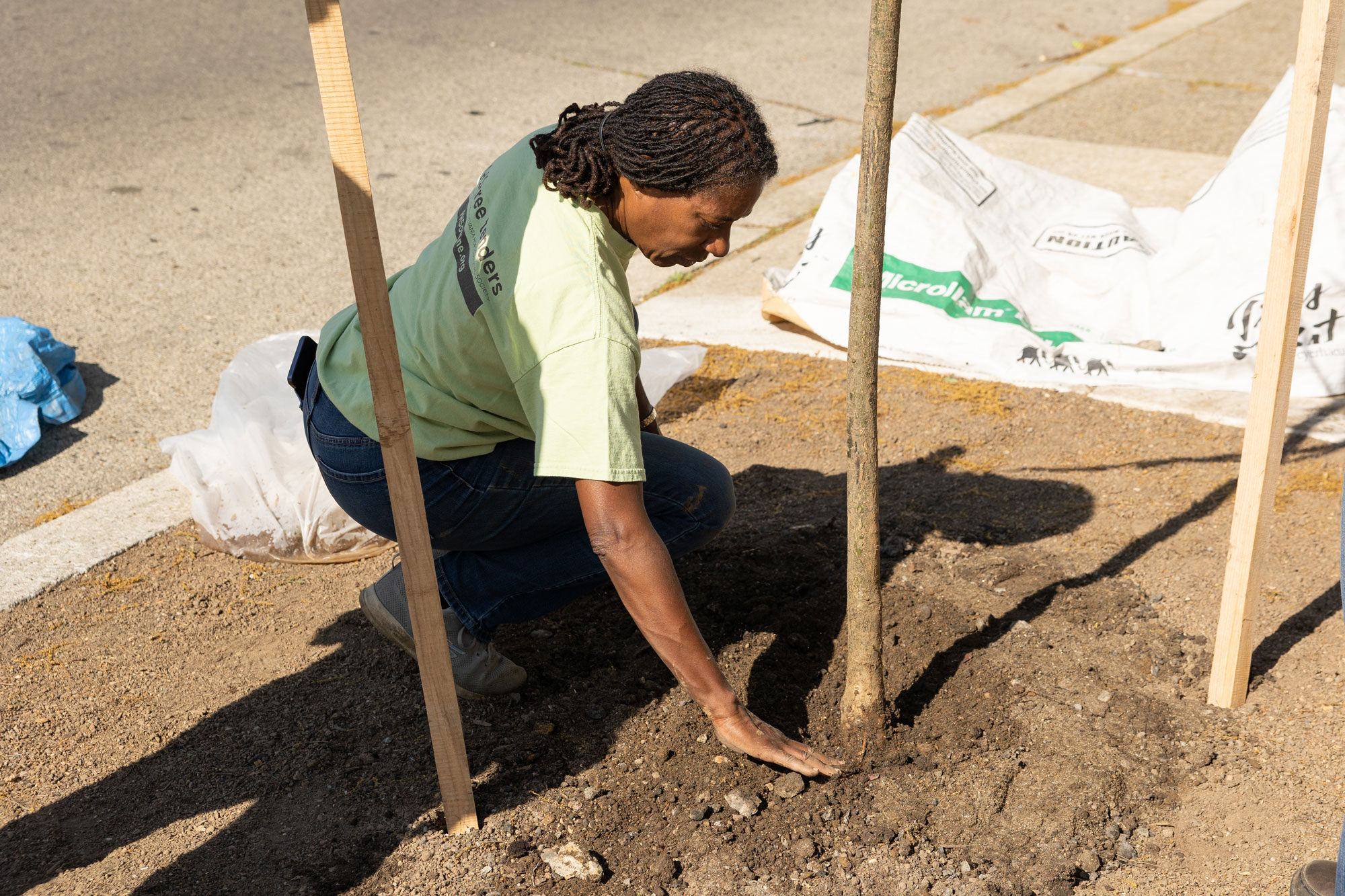
But as shown by one of the city's newest organizations speaking for the trees, more can and needs to be done. The Philly Tree Coalition, formally launched on Arbor Day on April 24, is just beginning to grow and tackle its core mission: increasing Philadelphia’s tree canopy to 30% and thus preventing an estimated 400 heat-related deaths per year.
In 2023, the city released its first-ever strategic plan for its urban forest, known as the Philly Tree Plan. The 10-year roadmap included several partner organizations and recommendations related to tree planting, maintenance and preservation, all in an effort to grow the city’s tree canopy equitably – and boost the environmental and economic benefits that come with the shade. But the tree planting initiative is nothing new to the city, either. The City of Philadelphia, in one capacity or another, has been doing street tree plantings itself since at least the 1890s, according to Parks and Recreation.
“Trees basically make our neighborhoods livable,” Erica Smith Fichman, the city’s forester, told City & State. “The presence or absence of trees is correlated with high heat, with high asthma, with poverty, and (with) lots of other public health concerns. Trees are basically at the intersection of a lot of equity conversations.”
At the helm of the new Philly Tree Coalition is Kiasha Huling, who brings years of experience in social work. Huling told City & State she views the efforts as a “public health intervention.”
“Seniors talk about their concerns about how brutal the heat is, and how (in the past) they used to be able to just close the blinds in their airtight homes, not turn on any appliances on a hot day, and just kind of take it easy,” Huling said. “They were appearing in the emergency room with heat stroke because of the ‘heat island effect.’”
That is a phenomenon occurring when “structures such as buildings, roads, and other infrastructure absorb and re-emit the sun's heat more than natural landscapes such as forests and water bodies,” according to the U.S. Environmental Protection Agency, which goes on to explain: “Urban areas, where these structures are highly concentrated and greenery is limited, become ‘islands’ of higher temperatures relative to outlying areas.”
The heat island effect is more often found in “environmentally disinvested neighborhoods,” Huling added, making the equitable public health approach that much more vital.
These neighborhoods, many of which are lower-income, industrialized, and densely built, particularly in North, South, and Southwest Philly, have lacked the investment and the open sidewalk or lot space that lend themselves to tree planting.
“A lot of times trees are framed as a ‘nice to have’ (or) as a beautification amenity, but (we’re) really thinking about trees as an investment in people,” Huling continued. “If you’re investing in trees, you’re investing in the quality of a neighborhood, and the quality of a neighborhood dictates the individuals in those neighborhoods’ ability to thrive.”
Xiaojiang Li, a University of Pennsylvania professor who developed the Treepedia Project to map and quantify streetscapes in cities, said that trees affect how humans experience air temperature in more ways than one.
“We usually use air temperature to quantify the heat, but air temperature is not enough – the humidity, the wind speed and the shade all impact how humans feel,” Xiaojiang told City & State. “Planting a tree can reduce the human-perceived temperature by about 20 degrees or more.”
His research backs up the city’s own data.
Smith Fichman said neighborhoods that lack street and yard trees – some areas have as little as 2% tree canopy – can be up to 22 degrees hotter than ones with an adequate tree canopy: “That is the difference between life and death for some people,” she added.
Coalition coalescence
The Philly Tree Coalition, which includes more than half a dozen community groups and organizations focused on tree planting and care, grew out of the Philly Tree Plan established in 2023 by the city and TreePhilly, which is supported by the City of Philadelphia’s Department of Parks & Recreation and the nonprofit Fairmount Park Conservancy.
Previously, the city’s Tree Plan – and tree plantings – were carried out by community organizations, including the Pennsylvania Horticultural Society. PHS, among others, led the efforts to secure major investments in Philadelphia’s urban forest, working with tree-tending groups to plant and maintain street trees alongside residents who sign up for tree planting.
Now, under the leadership of Huling and the Philly Tree Coalition – housed within the Public Health Management Corporation – the community-led implementation of the Philly Tree Plan has branched out.
“In the past, there were amazing projects happening – at universities, through the Water Department, through PHS and Parks and Recreation – and collectively, they are for the greater good of increased canopy and greening in our city,” Huling told City & State. “What we’re doing now is bringing all of those entities together … to really amplify and lend capacity to each of those projects (and) ensure that they're done in a smart and sustainable way.”
Huling said the coalition will ensure there’s equitable distribution of resources and planting and greening opportunities, with the overall “end goal to demonstrably increase our canopy.” Through the new structure, PHMC will facilitate collaboration among partner organizations and administer the community-based Tree Forward subgrant initiative.
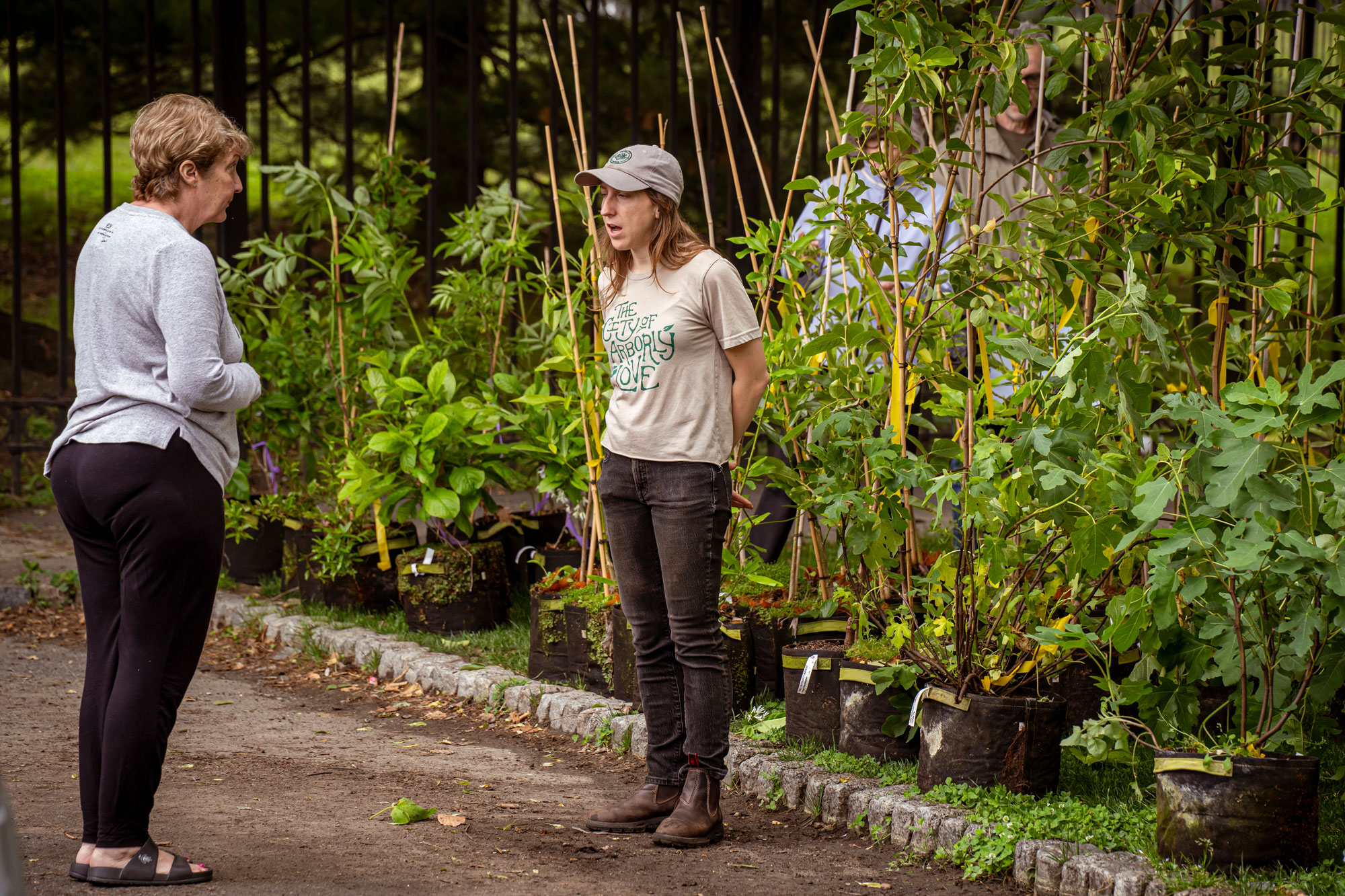
The Tree Forward grant, she said, will directly fund grassroots engagement efforts, as well as costs related to tree maintenance, preservation and removal. For 2026, with awards ranging from $15,000 to $40,000, PHMC distributed nearly $300,000 to 10 organizations through Tree Forward.
Few know the roots of TreePhilly like Ann Cohen, a Roxborough resident who’s been volunteering at yard tree giveaways and events for more than two decades.
“People are delighted (to get trees for their yard). They want to tell you about their trees, they want to tell you how they’re succeeding and, if it’s their first tree, they can’t believe how big they are and how beautiful they are,” Cohen told City & State. Noting how her own trees help with shade and stormwater management around her home, she added: “What the city’s doing now, which makes a tremendous amount of sense, is, they're targeting areas where there is not a lot of tree cover – that's where we do the tree giveaways.”
One of those partners is Matt Rader, president of PHS – which, in addition to producing the internationally recognized Philadelphia Flower Show, runs Tree Tenders, a program that supports 140 local tree-tender groups in and around Philadelphia, operates in 110 neighborhoods and plants roughly 2,000 trees annually.
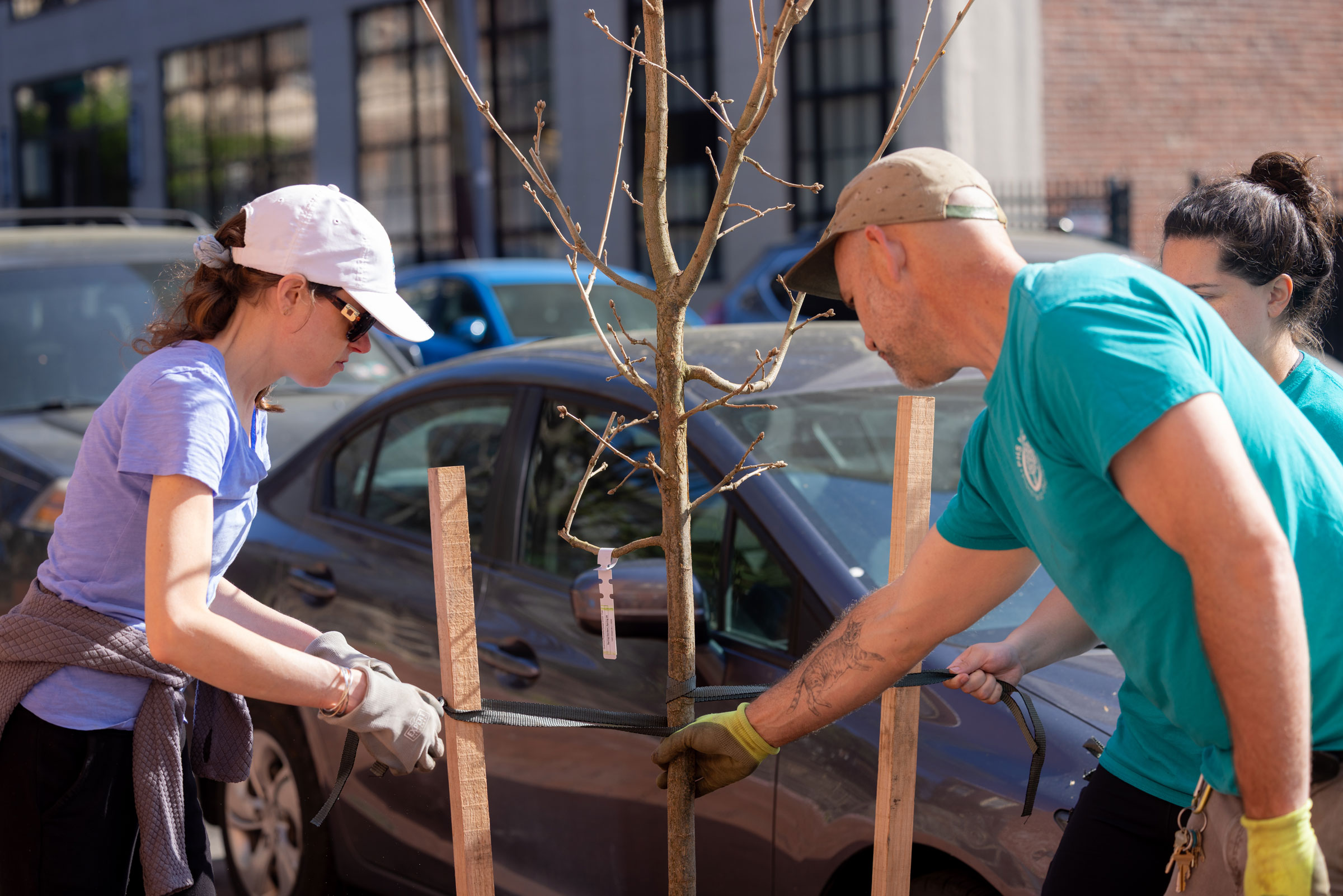
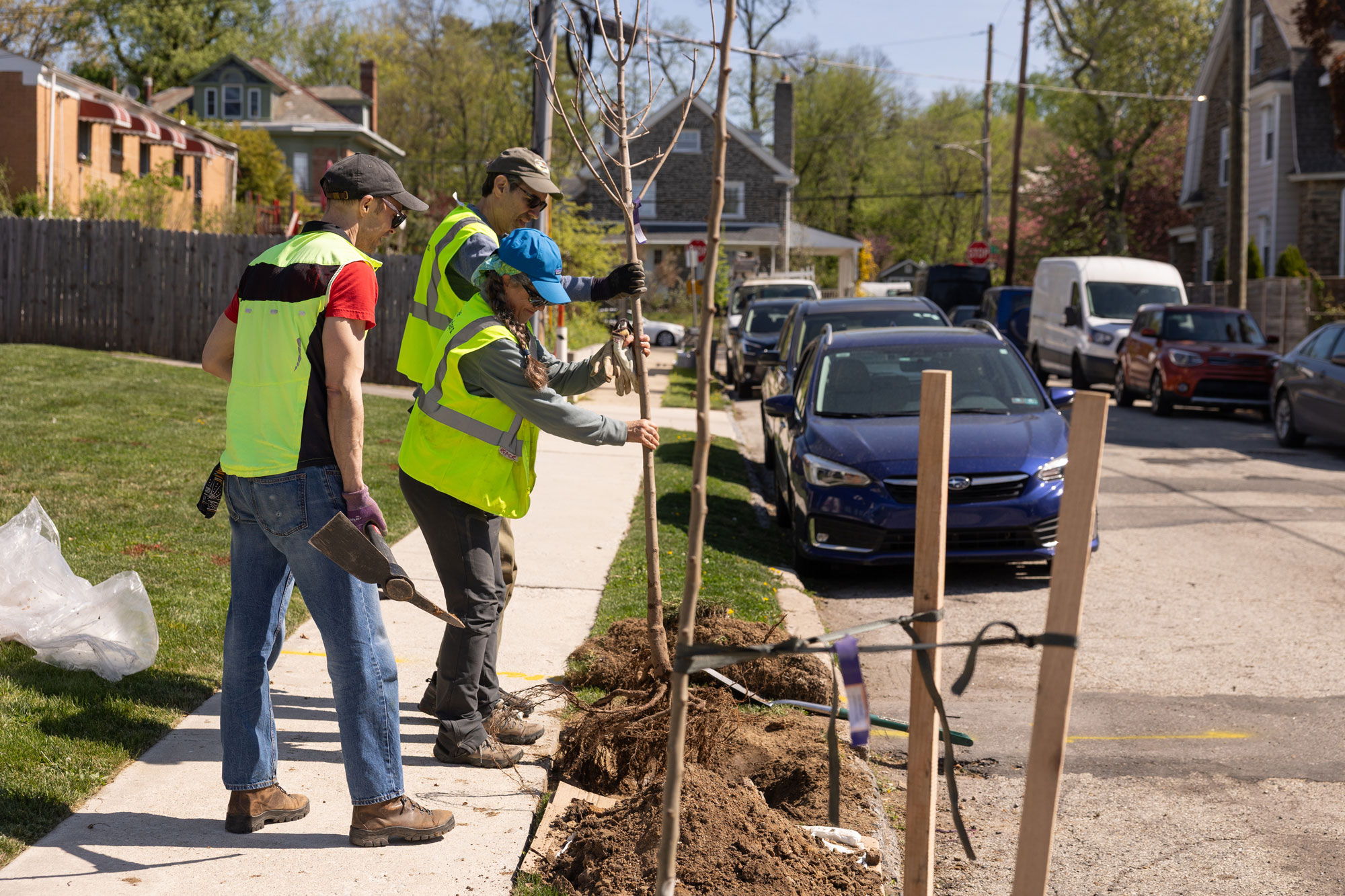
“Our model is to provide all the support and encouragement and empowerment that somebody needs to make something green happen in their neighborhood,” Rader told City & State. Interested tree tenders must take a nine-hour course to learn about tree biology, advocacy and care; once shown the ropes, the tenders form local groups to promote and implement the planting and continuing care of street trees for interested residents.
Forgotten infrastructure
Proponents of the tree-plan push are pitching trees not as an amenity, but as a necessity.
Both environmental and economic outcomes, they argue, make street and yard trees among the most cost-effective forms of infrastructure for creating and sustaining healthy communities.
Data from the U.S. Department of Energy shows that properly placed trees around buildings can reduce air conditioning needs by about 30% – and having three trees can reduce a household's energy bills by $100 to $250 per year. Tree plantings in urban areas have also been shown to have a significant impact on reducing crime, increasing property values and providing long-term health benefits to the surrounding community.
The Philly Tree Plan got off the ground with the help of a $12 million USDA Forest Service Urban and Community Forestry grant awarded in 2024 through President Joe Biden’s Inflation Reduction Act, which included a dedicated five-year climate investment for cities. The Trump administration briefly halted federal funding last year before unfreezing it, allowing the coalition to hire Huling and two full-time staff members who will operate through PHMC.
Through the Tree Plan, the coalition staff will oversee fundraising and coordinate the planting and upkeep of thousands of trees.
“The planting and care … of urban trees is a really transformational public health move for every city and town in Pennsylvania, and it’s not currently treated as an opportunity for funding,” he added. “And where funding happens, it’s often for planting but not care – yet the care is critical to keep them healthy. It’s also critical because that supports jobs and opportunities for tree-care contractors.”
There is widespread agreement among advocates that to ensure trees don’t become a liability or financial burden for the homeowner, the focus must go beyond planting to maintaining existing and new trees.
“It’s one thing to plant a tree. What do neighborhoods need to be able to maintain that tree and to maintain existing trees?” Huling asked. “If we plant a tree today, it will have some health benefits. But if we can hold onto a tree that we already have, we’re already benefiting from it, and so (we’re) thinking about our preservation of our current canopy as we also plan for the future and the increase in our canopy.”
“There should be an ongoing annual investment to treat tree canopy as a core municipal service, and instead it’s often treated as ‘We’ll do a planting project here or there’ – and that’s not what you need,” Rader said. He added that there’s also an economic incentive to funding local jobs: “If you have stable investment in tree maintenance in Philadelphia and municipalities commonwealth-wide, you have a huge opportunity to build a local tree care industry.”
But, Rader emphasized, “the goal would never be to move all of this into city government.” While the public role is critical in terms of resources, policy priority and services around care and maintenance of trees, Rader added: “You want to keep the character of tree-tending programs like that deeply embedded in the community, so that there’s ownership for the care of the trees.”
Huling and Smith Flichman agreed, noting that nonprofits and private partners can be more flexible than a municipal entity in responding to new opportunities.
That’s because of the grassroots nature of the coalition, whose governance structure centers a community-based advisory committee, “with voting power on how money is spent … and what the priorities are for coalition recommendations,” Smith Flichman affirmed. “We’ve had decades and decades of amazing volunteer programs, but they haven’t translated into an advocacy effort.” Now, he adds, that is changing.
Community connection
Much like the tree plantings that have taken place over the years, tree tenders and volunteers lead both on-the-ground and in-the-ground efforts from around the city.
The ability for these hyperlocal groups to meet with residents, assess neighborhood needs, and plant and maintain trees where needed is the root system for the coalition’s effort.
The coalition is actively seeking “Priority Area Leaders” to represent neighborhoods, a role that comes with a $1,200 annual stipend over three years and the responsibility for a tree plan progress report set to be published in the fall.
The application window for community-based organizations to submit projects opens on July 6 and runs through Aug. 24. Notification of awards will take place in October, setting the stage for newly organized projects to begin in 2027 to support the long-term sustainability of the city’s urban forest.
“Our largest opportunity to increase our tree canopy is through street trees – and street trees exist on our blocks, and they have to be permitted by the homeowner,” Huling said. So individual Philadelphians, like my neighbors to my left and right, are also critical participants in the successful increase of tree canopy.”