

Philadelphia
Philadelphia City Council turns to transit access and affordability in the city
Councilmember O’Rourke reintroduced his Transit Access Fund bill during session Thursday
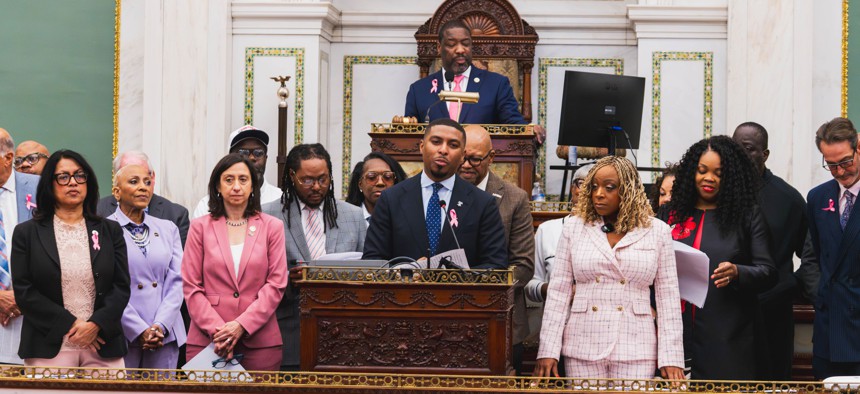
Philadelphia City Councilmember Nicolas O’Rourke speaks during Council session on October 1, 2026 Chris Mansfield | PHL City Council

During a Philadelphia City Council session honoring Eagles announcer Merrill Reese on his 50th season in the booth and Community Legal Services on its 60th year, the city’s legislative body kept its focus on affordability.
From transit funding and the city’s Homestead Exemption to food and nutrition for children, councilmembers and public commenters made it clear that kitchen-table issues are hitting home in Philadelphia.
Notably, Councilmember Nicolas O’Rourke reintroduced his “Transit Access Fund” legislation, which seeks to provide permanent financial protection for programs offering free transportation to low-income riders.
Originally introduced in April 2025, the measure was co-sponsored by 14 councilmembers, including Council President Kenyatta Johnson; Majority Leader Katherine Gilmore-Richardson; Minority Leader Kendra Brooks; and Transportation Committee Chair Mike Driscoll. The initial proposal would have put a ballot measure before voters to decide whether the city should be required to set aside 0.5% of its general fund in a Transit Access Fund.
The latest version of the bill still seeks to create a separate fund to financially support the city’s Zero Fare, Key Advantage and Key Partner programs, but instead authorizes the city’s finance director to establish the Transit Access Fund and requires the city to produce an annual transit access plan.
“Plans (would) lay out all the city operations, including capital spending, that increase SEPTA’s affordability and accessibility over the coming five years,” O’Rourke said Thursday.
O’Rourke, one of two Working Families Party members on Council, is among a few councilmembers who have sought to increase local support for SEPTA amid financial struggles and a lack of long-term funding from lawmakers in Harrisburg.
The Zero Fare program started as a two-year pilot program for residents with incomes at or below 150% of the federal poverty threshold, roughly $15,650 for a single person and $32,150 for a family of four.
Philadelphia Mayor Cherelle Parker proposed eliminating funding for the program in her initial budget proposal, citing the program's reliance on COVID-relief dollars from the federal American Rescue Plan Act, which was established under her predecessor, Jim Kenney. Parker, who backed down from the proposal during that first budget process, recently said the city was in discussions with SEPTA to permanently extend the program.
“Public Transit is essential to our region’s future and to economic mobility for our residents and businesses,” Parker said during her budget address in March, when she assured Zero Fare would be funded through the next year.
Meanwhile, transportation advocates, including many who spoke during Thursday’s public comment period, continue to push to make the low-income transit programs permanent.
“Residents being able to afford and access SEPTA is key to Philly’s future,” O’Rourke added. “We must be intentional about that, year in and year out.”