

Policy
Electoral College dropouts: PA Dems exploring switch to popular vote for presidential elections
Commonwealth Democrats are hoping the state will join the National Popular Vote Interstate Compact – and sideline the less-than-democratic Electoral College come 2028.
aprott/Getty Images

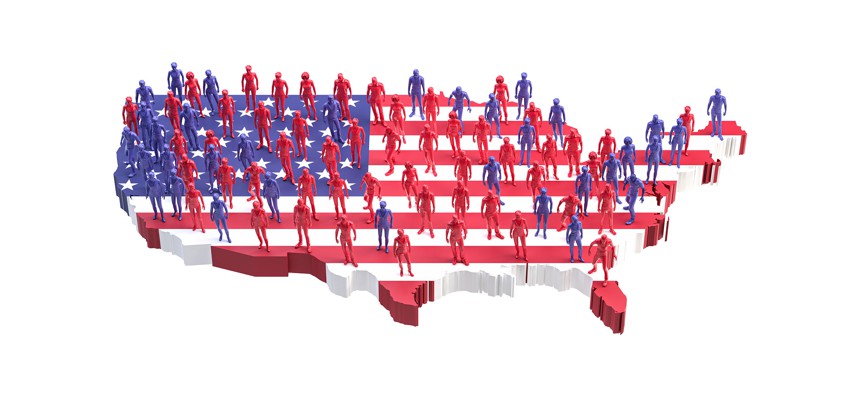
With a Democratic trifecta concentrating power in Harrisburg come January, one long-simmering issue is suddenly at the top of the legislative agenda: adding the commonwealth, with its 19 Electoral College votes, to the National Popular Vote Interstate Compact, a movement that ensures that the winner of a presidential popular vote reliably wins the election.
State Rep. Heather Boyd plans to introduce the legislation alongside her colleague, state Rep. Malcolm Kenyatta, on Dec. 1. “It was something that I wanted to pursue very early on,” ever since her election to the chamber in 2022, she told City & State. A similar, unsuccessful measure was promoted in 2022 by then-state Rep. Chris Rabb; more recently, Democratic state Sens. Maria Collett and Katie Muth floated a memorandum seeking cosponsors for a bill around a national popular vote.
Under the current system, which dates to a 1787 compromise with slaveholders, the Electoral College electors’ majority vote, a winner-take-all system within each state, determines who becomes president, not the actual vote tally of individual voters. This quirk, unique to the United States, has occasionally led to situations where the candidate with the most votes loses the election and the popular-vote loser ends up in the White House (see: 2000 and 2016).
States that sign on to the compact pledge to award their electoral votes to the popular vote winner, so when those states reach a critical mass — specifically, 270 votes’ worth – the popular vote will effectively prevail. The compact is effectively a workaround to a formal abolition of the Electoral College, which requires a constitutional amendment.
“The Electoral College is really rooted in an old system that was intended to try to balance the power of slave states, and we should not be working on that model anymore,” said Boyd, a former history professor. Instead, she said, Pennsylvania should be “acknowledging that every person should have the right to vote … one person, one vote.”
Eighteen states and the District of Columbia are currently signatories to the compact, totaling 222 electoral votes. The compact takes effect when participating states’ votes reach 270. With Democratic trifectas in numerous state legislatures come January, Pennsylvania’s participation could be part of a decisive effort to sideline the Electoral College, reliably produce winners that correspond to the popular will – and finally ensure that every American’s vote counts.
Pat Rosenstiel, a spokesperson for the National Popular Vote Campaign, can attest to the momentum. His phone has been ringing nonstop since the midterms, he said, with lawmakers, reporters and others interested in hearing about the group’s efforts to sign states on to the compact.
“Most American voters want an election for president where every voter in every state is politically relevant in the presidential election,” Rosenstiel, a Minnesota Republican, told City & State. “The National Popular Vote bill delivers on that promise by extending that principle of one person, one vote to presidential elections.
“I also think voters are tired of the current system where a battleground state court is more likely to determine the outcome of a presidential election than any single voter,” he added. A national popular vote “will ensure the permanent relevance of every voter in the state of Pennsylvania. It’ll force campaigns to campaign in all 50 states and the District of Columbia.”
The idea will likely have backing from Gov. Josh Shapiro, who is on record as an Electoral College skeptic and has supported a popular vote. “To me, the most important thing is that the will of the people is heard and respected. And I think popular vote is a way to do that,” he told “Pod Save America” host Jon Favreau at an event last weekend in Washington, D.C., adding that he would work with lawmakers “to figure out what the right mechanism is for moving forward on that.”
Incoming state Senate Majority Leader Maria Collett framed the popular vote initiative as part of the broader reforms Democrats view as their electoral mandate. “The Democratic state Senate majority gives us a real chance to move bipartisan election bills that sat in committee for years. The National Popular Vote Compact is part of that conversation,” she told City & State.
“Sen. Muth and I remain committed to ensuring that every vote in Pennsylvania carries the same importance as every vote in Texas and Montana and every single state in our union. The Constitution gives each state the power to decide how it appoints its electors and this compact uses that power.”
Boyd said she hopes for bipartisan support, though none of her Republican colleagues have yet supported the effort. But while Democrats are currently driving momentum, the shift to a popular vote is not essentially partisan, and Republicans have supported it in the past.
State Rep. Brad Roae, the Republican chair of the House State Government Committee, said he opposes the compact as a partisan gimmick. “Most Democratic-run states that join the compact would suddenly withdraw if their state picked a Democrat but the national popular vote went to a Republican,” he wrote in an email.
Constitutional scholar Kermit Roosevelt III, the David Berger Professor for the Administration of Justice at the University of Pennsylvania’s Carey Law School, said that recent elections have convinced Americans that the Electoral College favors Republicans. “That’s not always going to be the case, and it wasn’t always the case,” said Roosevelt. “John Kerry, I think, could have won the Electoral College while losing the popular vote if there’d been a pretty small vote shift in Ohio.
“And if that had happened … then it would have looked bipartisan, and I think maybe people would have done something then.”
Roosevelt said the popular vote appeals to Americans’ basic sense of fairness. “America has gotten more democratic over time, and I think the Electoral College is one thing that stands out,” he said. “And (we’re) trying to nudge it in a more democratic direction … One person’s vote shouldn't count for more than another person's.”
When Roosevelt last spoke with City & State in 2024, he opined that from a democratic point of view, there are no redeeming qualities to the Electoral College – no pros to balance the cons. Does he still feel that way? He responded without hesitation: “I do still feel that way.”