
Campaigns & Elections
Under the influencers: How social media is transforming campaign messaging
Candidates are going out of their way to include a group of online influencers that reaches key demographics.
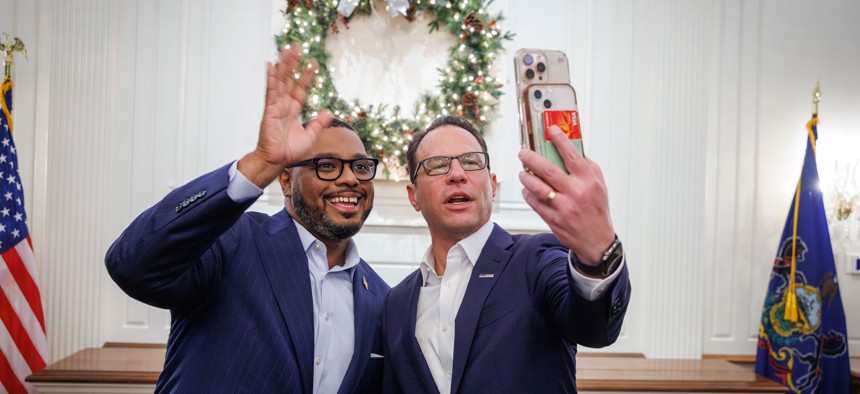
Gov. Josh Shapiro’s administration has embraced content creators to disseminate information. Commonwealth Media Services

It took Gov. Josh Shapiro’s reelection campaign just four words – “Credentialed Creator Access Only” – to show how different the coverage of and access to the 2026 gubernatorial race will be compared to the 2022 tilt, thanks to the continued rise of social media influencers in the political realm.
At the Jan. 8 event in Philadelphia announcing his bid for another term in office, in a prime location next to the stage where Shapiro would be speaking was a section reserved just for those aforementioned influencers, underscoring their importance to the campaign – and that media theorist Marshall McLuhan’s observation that “the medium is the message” is just as true today as when he first uttered it six decades ago.
Shapiro’s approach is far from unique: The continuing ascendance of social media has reshaped how parties and candidates look at content creators and so-called “influencers” – people with a strong online presence who’ve built credibility and an engaged audience.
Influencers’ audiences – which comprise key voting demographics – find such voices “authentic – they find their voices relatable, and therefore, give a certain degree of trust to their opinions and their voices," Chris Borick, director of the Muhlenberg College Institute of Public Opinion, told City & State. "Once that relationship is formed, it's not that far-fetched to think about: 'How are they now shaping you? How are they shaping your politics?"
Campaigns can leverage partnerships with influencers and content creators – along with repeated exposure – to cast a much wider net and ensure their message reaches the eyeballs of those who may not otherwise engage in politics.
Philadelphia-based content creators Lynette Cohen, who goes by Mayor Lyn on social media, and Tynecia Wilson each said that a politician who can reach new audiences by collaborating with content creators can reap dividends down the line.
“If you see six or seven people post the same thing, you’re like, ‘Wait, maybe I should pay attention,’” Cohen said.
“It puts more of a human touch to these people who felt like they were untouchable,” Wilson told City & State. “It’s making the political world feel so much more accessible to your everyday person, which is always how it should’ve been.”
Social shift
Research shows that the way the public seeks out information – and, in turn, how campaigns prioritize communications – has changed dramatically in recent years.
News consumption has changed drastically in the 21st century, with digital devices and social media platforms overtaking television and print media. According to Pew Research Center, a majority of adults – 56% – say they most often get their news from a smartphone, computer or tablet, while less than a third say they look to television for most of their news consumption.
The same study found that just 32% of adults say they often get their news from television, down from 40% in 2020, while 38% say they get it from Facebook; meanwhile, 55% of TikTok users get their news there.
Several sources agreed that with growing distrust in institutions, including mainstream media, more people are turning to personality-driven content that they find relatable.
“They find (creators’) voices authentic, they find their voices relatable, and therefore, give a certain degree of trust to their opinions,” Borick said. “Podcasters or online influencers form these relationships around (a lifestyle) that people are feeling or are interested in, then it branches out into more overtly political content.”
Borick said that outside of the headline-driving podcasts, campaigns are increasingly pursuing “hyper-localized” and “microtargeted” forms of engagement, based on online data, to reach a specific subset of the population.
That’s where influencers come in.
“These are folks, maybe we call them influencers, that have 20,000 followers. You think, ‘Why are they going there, instead of the (ones) with millions?’” Borick told City & State. “Part of that allows them to get right at who they want to get because of the algorithmic process. You know who’s there and how engaged they are.”
Both the Democratic and Republican national committees took this route in 2024, inviting content creators to conventions and featuring them as prime drivers of the vision the parties or candidates have for the country.
Even presidential administrations have gotten in on the act, including influencers in White House events previously attended solely by members of the mainstream media.
In 2024, President Joe Biden’s team brought in online personalities for a “Creator Economy Conference.” And President Donald Trump’s second administration has included right-wing social media personalities in press briefings and other events, tacitly recognizing that influencers are the source of news for many potential voters, especially younger demographics.
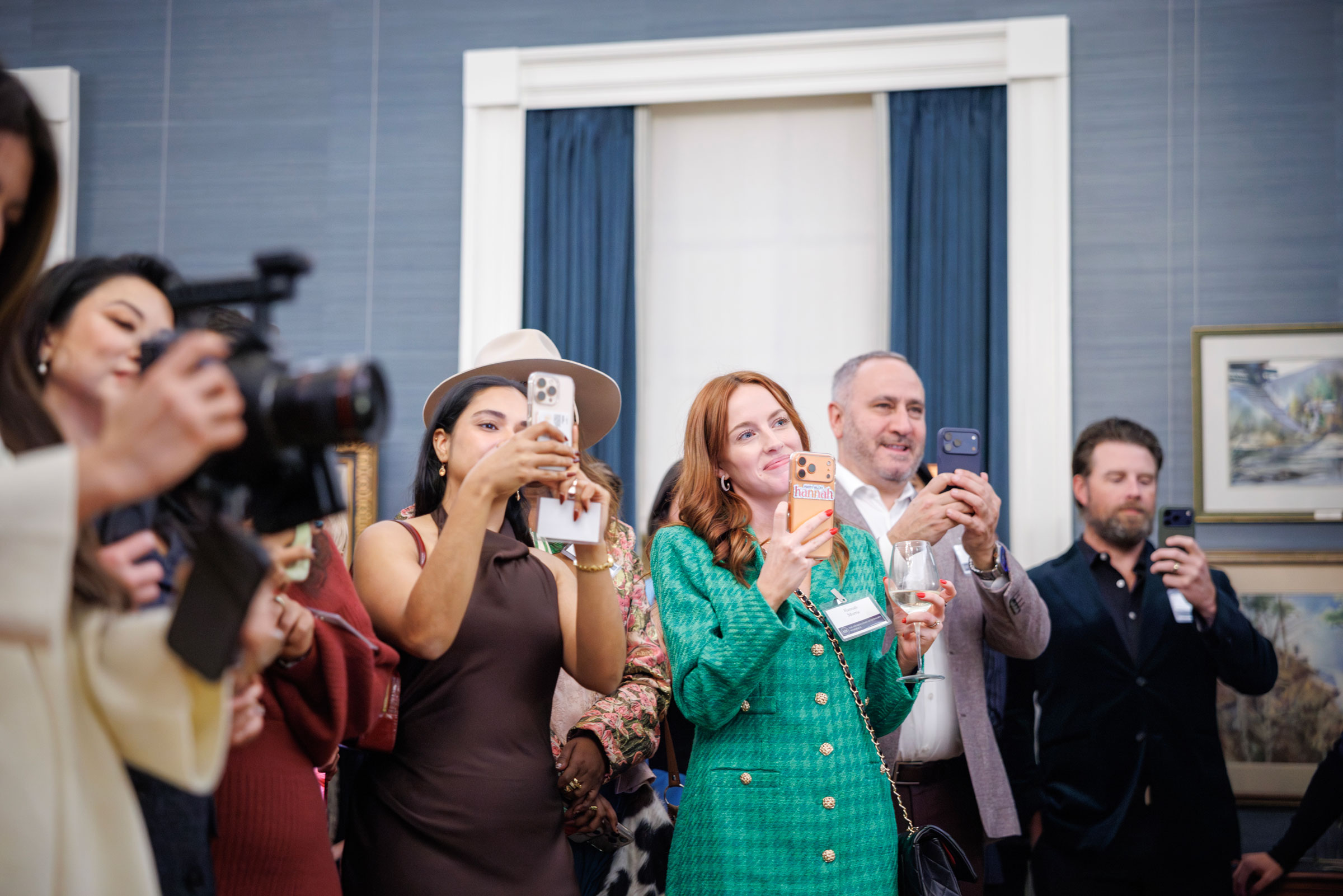
Shapiro has taken a similar approach when connecting with content creators. In December, he and Lt. Gov. Austin Davis hosted a “Digital Influencers Holiday Reception” at the Governor’s Mansion in Harrisburg. And on Jan. 10, less than 48 hours after announcing his reelection bid, Shapiro met with 10 content creators.
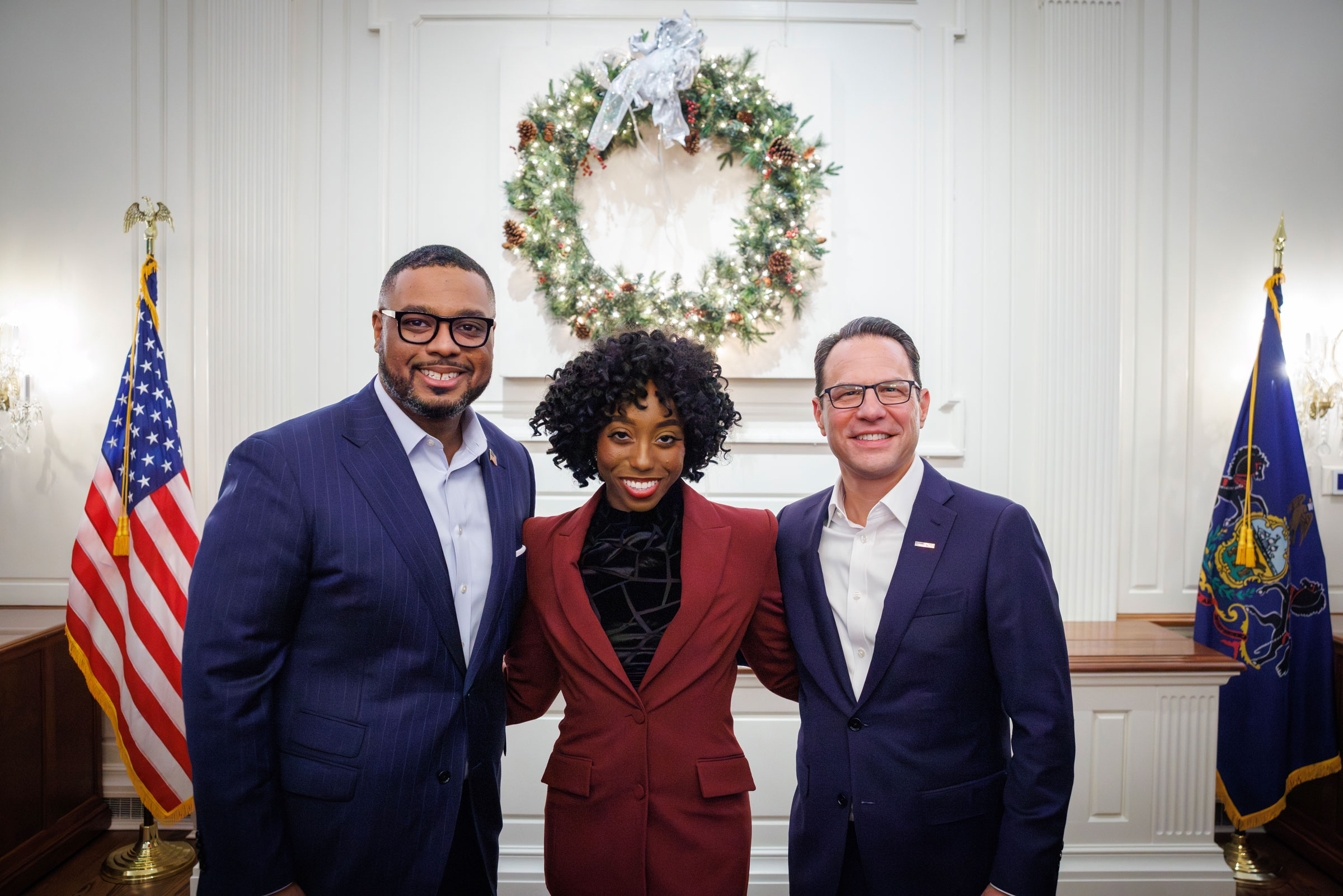
Wilson, who’s now been to the governor’s residence on a few occasions, said there were more than 100 influencers at the holiday reception with a large range of audiences.
“You have macro-influencers with hundreds of thousands of followers, and you have the nano-influencers that have just a few thousand,” Wilson said. “It’s a great equalizer to be in these spaces together,” she added, explaining that such interactions allow for an “understanding that you're not just trying to use our audience, but we're a part of your team. I think that is something that might be a little different from what other politicians are doing … it feels really authentic – it feels genuine.”
Commonwealth case studies
Several commonwealth-based content creators have become mainstays in the social media sphere.
Among them, Lindy Li may be in a class of her own.
Li, once a key member of the national Democratic establishment for both fundraising and messaging – and an erstwhile staunch supporter of Joe Biden – is now an “America First” commentator who has become a fixture in conservative media.
With more than 400,000 followers on X and another 80,000-plus followers on Instagram, Li is the rare influencer who has spoken out against both the “woke mob,” as she described Democratic spaces, and the “Make America Great Again” ecosystem.
“It’s definitely anger-tainment,” Li told City & State. “People don’t care so much about nuance because nuance is boring. They want you to go to the extremes, or they want you to be deeply partisan.”
Li has more recently been in the crosshairs of Trump loyalists after she criticized the administration’s foreign policy moves in Israel and Venezuela.
“The gatekeepers used to be (networks like) CBS, NBC and ABC. Now every little influencer has their own fiefdom,” Li said, noting that the MAGA faithful will do anything to back the president.
One such domain is the election integrity space, an area where Scott Presler, a conservative grassroots activist, has taken a leading role.
Presler, who said he reached more than a billion impressions across his social media accounts in 2025, has used his profile to challenge election laws and promote voter registration at the grassroots level.
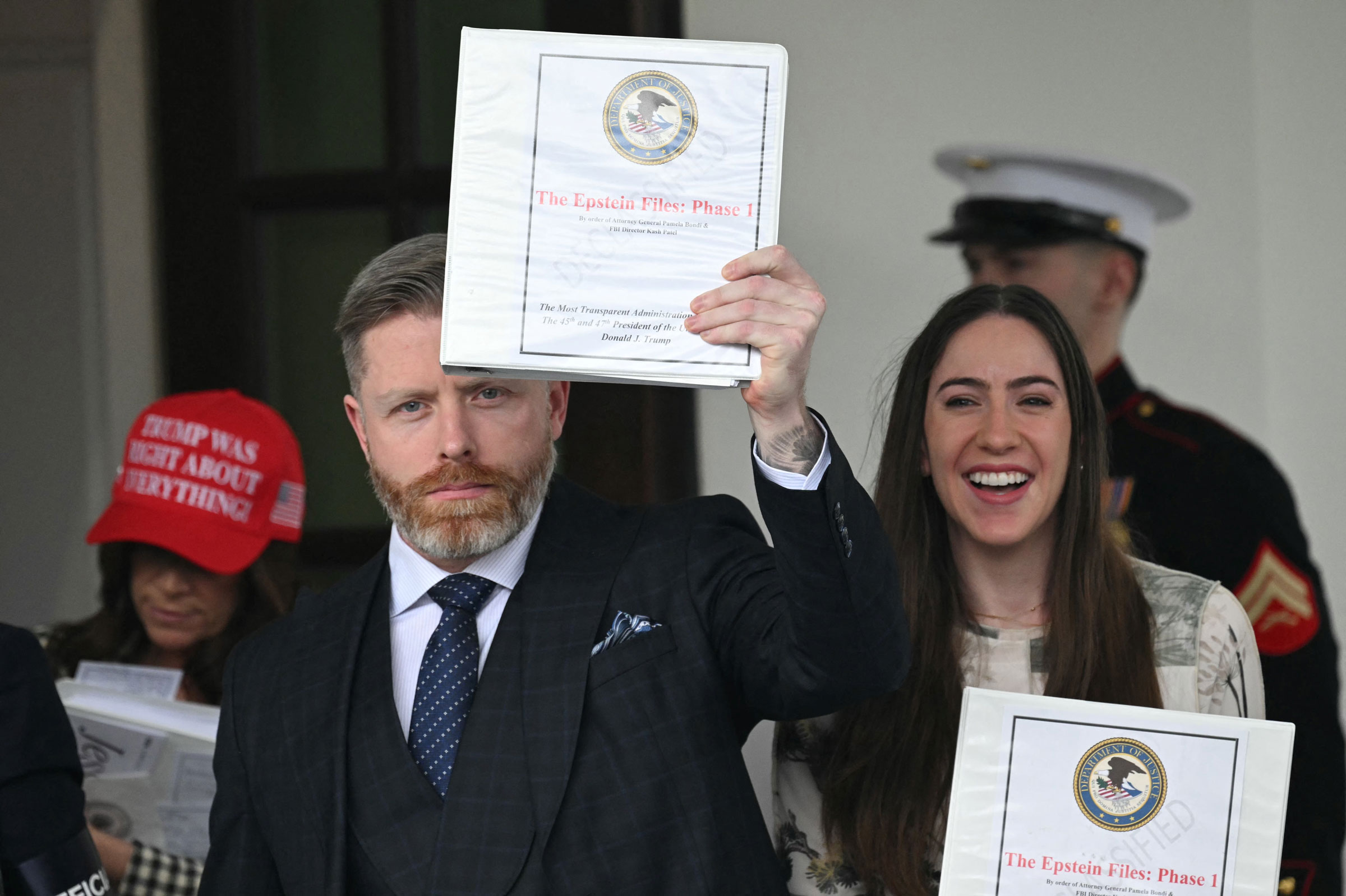
“Social media is not just a place to share information … it’s a battleground to set the stage for things that we want,” Presler told City & State, noting his “all-of-the-above approach” when it comes to posting on a wide range of platforms. “We’re using it as a pressurizing tool.”
Presler has traveled across the country doing media hits and voter registration events, and hasn’t stopped in 2026. “Truth is the name of the game in politics,” he affirmed, explaining that showing up in a relatable way goes a long way toward building a loyal following.
“We focused on Beaver (County) like a laser beam, and through dedicated precision, over six months, we flipped Beaver from blue to red” in 2024, Presler said. Then in 2025, he added, “we focused on Bucks County, and we flipped Bucks County from blue to red. Now there are 10,000 more registered Republicans in Bucks County than Democrats. I’m not taking the credit for that. That was grassroots – that was a lot of people coming together as a family to do that.”
“Trust is the only commodity you cannot buy,” Presler added. “Therefore, having those content creators that have a relationship, have a story and have a persona with their audience, that could be the difference” for a campaign.
Governor’s groundwork
A leading Democratic voice online, Shapiro and his social media machine are fueled by a staff that has nearly doubled in size since his predecessor, Gov. Tom Wolf, left office. Counting his communications, press, web and social media staffers, 21 employees are dedicated to promoting Shapiro’s image, touting his achievements and communicating his views as governor.
His reelection campaign will likely draw even more attention to Pennsylvania, a bellwether state for both the 2026 midterms and the 2028 presidential election. Not only is Shapiro on a shortlist of potential Democratic presidential candidates, but he’s also gone across the country to tout his – and his party’s – successes on television shows and podcasts. In 2025 alone, Shapiro appeared on more than two dozen podcasts across politics, sports, and pop culture to expand his digital presence and online engagement.
“It’s not surprising that someone as astute and effective in politics as Josh Shapiro would do that,” Borick said, noting that candidates embracing content creators has transcended ideology. “It shocks me not at all that he’d be well aware that (influencers) are the avenues and outlets that are important in contemporary politics.”
Shapiro’s camp has said their focus is on reaching Pennsylvanians where they’re at – and that politicians can no longer rely just on press and traditional constituent affairs.
Cohen and Wilson were among the dozens of online personalities who were invited to Shapiro’s reelection rally.
“I like that our leaders are visible (and) I can get in touch with them,” Cohen said. “Politicians need to tap into influencers now because it allows you to reach an audience that might be disengaged from watching television ads.”
Cohen, who said she started attending political rallies last year, told City & State her advocacy in local elections has already created tangible results. She cited a Working Families Party event and the judicial retention elections as leading examples of her content spreading awareness, adding that she received replies that her message was making an impact.
“They’ve credited me with helping a lot of people register early (and) a few people reached out to me on Instagram (saying they’ll vote),” Cohen said. “We’re trying to get (campaigns) to redistribute their dollars (to) influencers, instead of running crazy ads, to get more direct influence on people."
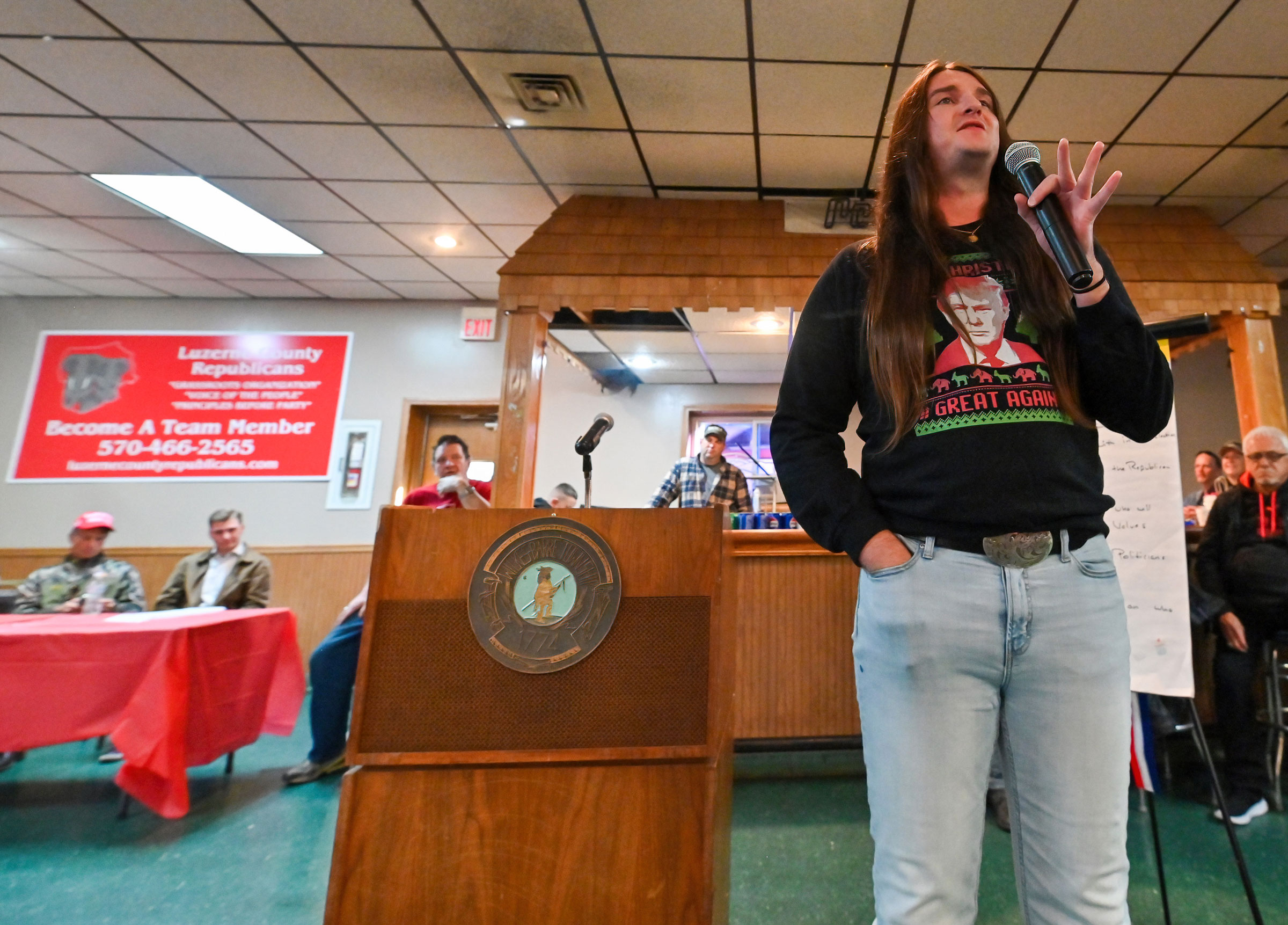
Several sources, both left- and right-leaning, commended Shapiro’s approach to content creation, even if they don’t align with him ideologically. His media appearances have enabled him to share his message in alternative channels.
“I think it’s smart, and you won’t hear me saying a lot of good things about Gov. Shapiro,” Presler added. “But look at what President Trump has done, inviting content creators to the White House, inviting them to the Social Media Summit – that’s just called being smart (and) leveraging social media to get your message to the masses.”
Wilson added that collaboration with content creators allows for the political message to be broadcast in “a very digestible way.”
“We are just like your everyday people that do make videos that are just like you,” Wilson told City & State. “I think it adds to the narrative that politicians are people, and I don't think everyone has seen them that way before now.”
Social networking
Although the opportunities are aplenty, the integrity of influencers – and the impact that they truly have on elections – remains a question.
“Creators are held to basically no standard … Mainstream media (has) a slew of operating procedures to adhere to,” Li said. “Politicians know that influencers may be more malleable.”
The new “gatekeepers,” as Li described them, may not need to be held accountable for the information they spread, whether it’s distorted or not. Above all else, she said, political actors will be drawn to them because of the audience and reach they carry.
In cases where there is actual news being broken, it will be up to the consumer to evaluate whether to take it with a grain of salt – or embrace it as gospel.
“It’s also a matter of access. They want to get their White House invitations,” Li added. “I’m in that world. The incentives are misaligned. It’s all about access to power and money; there isn’t anything altruistic about it.”
Borick added that content creators can easily build a following by being emotional and relatable, but how they shape people’s politics from there remains unclear.
“Once that relationship is formed … How are they now shaping you? How are they shaping your politics? How are they able to exert influence over your perceptions?” said Borick.
In many cases, the issues of polarization and echo chambers come into play. Politicians will seek out these content creators to broaden their reach – and hopefully work their way into social feeds they’d otherwise be kept out of due to algorithms.
“With the political climate that we’re in, I feel like everyone feels like they want to be able to do something. And if your lane is creating, this could be your way to actively help and get people involved,” Cohen added. “I just turned 30 this year, so I’m trying to tell all my friends, ‘We’re the new adults now, and we have to participate ... It’s up to us at the end of the day.’”
“You have to meet people where they are,” Wilson said. “Looking forward, I can see policy and social media really connecting and overlapping. I can see more and more political figures tapping into the content creator and influencer network.”
She added that, even more crucially, the collaborators need to know they are truly a part of the political process.
“The thing about influencers and content creators today is, we'll give (it to) you real,” Wilson said. “I hope that politicians see value in this.”
Li touched on the importance of value as well, noting that influence has become the coin of the realm. “Influence is no longer measured in wealth but in reach,” she explained. “Influencers – doubling as lobbyists and palace courtiers – now rule the political kingdom.”