

Politics
Capitol offenders: Efforts ramp up to bar pols from stock trading
Members of Congress have long profited from being able to trade on information the public doesn’t have access to – but a coalition of stakeholders may be on the verge of evening the playing field.

iQoncept/Getty Images

The age-old adage of “rules for thee, not for me” continues to ring true in the halls of Congress, where members trading stocks with the benefit of non-public information has long been a feature – or a bug.
While corporations have entire divisions dedicated to ensuring no one can use their position for an unfair advantage, good government advocates from across the political spectrum have made little to no progress in stopping stock trading by members of Congress, who can use potentially market-moving information to trade stock and reap a profit or avoid a loss – despite it being a widely unpopular practice among the general public.
A 2025 study by researchers at the University of California at San Diego found more than 86% of the voting public would support banning members of Congress from trading stocks, and that the practice has harmed public trust in the government. A previous study, a 2023 survey by the Program for Public Consultation at the University of Maryland, found that the same figure – 86% – of Americans, both Republican and Democrat, believe members of Congress should be prohibited from trading stocks.
“Insider trading is not allowed anywhere else, and (in Congress) you are constantly working on legislation that could impact companies or markets,” U.S. Rep. Ryan Mackenzie told City & State. “We want to figure out a way to stop people from profiting off that information.”
So: If there’s broad public support – and bipartisan proposals – on the issue, why hasn’t any of the legislation seen movement?
And at a time when trust in institutions – including Congress – continues to dwindle, stakeholders continue to hope and plan for forward progress on eliminating such trades on Capitol Hill.
“A lot of members of Congress across party lines agree with (the concept) and don’t look at it as a way to enrich themselves, but you need a lot of support to get anything passed in Congress,” Philip Hensley-Robin, executive director of Common Cause Pennsylvania, a nonpartisan organization that advocates for greater transparency from public bodies, told City & State. “Some members of Congress, unfortunately, are profiting handsomely off of it. There is going to be resistance from those folks who benefit from it.”
Recent review
Members of Congress taking advantage of inside information to enrich themselves has been going on since the earliest days of the republic – in 1789, many of them scooped up Revolutionary War bonds for pennies on the dollar just before Treasury Secretary Alexander Hamilton announced that the bonds would be redeemed for full value. Among more recent high-profile examples of the practice: members of Congress on both sides of the aisle made beneficial stock trades during the early days of the COVID-19 pandemic, using information from nonpublic briefings to get ahead of the expected economic downturn and subsequent upswing.
Pennsylvania’s congressional delegation is no different than other states when it comes to individual stock trading, but a couple of congressmembers in particular have stood out for their questionable market moves.
U.S. Rep. Mike Kelly, a Republican from the 16th district in the northwest corner of Pennsylvania, was under investigation for potentially violating Congress’s Code of Official Conduct with his spouse’s stock trades. Last year, the House Ethics Committee “found substantial evidence” that Kelly violated rules when his wife profited off stock trades for a company he was focusing on in Washington.
The case dates back to 2020, when steel manufacturer Cleveland-Cliffs said it might have to close its Butler location, in Kelly’s district, and lay off employees if the Trump administration didn’t implement tariffs to protect the production of grain-oriented electrical steel. A day after the Commerce Department told Cleveland-Cliffs it would begin looking into the issue, Kelly’s wife, Victoria, bought 5,000 shares of the company’s stock. Kelly said in an interview that his wife “would’ve heard any of my conversations” during that time as he worked from home after testing positive for COVID-19.
The congressional report, while clearing Kelly of intentionally causing his wife to trade based on insider information, determined that he breached the code of conduct “by failing to meet his duty of candor” when doing work related to the steel manufacturer.
As a result, the House Ethics Committee ordered Kelly and his wife to divest of their investments in Cleveland-Cliffs, despite already profiting from previous trades.
Kelly declined to provide comment to City & State.
More recently, freshman lawmaker Rob Bresnahan has faced increased scrutiny for the timing and frequency of his stock trades.
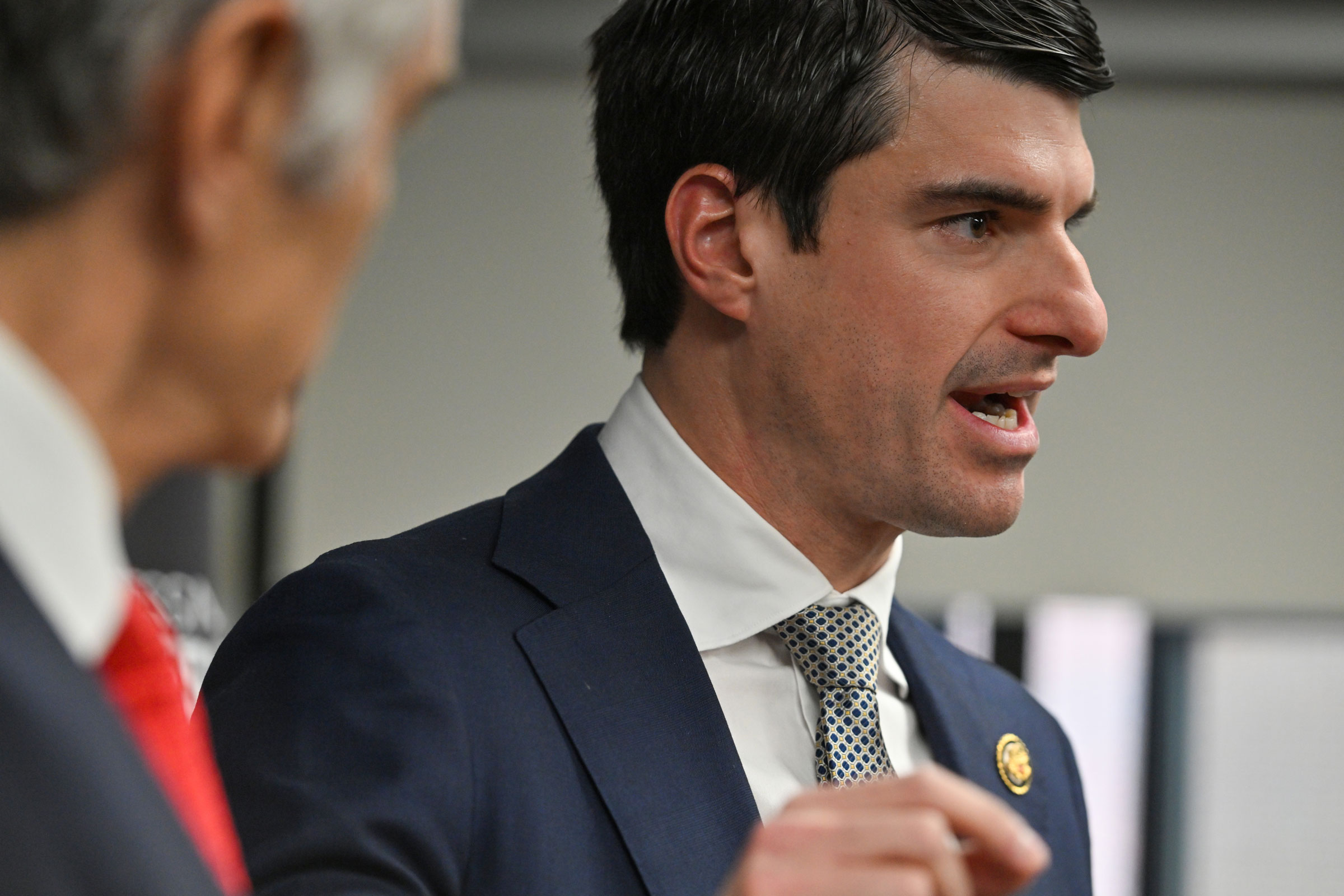
Late last year, Bresnahan, a Republican from the 8th district in Northeast Pennsylvania, found himself under scrutiny after selling stock in several Medicaid providers before voting for a spending plan that included massive cuts for a group of companies that manage nearly half of all Medicaid enrollees in the country.
Bresnahan has already made a name for himself as one of the most prolific stock traders in Congress, but the moves, made in May 2025, brought even more attention to his transaction history – particularly since he campaigned on seeking to ban congressional stock trading.
He reportedly offloaded nearly $130,000 worth of stock in companies that oversee Medicaid managed care organizations – seven days before the House voted on a funding plan to slash funding for Medicaid by nearly $1 trillion over the next decade. But a week before the move, on May 6, Bresnahan introduced legislation to ban congressional stock trading and announced he was moving his holdings into a blind trust.
Bresnahan, who also declined to comment for the story, said in a statement to NBC in November 2025 that he “never instructed my financial advisors on what to buy, sell, or hold.”
“It is no secret that I built a successful career before serving, and I am beholden to no lobbyist or special interest,” he said.
Hensley-Robin, who expressed skepticism about the timing of the trades, said that “there are some sacrifices that are entailed in public service,” which should include restrictions on stock trading.
“The fact that (Kelly knew the) company and made a lot of money off of that transaction – that’s exactly the kind of thing that should be illegal, and it’s frankly outrageous that it’s not,” he told City & State. “(Bresnahan) is another example … if that’s not insider trading, then I don’t know what is.”
Pennsylvania portfolios
The recent push for greater transparency comes years after Congress passed its initial approach to banning stock trading – the Stop Trading on Congressional Knowledge Act of 2012 – now considered to be ineffective.
The bill, which prohibited using nonpublic information for profit and mandates 30-day reporting of transactions, hasn’t been the accountability measure many had hoped for, due to a lack of enforcement, weak penalties for late disclosures and no prosecutions for alleged insider trading violations.
According to Capitol Trades, a website dedicated to tracking lawmakers’ stock activity, several members of the state’s congressional delegation have made trades while in office.

Two Pennsylvania congresspeople in particular stand out fro their trading activity: Bresnahan and Republican Sen. Dave McCormick.
Within the last year, according to Capitol Trades, the commonwealth’s senators, John Fetterman and McCormick have made 19 trades and 176 trades, respectively, with McCormick’s transactions totaling more than $23.7 million.
Among those in the House, Bresnahan has made 519 trades – totaling nearly $7 million – while Kelly has made 14 trades, Democrat Dwight Evans has made 21 trades, Republican Dan Meuser has made nine trades and Republican Guy Reschenthaler has made three trades.
Bresnahan, who’s primarily traded in the IT and healthcare sectors, sold roughly $1.25 million in stocks in March 2025 alone; McCormick, who’s gone into cryptocurrency and municipal bonds, sold about $3 million in stocks in January 2025.
Multiple members, including Bresnahan, have shown support for cracking down on the practice, but two fellow Republicans – Mackenzie and Brian Fitzpatrick, who represents the 1st district in Bucks County – remain among those pushing for movement on the legislative front.
In an interview with City & State, Mackenzie said he’s supportive of all the approaches put forward related to restricting stock trading. He added that, insider trading or not, the perception of potential conflict of interest is enough of a reason to establish greater transparency.
“It doesn’t sit well with people,” Mackenzie told City & State. “It also says something (in) that it doesn’t pass the smell test; there’s something wrong or broken in the system.”
Stock options
The legislative issue boils down to three different approaches: limiting investments to exchange-traded funds, known as ETFs, or mutual funds; placing investments in blind trusts; and prohibiting the purchase of new stocks while allowing existing holdings.
In January, the House Administration Committee advanced a GOP-backed bill that would allow lawmakers, their spouses, and dependent children to hold on to stocks they already own but prevent them from buying new ones and require a seven-day notice before making sales.
Democrats, who’ve pushed back on the proposal, have said the bill isn’t comprehensive enough and shouldn’t include an exemption for the president and vice president.
Congressional Democrats have called for the “loopholes” included in the legislation to be closed, arguing that other proposals, including the Restore Trust in Congress Act, would establish a “real ban on Members of Congress trading stocks without loopholes.”
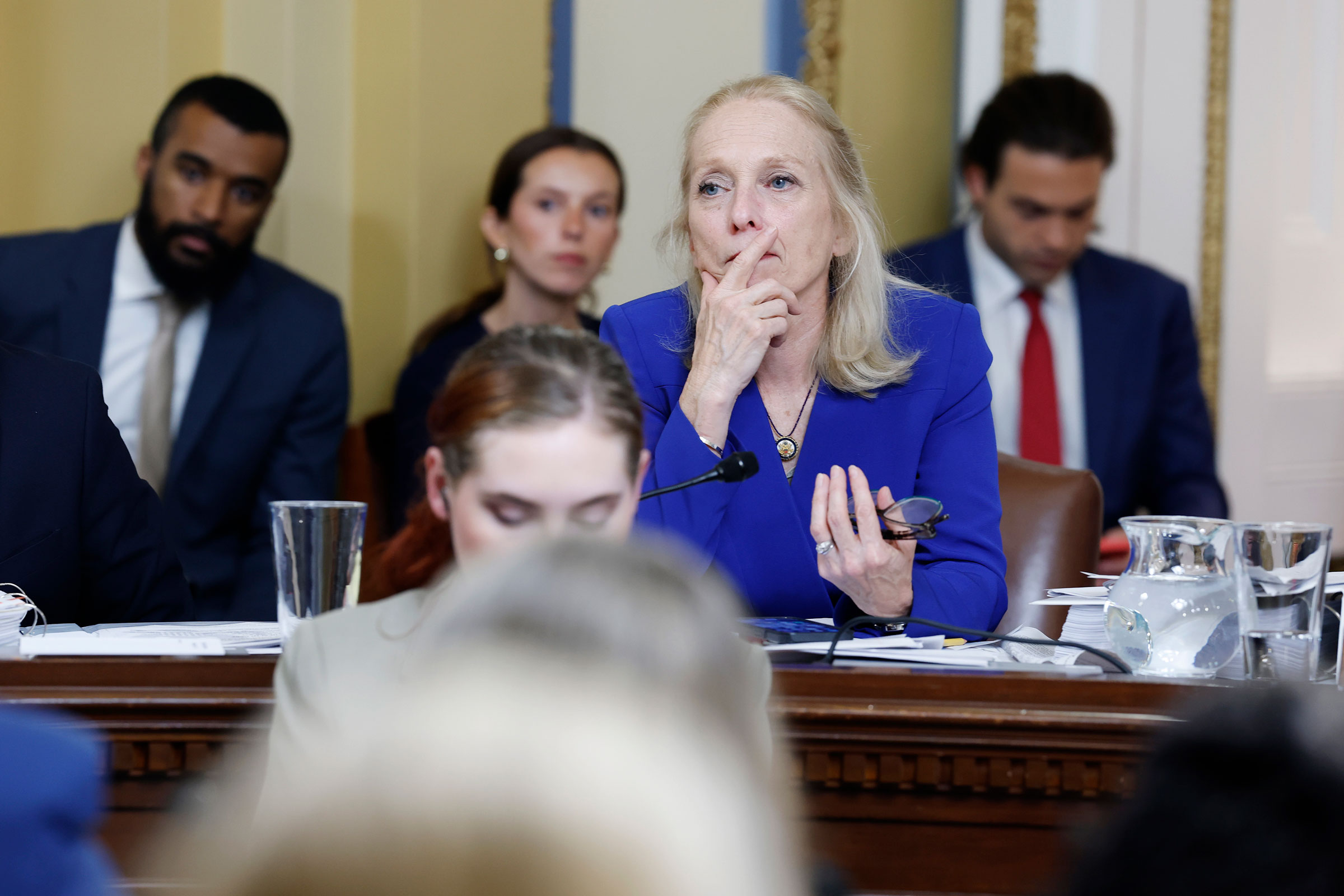
“The American people deserve better than weak legislation like Republicans’ toothless and misleading stock trading bill that fails to meet even those most basic standards for meaningful reform,” said U.S. Rep. Mary Gay Scanlon, a Democrat representing the 5th district in Southeastern Pennsylvania, in a statement to City & State. “While members can’t buy stocks under Republicans’ bill, they can continue to trade a substantial number of individual stocks (via investment vehicles like exchange-traded funds and blind trusts) – the fundamental problem the American people want Congress to address. Their bill also excludes the President and Vice President …At a time when working Pennsylvanian families are getting crushed by rising costs, anything short of slamming the door on loopholes that allow politicians and their families to benefit financially while in power is unacceptable. The American people demand it, and trust in our government depends on it.”
Hensley-Robin said that allowing access to exchange-traded funds, which typically provide passive investments pegged to the performance of a particular index or sector, is essentially a circumvention on its own.
“That bill is just totally worthless, because you can just buy an ETF instead of buying Tesla stock,” explaining how easy it is to just “buy an ETF that tracks Tesla stock” as a workaround.
Democrats continue to look toward another bipartisan proposal, the Restore Trust in Congress Act, which would prohibit the purchase, sale or holding of covered investments, defined as a “security, commodity, a future, or any comparable economic interest acquired through synthetic means.” The legislation would give lawmakers 180 days to divest themselves of their current individual stock holdings and allow incoming members 90 days to do the same after being sworn in.
As of February, the bill had 128 cosponsors in the House, including a bipartisan group of seven from Pennsylvania: Fitzpatrick, Bresnahan, Scanlon, Mackenzie, Scott Perry, Chris Deluzio and Summer Lee. The bill was referred to the House Committee on House Administration in September 2025 but hasn’t seen any movement since.
Mackenzie, who said he doesn’t want the “perfect to be the enemy of the good” in legislative debate, remains hopeful that House leadership will put its money where its mouth is when it comes to insider trading.
“I think this is one of the instances where everybody, or 80% of people, recognize the problem, and we can all identify the problem, and so then it’s really getting to an agreed-on solution,” Mackenzie told City & State. “I think there is an interest from (House Speaker Mike) Johnson and others to move something. Even though we all agree on the problem, identifying the solution that will get the 218 votes in the House, the 60 votes over in the Senate and we can get signed into law, is what we’re after.”
Hensley-Robin, on the other hand, pushed back on that notion, saying there should be “few narrow exceptions” included in any potential legislation.
“I don’t view it as a ‘perfect being the enemy of the good’ sort of a situation, because it’s not even really very good,” he said. “The Restore Trust in Congress Act is the one that has had clear bipartisan support for a while now and would actually address this crisis in public trust.”
There is currently nothing on the congressional calendar to advance any legislation on the issue.