

News & Politics
Addition by subtraction: Philly schools’ controversial closure plan has many ways to fail
The School District of Philadelphia has a $3 billion “right-sizing” plan to improve hundreds of city schools by closing 17 of them – but not everyone is buying it.
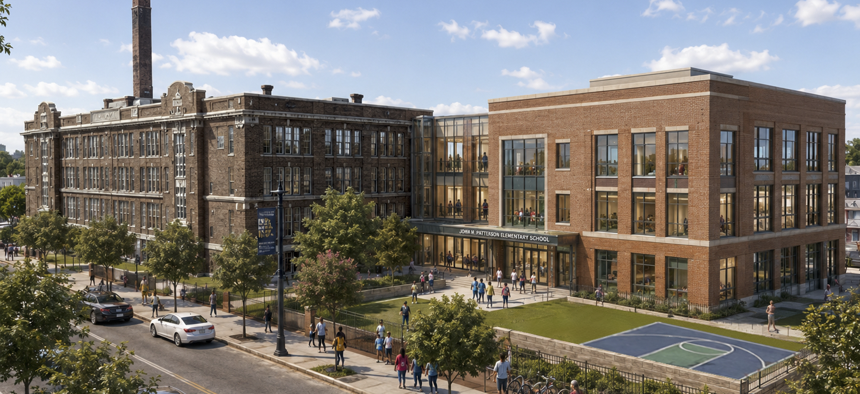
A conceptual rendering of a new and improved John M. Patterson Elementary School. School District of Philadelphia

Jessica Thompson can measure her family’s experience with the Laura Wheeler Waring School in numbers: Three children, a dozen years as a Waring parent, and nine years left until the last of her brood graduates from the School District of Philadelphia.
In March, the district added a new number for Thompson and other stakeholders to consider: 2031. That’s the year that Waring will become one of 17 of the district’s 249 schools to close as part of a $3 billion, 10-year plan to “right-size” operations through a thorough overhaul of its facilities across the city. The school’s student population will be absorbed by the Bache-Martin School, a roughly 10-minute walk away, while the school building itself will be renovated into the new home of the Masterman Middle School.
For Thompson, the news was “heartbreaking,” she recalled. “I just knew that my son, who was in the fifth grade, would be the last class graduating from Waring.” Yes, the district “had some open houses for parents to kind of come and express their concerns. But I felt like at that point, it was kind of counterproductive,” she added. “They had already finalized the decision. It was like a forum for us to complain about something that we couldn't change.”
For his part, SDP Superintendent Tony Watlington Sr. has cited some numbers of his own: 70,000 empty seats and counting. The state’s largest school district currently educates just shy of 200,000 students, 20,000 fewer than a decade ago – and it does so in buildings that are largely aging and in need of repair.
Philadelphia is not alone in dealing with a shrinking student population: A recent article in the Washington Post noted that school closures nationwide have spiked by 35% over the past four years, driven by everything from the end of COVID-19 relief funding to declining birthrates, the federal immigration crackdown and a trend of parents opting out of public schools.
The School District of Philadelphia’s plan, which confronts a $300 million structural deficit, initially called for the elimination of 148 teaching jobs and 119 staff positions – layoffs that, in response to a widespread outcry, were reversed shortly afterward. The current plan includes badly needed upgrades to an additional 169 schools, many of which are housed in deteriorating buildings from the last century that fail to meet modern standards for safety, temperature control and student recreation.
Despite these rationales, educators and families are concerned by the short- and long-term implications of the plan for their home schools and communities – and struggling to understand why and how the changes are being implemented.
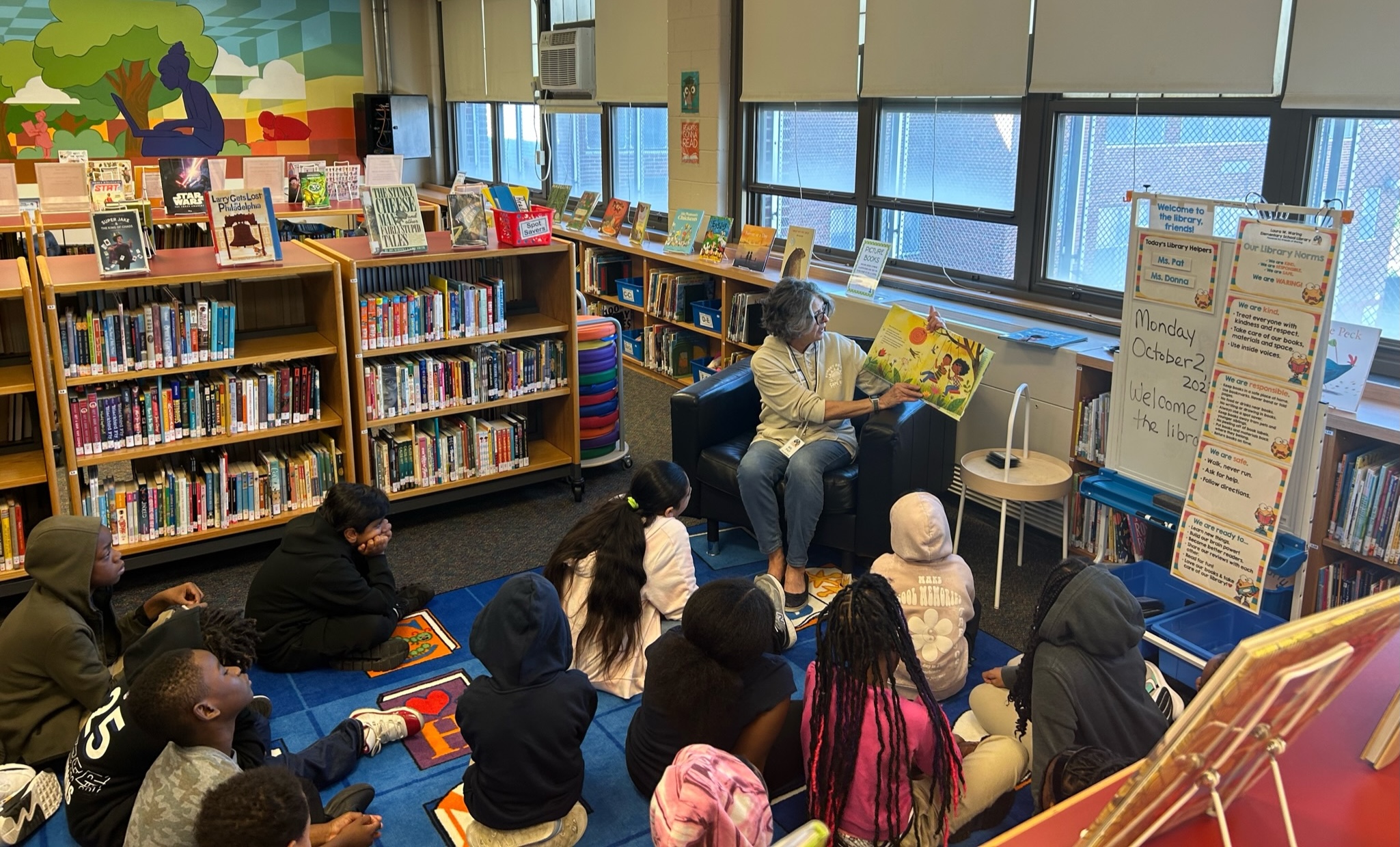
For Donna Perkins, who chairs the Friends of Waring – a 501(c)3 that supports the Waring School and runs its library – the inclusion of the 70-year-old institution on the closure list came as a blow.
“It was surprising, but not shocking,” she said. “There had been so much work happening on the building – upgrades for the electrical system, air conditioning units – and, particularly, the superintendent and his team had just visited us the week before (the announcement) … Lots of photo ops, lots of, ‘You're doing a great job here’ – all those nice things.
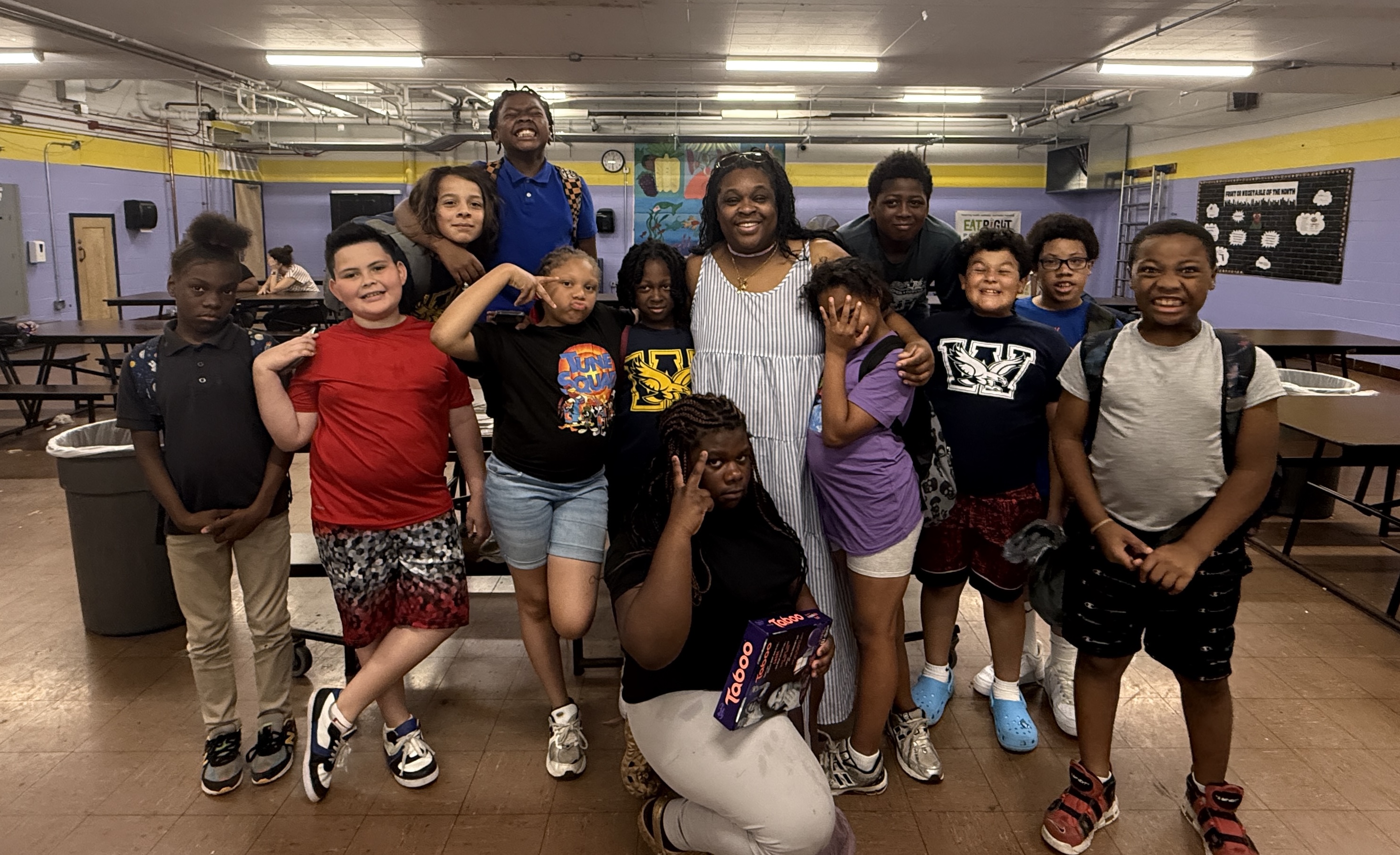
“We’re a small school, but you know, it’s an amazing staff,” Perkins added. “There's very little turnover with the teachers. Principal Amanda Strain is a great leader. So, yeah, I would say I was surprised.”
Retrenching redux
For many stakeholders, memories are still fresh of the district’s last major consolidation after the 2012-2013 school year, when two dozen schools were shut down and five others were relocated or merged. At the time, the district, facing a $300 million budget deficit, also laid off nearly 3,800 employees – including 676 teachers.
One of those teachers, Ashante Palmer, was hired back at Waring, where she has been for the past 11 years. Palmer, who teaches fourth grade – and who has taught all three of Thompson’s children – has reservations about how this latest retrenchment plan is going to work for her students and those at Masterman and Bache-Martin.
The district’s goal “is to move Masterman into our school – that's at least 700 Masterman students. Our building is only designed to hold about 420,” she explained. Palmer added that for families of the 900 children displaced from Waring and Morris Elementary, another school slated to close, details have been scarce around the proposed remodeling of Bache-Martin to accommodate a nearly 1,000-pupil expansion.
“This is going to lead to more crowded classrooms … The logistics and the data don't make sense about why we need to close,” she reflected. “My students are just as deserving of a home that they already have, instead of having to move to get that ‘better education.’”
Finances remain one of the biggest questions this time around, with stakeholders pointing out that funding for the district’s ambitious $3 billion overhaul remains uncertain. The district will allocate $1 billion of its capital budget over the next decade to begin the process of closures, mergers and renovations – but where the remaining $2 billion would come from is unclear.
The district says it has a 16-year, $1.85 billion backup plan that involves borrowing, rather than resorting to outside funding. But “there is no alternative plan,” SDP spokesperson Monique Braxton told Axios, contradicting the district’s own website.
Chief among the plan’s critics is Arthur Steinberg, president of the Philadelphia Federation of Teachers, who argues that both the district’s decisions on school closures and how the process will work seem “arbitrary.” He observed that while the district has taken pains to emphasize community engagement this time around, that effort has been more superficial than substantive.
“Their public position on how they intended to engage people was much clearer (this year) than it was then,” Steinberg said. “They made no bones about not engaging the community last time, so the district put together what they claimed was a transparent process this time. It really was not … They will dazzle you with statistics and all kinds of meetings they had, but you have to dig down and see who attended and what they actually did with the input they got at those meetings.”
Palmer, for one, would like to see her union be more aggressive. “I feel like they've been a little quiet. I just wish that they would do more for these schools that are closing, especially because some schools were able to get off the list,” she said. “I want to hear more about how you're working with the district to get protections in place for us, or how to keep seniority if we do want to move. Are you putting other plans in place … that shows that these schools can stay open and they can still meet their goals? I would just like to hear more from them.”

Transition team
The point person in charge of easing anxieties this time around is Assistant Superintendent Shakeera Warthen-Canty, formerly assistant superintendent of school operations and management, who’s been tasked with leading the transition office’s implementation of the $3 billion plan.
“A large part of the transition office is to be able to be a place, a one-stop shop, for community members – from families to students to community partners to our staff members that have questions about the process – about different services or the impact to their particular school communities,” Warthen-Canty told City & State.
Warthen-Canty, along with four other employees, will coordinate with district departments to ensure that everything from student and teacher placement to facility and safety upgrades is done hand in hand with an individual school’s community.
She explained that her office will focus during the upcoming academic year on working with the individual schools that will be impacted, especially those affected beginning with the 2027-2028 year.
“We have a number of schools that, at the end of this 2026-2027 year, will close, and we have another handful that will begin a phaseout, so in this year we will be standing up committees in those schools in terms of making so that we are ready for school selection,” Warthen-Canty told City & State.
Much of the transition office’s work, Warthen-Canty said, will center on modernization projects that will address everything from handicapped accessibility to classroom upgrades. The district hopes those upgrades will bolster its academic momentum: According to Chalkbeat Philadelphia, in 2025, Philadelphia students’ average scores on state math tests reached their highest rate in nine years. However, only about one-quarter of students in grades 3 through 8 achieved proficient scores, well below the district’s goal of greater-than-50% math proficiency by August 2030.
“This is an investment in buildings, but it's also an investment in improving academic outcomes and opportunities for our students,” Warthen-Canty said. “How do we make sure that when we invest in school and we create this new facility, that we're also making sure that we're offering increased academic programming? … It's not just about the physical space; it's also about the experience and the opportunity that it provides for our students.”
For Palmer, the very setup of the transition office underscores the district’s lack of commitment to the process. “How are four staffers going to accommodate 17 school closures – and not just school closures, but buildings where they want to co-locate programs?” she asked. “How are you going to give them the treatment they deserve with such little staff?”
Facilities frenzy
The school closure saga and long-awaited facilities plan were months in the making.
The district arguably started off on the wrong foot with last spring’s contentious school board meetings, which included shouting matches between the district board and members of Philadelphia City Council, who have been frustrated by the district’s lack of transparency throughout the process.
Emotions ran so high that councilmembers, several of whom pushed back on closures within their respective councilmanic districts, disrupted the board meeting discussion of the facilities plan, prompting the board to hold a closed-door session, where it completed its initial vote via video call.
The school board ultimately approved the facilities master plan, which claims to prevent teacher job losses in the immediate future – a major sticking point for PFT and educators throughout the process.
The district and city officials agreed to hold off on 340 school-based position cuts through a one-time $48 million allocation from City Council. That deal, however, would not reverse the 220 substitute teacher cuts or the 130 central office position cuts the district adopted as part of its facilities plan.
District leaders say closing schools will allow them to bolster both academics and extracurricular opportunities in the schools that stay open.
They have promised that if the plan goes through, the district will be able to provide access to algebra for all eighth-graders, offer more pre-K options, expand career and technical education programs, and add Advanced Placement courses at neighborhood high schools. The plan, officials say, will also eliminate all buildings in poor condition and boost building utilization, which stands at 65% systemwide.
Payment plans
District leaders are keen to dispel concerns that any school, student or teacher will be left behind.
Warthen-Canty said that her office will be there to give everyone a voice – not only in transitions, but also on design elements for schools undergoing modernization. “These are very personal things for school communities,” Warthen-Canty added. “The reality is, we do have some neighborhoods that are over-enrolled, and we have some that are under-enrolled. But how can we get to a place where all of our students are in buildings that are rated as satisfactory, and all of our students are in buildings that can offer them various programs?”
With the current proposal, she said, “ultimately, students and staff and families will have a better facility that meets the needs of a growing population.”
Steinberg worries that key elements of the district’s plan could be put on hold if some or all of the yet-to-be-determined $2 billion in future funding does not materialize. If that happens, he said, all of the upheaval endured by those affected by an incomplete process would be for naught.
“My great anxiety and fear is that the schools are going to close, and they're phased in, so they're not going to close for a few years down the road,” Steinberg said. “And then all of a sudden, (the district is) going to come back and say, “‘Oh, we didn't get the money. We have to stop the plan. We have to stop the renovations … You'll have these schools closed, neighborhoods devastated – and you won't get the modernized schools, which is the carrot that’s being dangled in front of everybody. In my mind, it’s all a house of cards – the foundation is very shaky, and it could collapse at any point.”
Jessica Thompson, the Waring parent, is resigned to her school’s impending demise – and harbors little hope that the district will do what is best for the parents, educators and, most of all, students. “Can you ensure that they're going to be in another environment where the teachers are caring, where the students are actually learning and thriving – or are they just going to be thrown into another school and become numbers on a piece of paper?” she wondered.
“Because I never felt like that at Waring. If my kids miss school at Waring, the teachers are calling: ‘Hey, is everything okay? Is Caleb sick?’ They care. And I don't understand, especially in this climate, why you would want to take it from these kids.”