

Politics
Behind closed doors: The fight to open up the PA Senate ‘Rules Room’
In a time of increasing transparency efforts at all levels of government, one of the most consequential spaces in the state Capitol remains opaque despite efforts to show what happens inside.

SimoneN via Getty Images

Smoke-filled rooms once dominated American politics, so much so that the term remains a common metaphor for closed-door doings in a political arena and era long on readily available short-form content and streaming options that have transformed how voters access their elected leaders.
Today, despite the prevalence of content providers running the gamut from PCN to TMZ revealing how the legislative sausage gets made at every level from local school board meetings to sessions of Congress, one of the most politically powerful chambers in the commonwealth remains its least accessible.
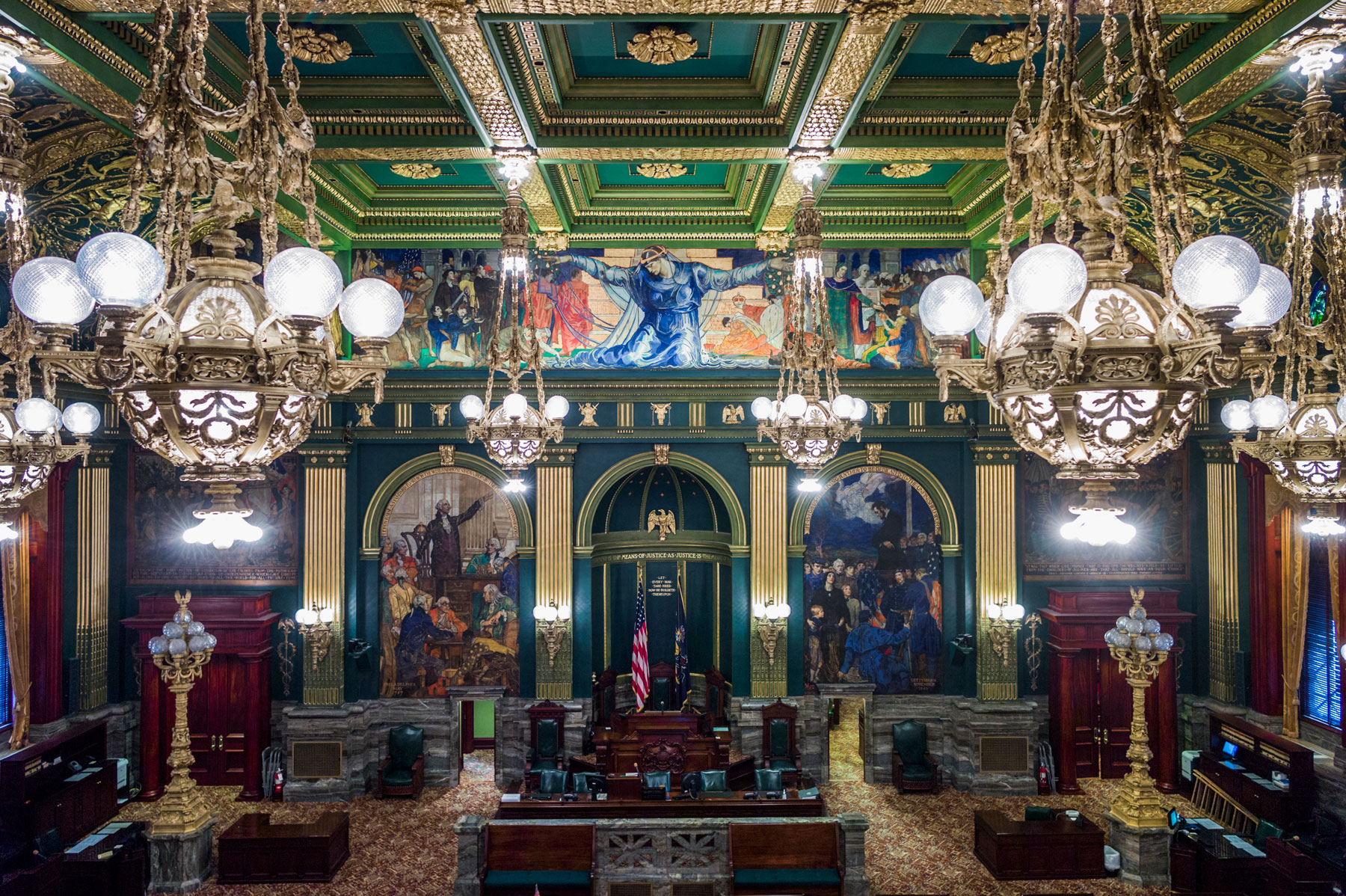
The Senate Rules Committee Conference Room, located just steps off the Pennsylvania Senate chamber, is home to regular meetings of the Senate Appropriations and Rules & Executive Nominations committees, where bills big and small get teed up for a final vote in the General Assembly’s upper chamber. That includes the state’s annual budget bills, which often get amended during the Appropriations Committee's final, negotiated budget meetings, as well as measures to amend the state constitution.
Unlike committee meetings in the state House of Representatives – which records and livestreams all its committee meetings for the public to view – committee meetings held in the Senate Rules Committee Conference Room are not livestreamed or recorded, and are often “off the floor” meetings announced on the Senate floor just minutes before they’re set to take place.
Erica Clayton Wright, a spokesperson for Senate President Pro Tempore Kim Ward, told City & State in an email that the Rules Room, by nature of being in the state Capitol, is a nationally recognized historic landmark that is used to preview bills and nominations before they get votes from the entirety of the state Senate.
“Pennsylvania’s Capitol Building, including the Senate Chamber and Senate Rules Room, (is a) National Historic Landmark. The Senate Rules Room is used to provide review of legislation and nominations before (they go) to the floor for a vote by the Senate,” Clayton Wright said in a statement. “It is also a historic and functioning meeting room that meets all safety and building code standards and complies with the Americans with Disabilities Act requirements.”
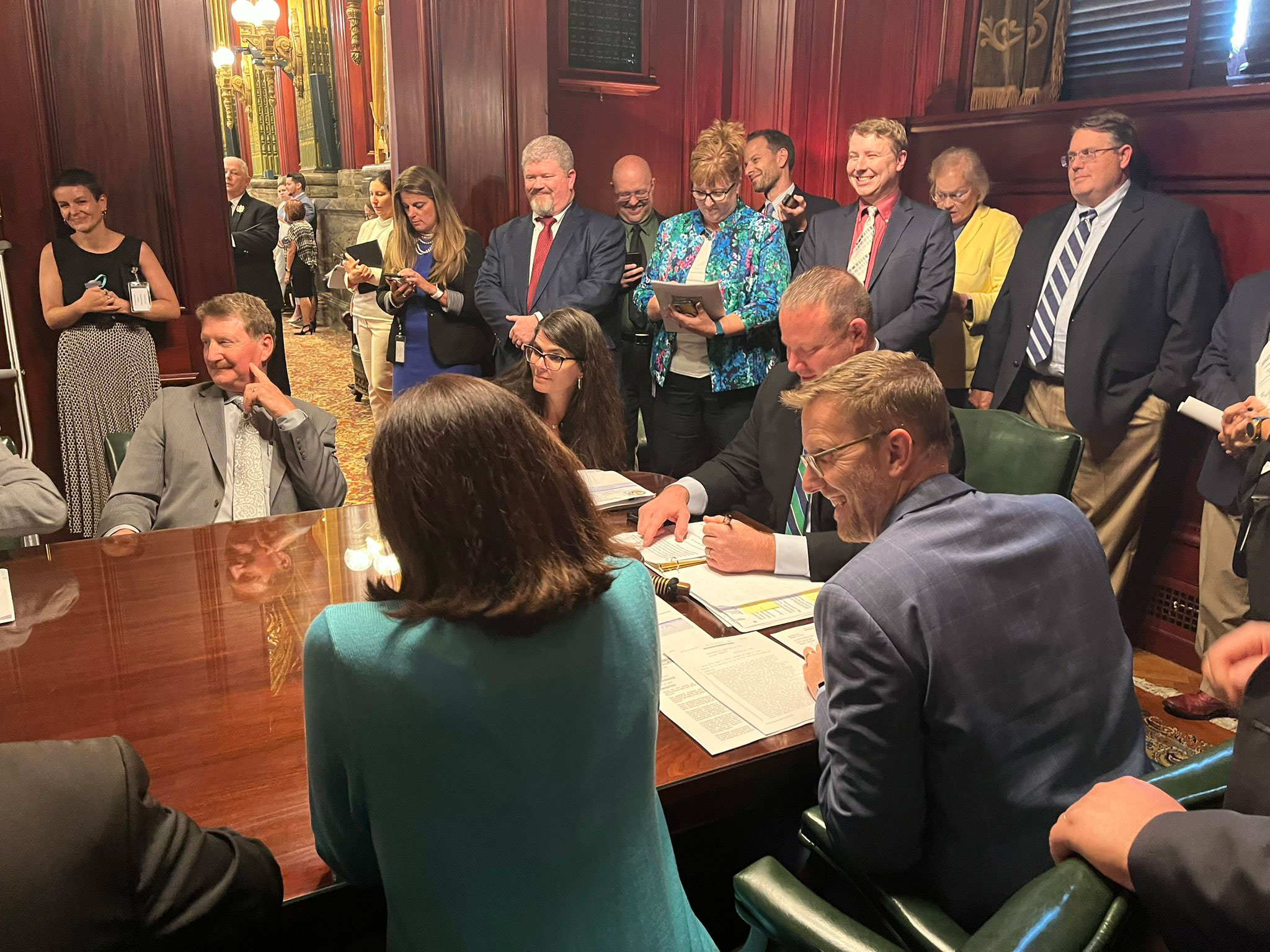
Still, some lawmakers and advocates say the regular use of the Senate Rules Committee Conference Room raises transparency concerns due to its lack of livestreaming and its small size, which often forces those who do want to attend meetings in the room to stand shoulder to shoulder.
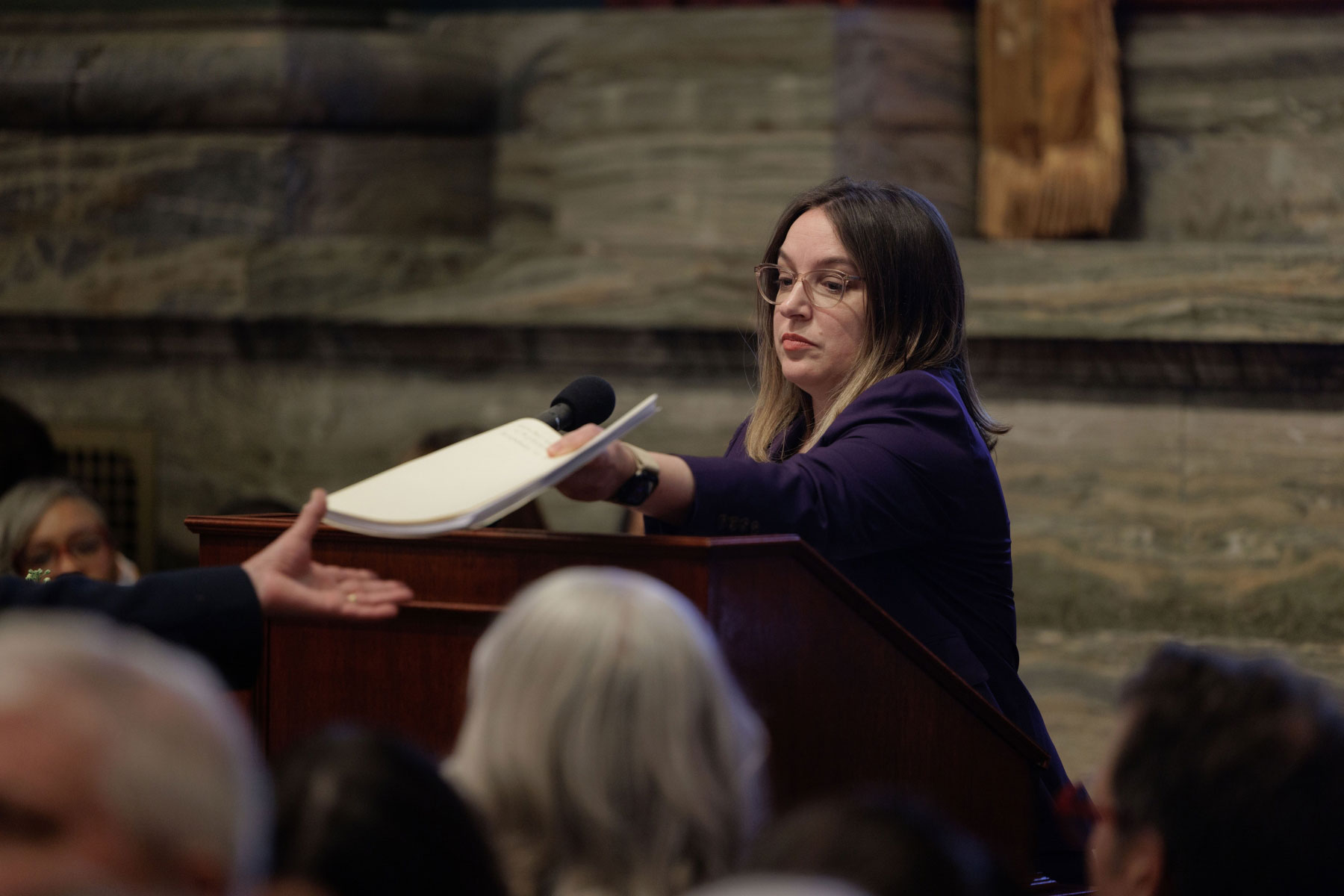
“I have a lot of concerns with the frequency with which we use the Rules Room, and that it doesn't have the capability to livestream, so people can't watch it – compounded by the fact that the room is so small, so you actually can't get a ton of people in,” Democratic state Sen. Lindsey Williams told City & State in an interview.
Other Capitol stakeholders have experienced that firsthand. Carol Kuniholm, the chair of Fair Districts PA and Fix Harrisburg, a nonprofit that has advocated for redistricting reform measures at the state Capitol, recalled an instance in which a bill her organization was monitoring was being voted on in an off-the-floor meeting.
Kuniholm and other Fair Districts members were told by a legislator that a bill they supported would receive a vote at an off-the-floor committee meeting. She said that by the time they moved from the Senate gallery down to the Rules Room, that room was nearly full. “The room was already packed with reporters and other legislators … I wedged in there, but it was incredibly intimidating and uncomfortable, and most of the folks that we had there, who were very concerned about this bill, were not able to get entrance,” Kuniholm recalled.
“I do remember somehow getting into that room and standing against the wall and looking around and thinking, ‘This is really intentional – cut out any public view of what’s happening.’ There were some reporters, there were other legislators – there was no room for anybody,” she added. “It was very crowded and very uncomfortable.”
Over the course of the 2025-26 legislative session, more than 60 off-the-floor committee meetings have been held in the Senate Rules Committee Conference Room – none of them livestreamed. Some of the major pieces of legislation to move through the room this session include last year’s $50.1 billion state budget, which was amended into a bill originally designed to exempt reparations for Holocaust victims from the state’s Personal Income Tax. This year, bills that have advanced through off-the-floor meetings held in the Rules Room include legislation creating a bell-to-bell school cellphone ban, bills seeking to protect children from AI tools, and legislative efforts to combat human trafficking, among others.
Over the last several legislative sessions, lawmakers on both sides of the aisle have introduced measures that would require all committee meetings held in the General Assembly to be livestreamed and recorded.
Republican state Sen. Pat Stefano has introduced a bill multiple sessions in a row that would require both the House and the Senate to record committee meetings and hearings and publish them on the General Assembly’s website. His bill would also require meetings to be livestreamed “when technically possible.”
“As public servants, we have a fundamental responsibility to ensure that the constituents who have elected us have clear insight into how we are representing their interests,” Stefano wrote in a co-sponsorship memo circulated to colleagues prior to the start of the most recent session. “A crucial part of this is providing transparency into the decision-making process, especially during meetings where we vote on legislation that directly affects their lives.”
This session, both Democrats and Republicans have signed on to Stefano’s bill as co-sponsors, though the bill has not advanced out of the Senate State Government Committee. Stefano introduced the same bill during the previous legislative session, where the measure also failed to receive a committee vote.
Williams and her Democratic colleague, state Sen. Katie Muth, have sought to overhaul the Senate’s operating rules with a legislative rules reform package they say would promote more bipartisanship, improve the legislature’s productivity and increase transparency.
One of the reforms included in that package is a rule change requiring all Senate committee meetings to be livestreamed, with recordings retained for 10 years.
Throughout the COVID-19 pandemic, off-the-floor meetings typically held in the Senate Rules Committee Conference Room were instead held on the Senate floor, where they were livestreamed and accessible to the public. However, once the pandemic ended, the Senate reverted to holding off-the-floor meetings in the Rules Room, with no recordings or livestreams available.
Williams said that, even if the Senate is unable to stream meetings in the Senate Rules Committee Conference Room due to logistical or technical constraints, the chamber could hold off-the-floor meetings on the Senate floor, or in another room with streaming capabilities, like the Senate did with an off-the-floor meeting of the Senate Education Committee on April 20th, which was livestreamed.
“There's no reason why we can't have an off-the-floor Approps meeting on the floor of the Senate with the livestream,” Williams said. “They could have it in a different room that has streaming capabilities – but they choose not to.”
Clayton Wright added that conversations about modernizing the room continue, including making meetings in the room accessible via livestream.
“Conversations are taking place related to the modernization of the room to accommodate livestream meetings and an important part of those conversations is maintaining the historic integrity of the room to meet preservation standards,” she said.
Melissa Melewsky, who serves as media law counsel for the Pennsylvania NewsMedia Association, said that the historic nature of the Capitol may present difficulties when it comes to modernizing the room.
“There may be limitations on what can be done physically to such a historic location. I know that's been an issue in other places inside the Capitol building,” Melewsky said. “I think that means it needs to be handled carefully and within the confines of whatever rules apply to modifying a historic structure – but it doesn’t mean that it can't happen. It may require more time, more money, more effort. The question becomes, is that something the Senate wants to pursue? Is it worth it to them? Is that a price that they believe we should shoulder as a society?”
To Williams, lawmakers in the General Assembly should do everything they can to make government meetings and proceedings as accessible as possible, including examining how access to the Rules Room – and what happens inside it – can be improved.
“It sends a bad message, and at a time when trust in public officials is at an all-time low for all levels of government. We should be doing everything we can to rebuild that,” Williams said. “That means having things public, having proper notice – having amendments sunshined more than an hour before meetings so that people can comment on them.”