

Capitol Beat
A guide to Pennsylvania’s 2026 race for governor
Josh Shapiro and Stacy Garrity have very different approaches to the challenges Pennsylvania voters will be most likely to focus on in the voting booth.
Gov. Josh Shapiro and Treasurer Stacy Garrity will face off in this November’s gubernatorial race. MATTHEW HATCHER/GETTY IMAGES

In November, Pennsylvania voters will decide whether Democratic Gov. Josh Shapiro gets another four years in office – or a replacement in the form of state Treasurer Stacy Garrity, the Republican Party’s nominee.
To date, the 2026 gubernatorial race has largely centered around Shapiro’s record in office, coupled with a heavy dose of data center politics as voters across the nation express growing frustration with data center development.
Public polling on the race shows Shapiro with a sizable lead: A Franklin & Marshall College poll released in late August showed Shapiro with a 25-point advantage, while another August poll from The New York Times, Philadelphia Inquirer and Siena University had Shapiro holding a 16-point edge over the Republican nominee. Prediction markets also favor Shapiro, with Kalshi traders giving Shapiro a 97% chance of winning reelection as of mid-September.
Ultimately, voters will make the final decision, and both candidates have been crisscrossing the state to make their case to voters. With little more than a month to go until Election Day on Nov. 3, City & State has put together a comprehensive guide to this year’s race for governor and what it means for the commonwealth.
Meet the candidates
A native of Montgomery County, Shapiro has had a lengthy career in public service. He was elected governor in 2022, defeating GOP state Sen. Doug Mastriano by a 14-point margin.
Prior to his time in the governor’s office, Shapiro served as the state’s attorney general, a position he held from 2017 until he took office as governor in 2023. During his time as AG, Shapiro routinely challenged policies enacted by President Donald Trump’s administration and oversaw a landmark grand jury investigation that revealed widespread instances of child sexual abuse within the Catholic Church in Pennsylvania.

Shapiro also spent five years as a Montgomery County commissioner, and served four terms in the Pennsylvania House of Representatives.During his tenure as governor, Shapiro has built a national profile, including making 2024 Democratic presidential nominee Kamala Harris’ shortlist of running mates and emerging as a potential presidential contender in 2028.
A Bradford County native, Garrity was first elected treasurer in November 2020, when she upset incumbent Democrat Joe Torsella. She was reelected to the office in 2024 and made history when she secured 3,542,336 votes – the most votes any Pennsylvania candidate has ever received in a statewide election.
She is a retired U.S. Army Reserve colonel and has been deployed overseas three times: in 1991’s Operation Desert Storm, in 2003 for Operation Iraqi Freedom and in 2008 for Operation Enduring Freedom. Garrity has received the Bronze Star twice for exceptional service and also received a Legion of Merit before retiring.
During her time in Iraq, Garrity was one of several officers in charge of the Camp Bucca internment camp in Southern Iraq, at a time when images of U.S.-run detention centers raised questions about internment camp conditions in the country. However, Garrity earned the nickname “the Angel of the Desert” for her work and perfect record at the camp.
Record rundown
The duties of the governor and state treasurer vary considerably, but both candidates running in this year’s gubernatorial race have accomplishments to tout on the campaign trail.
Shapiro has signed a wide range of bills into law throughout his first term, including legislation to establish an insurance coverage framework for telemedicine services, a bill repealing the state’s Sunday hunting ban, and a new law that bars the use of cell phones and mobile devices while driving. The governor has also signed executive orders rolling back degree requirements for state jobs, imposing stricter standards on data center development and streamlining the processes for obtaining state licenses and permits.
Some of Shapiro’s biggest wins have come as part of annual state budgets, where he’s secured increased funding for public schools, an expansion of a state-level property tax relief program, a new tax credit for working-class Pennsylvanians and a cost-of-living adjustment for state pensioners.
The governor has also been a major advocate for economic development projects in Pennsylvania, including several billion-dollar investment deals from Amazon, Eli Lilly and Chobani.
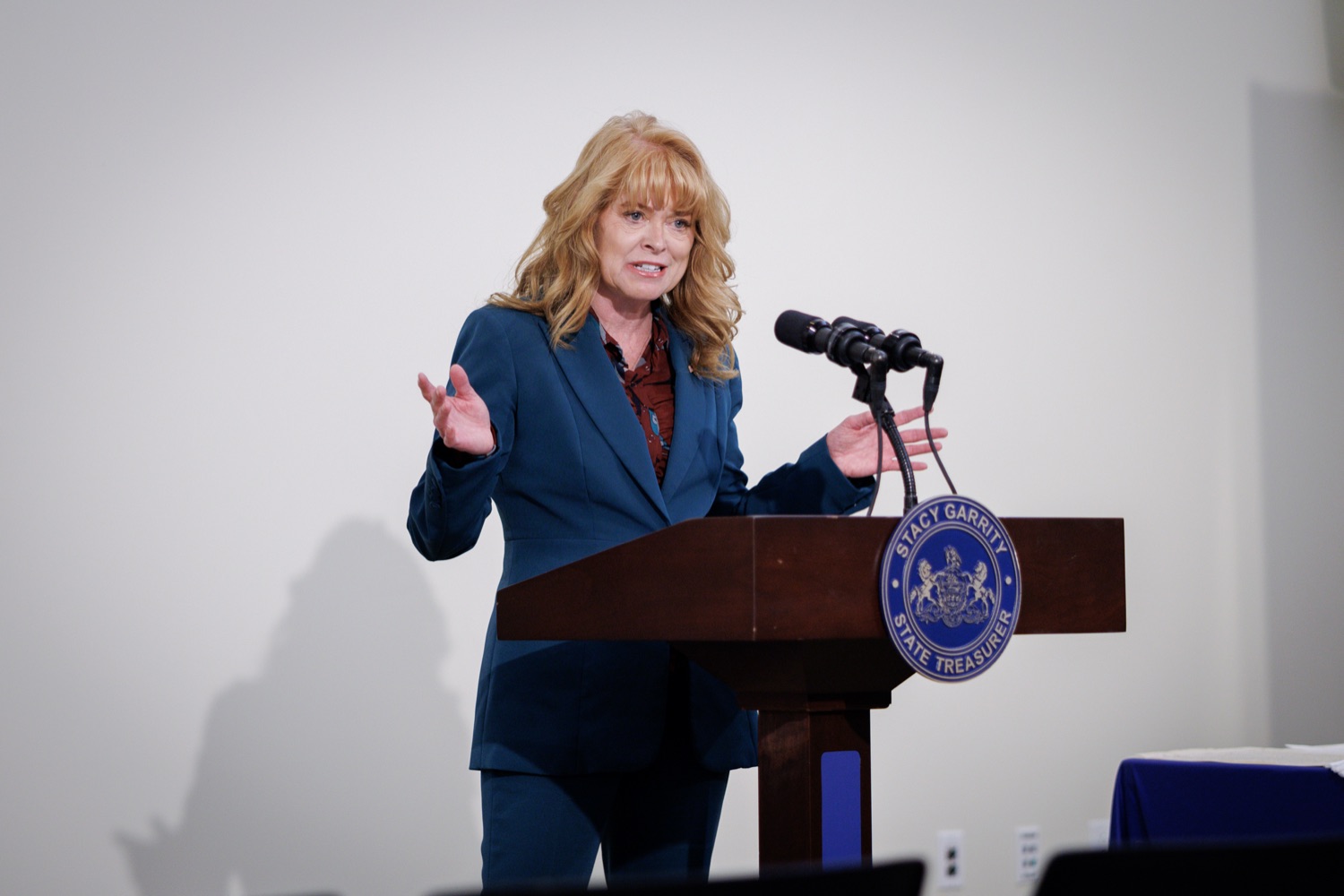
Garrity, meanwhile, has focused heavily on returning unclaimed property to Pennsylvanians, and has returned more than $1 billion in unclaimed property during her time as treasurer.
Garrity has also ushered in reforms to the state’s PA 529 College and Career Savings Program, which helps families save for future college and career education expenses. Garrity has reduced and waived fees for PA 529 plans on multiple occasions, and the state has received a “Gold” rating from Morningstar for its 529 plans over the last three years.
The incumbent treasurer has also touted her rate cuts for the PA ABLE Savings Program, which is a savings plan that allows individuals with disabilities to keep their means-tested benefits.
Garrity also told City & State in 2025 that she would like to replicate the Treasury’s transparency portal statewide if elected governor.
On the issues
After securing the Democratic nomination in the May primary, Shapiro said that while the state has made real progress under his administration, he is “hungry for more.” He stressed the importance of downballot races for seats in the state House and state Senate, noting that a Democratic majority in the state Senate – which is currently controlled by Republicans – could open the door for Democrats to achieve long-sought policy goals in Harrisburg.
“While we’ve made real progress, I am hungry for more. I know people are hurting right now because of Trump’s policies in D.C. and Republican intransigence in Harrisburg,” Shapiro said. “Give me a Democratic majority in the Senate and we will fully fund mass transit, build more affordable housing, and codify abortion rights into state law.”
The governor also vowed to protect unions and their workers, as well as abortion access and LGBTQ rights.
And, if Shapiro gets a Democratic trifecta in Harrisburg, it’s likely that he will continue pursuing policy goals that have eluded him during his first term, including legalizing recreational marijuana and signing legislation that would give child sexual abuse survivors a two-year legal window to sue their abusers.
Garrity, meanwhile, has made data centers one of her top issues, vowing to support a pause on data center development while hosting a series of listening sessions on data centers in Pennsylvania communities. She has routinely criticized Shapiro for his past support of data center projects in the commonwealth, while Shapiro has knocked Garrity over her previous comments saying the state should “deregulate” to promote more data center development.
Garrity also released a six-point “Turnaround PA” plan focused on policies that she says could make life more affordable for Pennsylvanians. The plan centers on delivering property tax relief, lowering electric and utility bills, reducing the cost of insurance and prescription drugs, making homeownership more accessible, and improving healthcare access in rural areas of the state.
On the property tax relief front, Garrity has called for a constitutional amendment that would exempt eligible seniors from school property taxes and use new revenue from energy development projects to provide property tax relief.
Her plan also calls for eliminating the state’s Gross Receipts Tax on electricity and natural gas, and proposes eliminating unnecessary taxes, fees and regulatory costs that increase utility bills.
Banking on Harrisburg
One could make the argument that the biggest difference between Shapiro and Garrity in this election cycle isn’t related to their backgrounds, policy positions or respective visions for the commonwealth, but their finances.
Since the beginning of 2025, Shapiro has run circles around Garrity when it comes to fundraising, pulling in more than $55 million in total contributions through September 2026. Garrity has raised $5.3 million during that same period, putting her at a major financial disadvantage in the home stretch of the midterm election cycle.
Shapiro had more than $19.8 million in the bank as of mid-September, while Garrity reported having just $1.3 million in cash on hand.
Shapiro’s donor list is a who’s who of business, organized labor, politics and sports. He’s received contributions from trial lawyers, the state’s largest labor unions, NBA Commissioner Adam Silver, Philadelphia Phillies owner John Middletown and Illinois Gov. JB Pritzker, to name a few.
Garrity’s high-profile donors include former RNC committeeman Bob Asher, U.S. Rep. Dan Meuser and Pennsylvania House Republican Leader Jesse Topper.
High stakes
Pennsylvania’s candidates for governor have framed this year’s context in stark, existential terms.
In a statement highlighting the potential consequences of the race, Garrity’s campaign said a Democratic trifecta in Harrisburg would result in increased taxes, single-payer healthcare, restrictions on gun ownership, increased access to abortion and the destruction of high school girls' sports.
“Elections have consequences and this year that statement could not be more true,” Garrity’s campaign said in a September press release.
Shapiro, meanwhile, said earlier this year that voters can’t afford to give Trump “a rubber stamp in the governor’s office.”
“My opponent is running on her complete and total allegiance to Donald Trump – because she’s more focused on serving him than fighting for you. She proudly wears her MAGA hat, while I wear the Pennsylvania jersey,” Shapiro said, adding that November’s election “is a clear choice between their chaos, cruelty and corruption and our compassion.”