

Honors
The 2026 City & State Pennsylvania Above & Beyond
Meet the women whose commitment is shaping Pennsylvania’s future
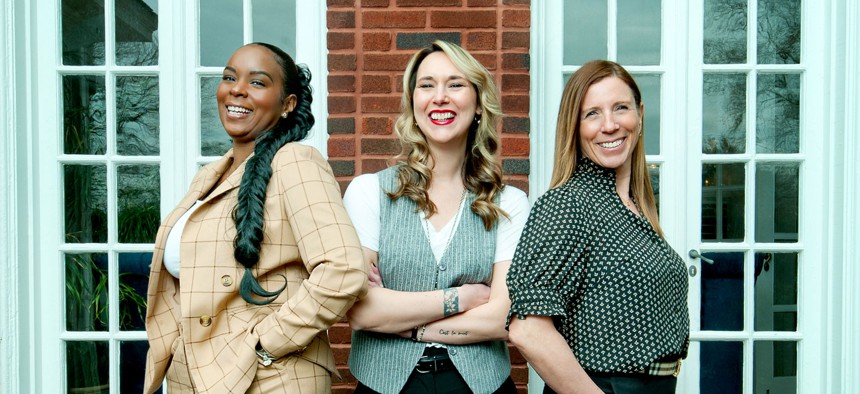
From left to right: Portia Fullard, Ashley Walkowiak and Jennifer Davis Stephanie Nolt

This year’s City & State Above & Beyond honorees are leaders in fields as varied as healthcare, business, law, education and construction. But they have something in common: mentorship, which virtually everyone on this list has mentioned as central to their success. As they shape Pennsylvania's future across myriad sectors, these women are now mentors themselves, cultivating the next generation of leaders through professional and civic engagement.

Jumee Barooah
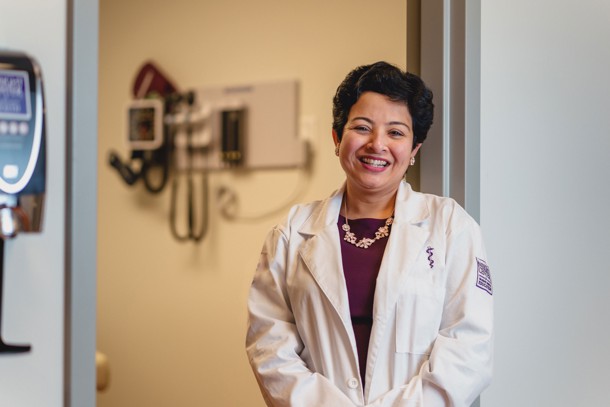
With an impressive four board certifications – in internal, obesity, addiction, and lifestyle medicine – Jumee Barooah brings a holistic approach to her role overseeing medical education at The Wright Center for Graduate Medical Education, where she is also the Designated Institutional Official.
“In medical leadership, the ‘double bottom line’ requires balancing rigid regulations with the human needs of our trainees,” explains Barooah. “My leadership is rooted in a trauma-informed lens, prioritizing psychological safety alongside clinical excellence.”
A dedicated advocate for community-based care, Barooah oversees the strategic growth and accreditation of residency and fellowship programs at Wright, which, as a Federally Qualified Health Center, serves vulnerable populations.
Responsive to the needs of her Northeast Pennsylvania community, the Scranton native has launched high-need residency programs, including Physical Medicine and Rehabilitation and Family Medicine, and innovated curricula that address the social and metabolic determinants of health. She is an active member of the Lackawanna and Luzerne County Medical Societies and a Fellow of the American College of Physicians.
Over time, her mentorship “has shifted from fitting into the system to actively evolving it,” says Barooah, a committed homemaker and parent. “I advocate for sustainable excellence – replacing the ‘Iron Man’ era with cultures that support parental leave and wellness. By modeling an integrated life, I hope to show future physicians that professional authority and personal fulfillment are not mutually exclusive.”
Brittany Bronson

As a Black woman, Brittany L. Bronson draws on her own perspective to shape inclusive workplace strategies – including at Philadelphia Gas Works, where she is the inaugural manager of culture and inclusion.
“Being a woman – especially a Black woman – in this field means navigating a space where I am often both the subject and steward of the work,” she says. “One advantage is a deep, lived understanding of what meaningful inclusion looks and feels like.”
With over 15 years in the field, Bronson has demonstrated that inclusive workplaces can drive successful business outcomes. She holds a doctorate in educational leadership from Saint Joseph’s University, where her research focused on the lived experiences of Black women DEI leaders in corporate spaces.
Later, she developed enterprise-wide inclusion strategies and global initiatives at CI&T, Foundever, and the City of Philadelphia, where her impact was felt across workforces ranging from 3,000 to a quarter-million employees.
Bronson also brings that ethos into her own community: She secured grant funding to launch a caregiver support network at her children’s school, offering advocacy and resources to families of children with diverse needs.
“I’ve seen more organizations become receptive to intersectional approaches in recent years, and that shift is critical,” she observes. In her own life, mentorship “has been both essential and nontraditional – peer relationships, lateral networks, and community spaces that affirm rather than dilute our identities.”
Sandy Brown
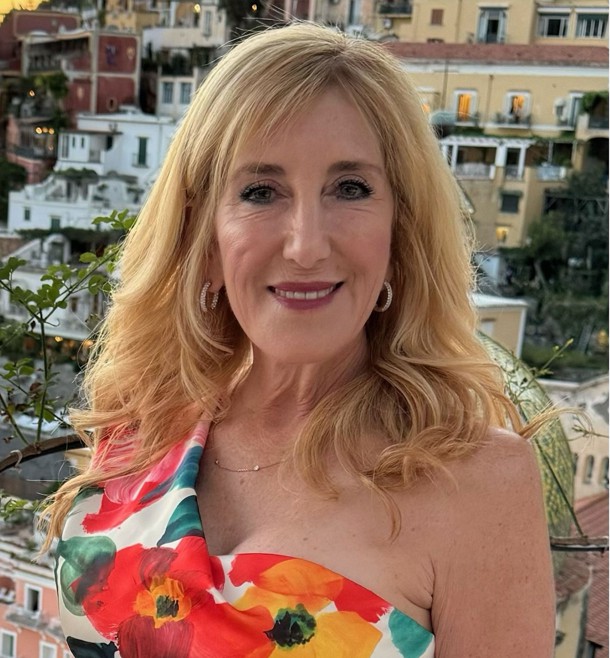
Sandy Brown still remembers the thrill she felt when, alongside her husband, Jeff, she was recognized at then-President Barack Obama’s 2010 State of the Union address for their work combating food deserts in Pennsylvania. It remains “a highlight of my career,” says Brown, the executive vice president and board chair of Brown’s Super Stores.
For more than three decades, she has helped nurture the brand and its grocery business – opening supermarkets and variously overseeing human resources, customer experience and quality assurance. In her current role, she runs the company’s ShopRite and Fresh Grocer supermarkets, and the Philadelphia-based gourmet brand, Di Bruno Bros.
She also serves on the board of directors for Wakefern Food and is the board chair for Uplift Solutions, a nonprofit where she has long been involved, supporting returning citizens in securing employment and reintegrating into their communities.
Looking back on her early years in the consumer packaged goods business, Brown is grateful that women have attained greater prominence in the industry. “I was one of three women managers across the whole country at a major global organization,” she recalls. “This has changed quite a bit … I have had some wonderful mentors over the years, and enjoy mentoring women in my own organization – and outside of it.”
Nicole Cashman

When Nicole Cashman was starting out in lifestyle marketing, there weren’t many Philadelphians, let alone women, dedicated to building the city’s 21st-century brand.
But Cashman knew her hometown could aim higher – and Philadelphia’s star turn as a global foodie and tourism destination, and as a host for marquee events, has her partly to thank. Twenty-five years ago, she founded Cashman & Associates, elevating her hometown’s hospitality, fashion, retail and luxury real estate brands and setting a new standard for the region’s public relations and special events landscape.
“I’ve been proud to play a role in defining moments for Philadelphia, from the Democratic National Convention to the first Made in America Festival – and this year, the MLB All-Star Game and the semiquincentennial,” she says. “While I value partnerships with major national brands, nothing is more rewarding than helping small businesses and entrepreneurs find their voice and succeed.”
Today, Cashman cultivates emerging talent through partnering her firm with the Philadelphia Association of Black Journalists; she also lent her business perspective to the transition committees for both Mayor Cherelle Parker and Gov. Josh Shapiro.
And she remains committed to mentoring women who are entering the field she helped pioneer. “Starting out as a young, single woman in my twenties, I faced the challenge of not always being taken seriously,” Cashman recalls. “But there’s a certain fearlessness that comes with being young – and even with being underestimated. I used that to my benefit.”
Jennifer Davis
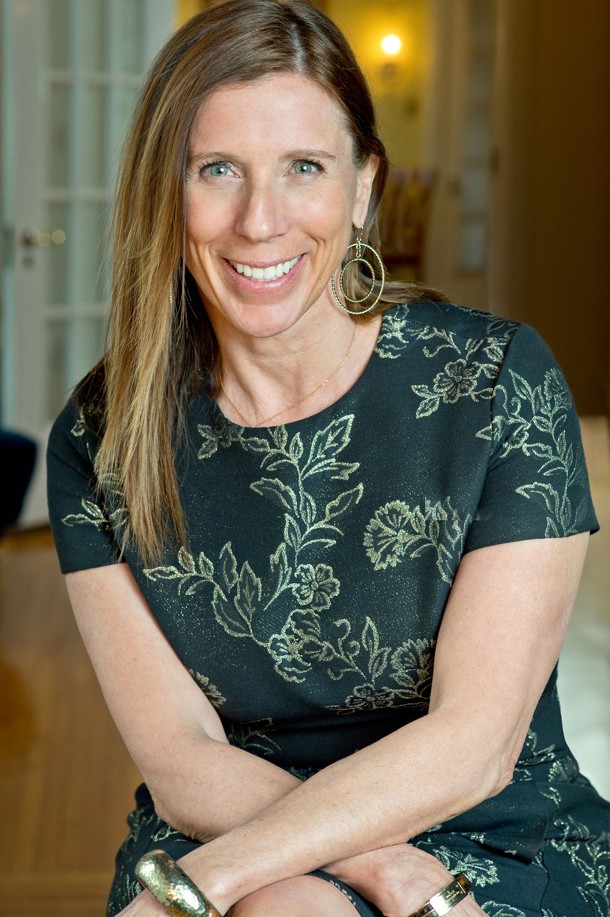
Jennifer Davis knows that nonprofits can make wishes come true. In her current role, it’s literal: She heads Make-A-Wish Philadelphia, Delaware & Susquehanna Valley, which realizes life-changing wishes for children with critical illnesses.
“I have spent the majority of my career in nonprofits, but joining Make‑A‑Wish was truly transformational,” Davis says. “It reshaped my understanding of impact, purpose, and what it means to serve families at some of the most vulnerable moments of their lives.”
Under Davis’ leadership, the chapter has expanded community engagement and elevated its visibility throughout the region through projects like the Wishing Place, an experiential children’s facility “where hope is restored,” as she put it.
Davis, an avid equestrian who grew up in New Jersey, joined the organization in 2021. Before that, she spent nearly a decade in executive roles with the American Heart Association and the American Stroke Association in Philadelphia.
“Being a woman in nonprofit leadership has been empowering and instructive,” she says. “While the sector values collaboration and empathy, strengths many women bring, there can still be assumptions that overlook the strategic, financial, and operational rigor required of executive roles. I’ve learned to lead with both heart and discipline, pairing storytelling and relationship-building with clear strategy and accountability.”
Shannon Dickerson

Blending “strategic rigor with creativity and heart,” as she says, Shannon Dickerson is committed to her Pittsburgh community – including the feathered and four-legged.
As director of operations for Humane Action Pennsylvania, she supports the nonprofit’s efforts to protect animals, support communities and advance humane public policy. She is also a volunteer with Planned Parenthood of Western Pennsylvania, the founder of the Hanktuary animal sanctuary and a member of the Animal Policy Alliance, and volunteers her skills and services to small businesses and good causes through her Featherweight Marketing initiative.
Across these roles, Dickerson draws on a background in communications, marketing, and nonprofit strategy. At Humane Action, she has played a central role in expanding the organization’s programs and partnerships – including scaling community initiatives like the Love Your Wild Neighbor campaign and HAP Hive, whose pollinator garden won the Governor’s Award for Environmental Excellence.
Motivated by “building systems that create lasting, compassionate change,” Dickerson also supports youth community leadership through the organization’s Youth Steering Committee, and collaborates with legislators to advance animal protection laws, including measures to protect companion animals from domestic abuse.
“My empathy and gentle leadership are my greatest strengths,” she says. “It’s a joy to connect with other women from around the state and see the amazing influence they're having across every industry.”
Hillary Do

Hillary Do dreams of a Philadelphia “where every neighborhood thrives, led by the people living in them,” she says.
The native Philadelphian is currently making that happen as the founding executive director of Build Our Lives Together, known as PhillyBOLT. The nonprofit organization, which she founded in 2021, empowers grassroots change through community-based youth and adult leadership training programs.
An alumna of Central High School, she studied social studies and computer science at Harvard University and earned an MBA from the Stanford Graduate School of Business. Her background includes stints with the City of Philadelphia, Google and in a variety of voter mobilization and field organizing political roles – so it’s no surprise that she has a passion for leveraging technology to advance civic engagement.
Do has been named Citizen of the Week by the Philadelphia Citizen and has been awarded the Camelback Ventures Fellowship, which funds entrepreneurial startups that address grassroots inequities. “But I'm most proud of our team” at PhillyBOLT, she says, “and the impact.”
Portia Fullard
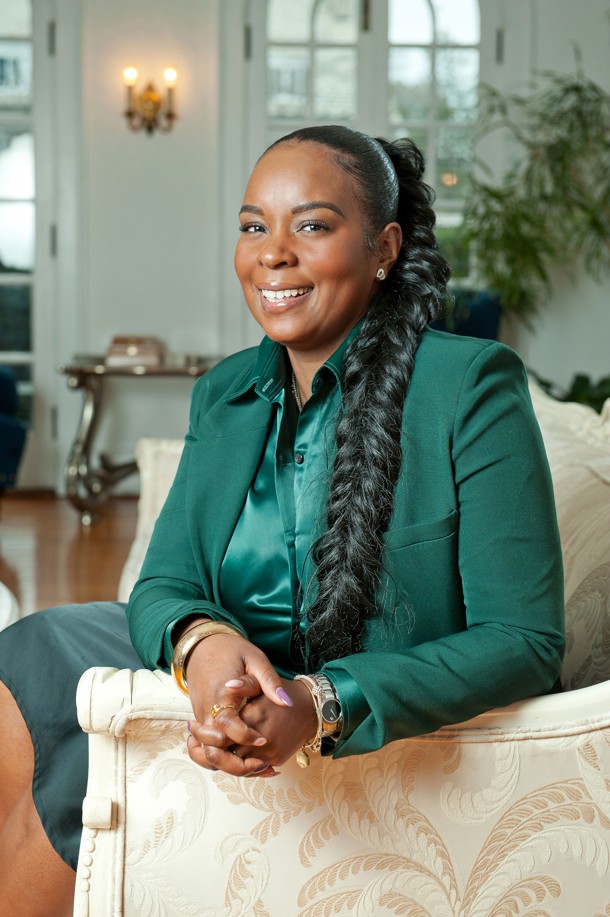
Devoted to bettering her hometown, Portia Fullard is the executive director of the Leon H. Sullivan Charitable Trust, stewarding one of Philadelphia’s most historic institutions advancing economic justice, workforce development and community empowerment.
Drawing on years of experience across nonprofits, education and government, she also heads MOV Solutions, the strategic consulting firm she founded to support mission-driven organizations with fundraising, sustainable growth and leadership.
Fullard’s guiding principles are “empathy, lived experience and community responsibility,” she says. “I lead with integrity even when it is not popular or easy, because trust and accountability matter more than optics.”
Fullard holds a bachelor’s in African American studies from Temple University and a master’s in education from Rosemont College, and began her career with the School District of Philadelphia. She is especially proud of leading the Lenfest Institute for Journalism’s Every Voice, Every Vote initiative, which bolsters civic engagement through community journalism.
She is also passionate about mentoring young, Black and Brown girls and women – a tribute, she says, to those women whose mentorship shaped her own commitment.
“Being a Black woman has shaped how I lead and navigate systems not originally built with us in mind,” Fullard notes. “I have faced moments where my credibility was questioned and my confidence misread, but those challenges strengthened my clarity, resilience, and commitment to values-based leadership.”
Brooke Fuller

Brooke Fuller made rapid strides as a student-athlete at Waynesburg University. So it’s no surprise that she’s brought her energy to not just one, but two public roles – as mayor of Wampum Borough, as well as senior communications specialist for the Eastern Atlantic States Regional Council of Carpenters.
A native of Pittsburgh, Fuller is proud of the work she’s done with the council, including supporting grassroots efforts to organize workers and to mobilize union members at election time across six states and Washington, D.C. She also managed digital outreach to help elect pro-union candidates and advance policies that benefited the council’s membership.
Along the way, Fuller decided to run for office – even though Wampum had never yet had a female mayor. “In both roles, I focus on strengthening the community and creating opportunities for the next generation of leaders,” she explains.
“As more women enter these fields, it’s been encouraging to see the fields become more inclusive,” Fuller adds. “Much of my success is owed to the people I’ve worked alongside, whose guidance and support have been essential to my development.”
Deana Gamble
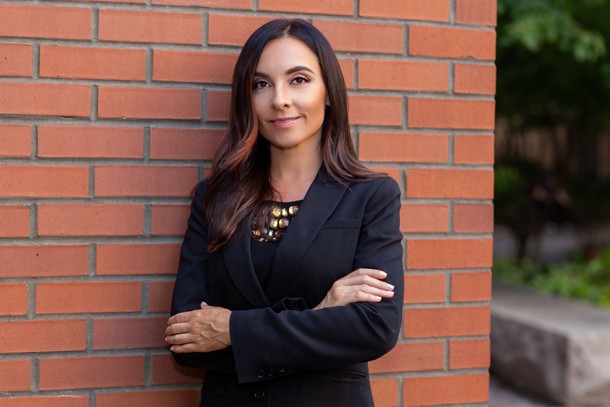
Having steered communications for the city of Philadelphia – including as a key voice for then-Mayor Jim Kenney’s landmark free pre-K initiative – Deana Gamble has brought her skills to Jefferson, the region’s largest employer, where she is vice president for strategic communications.
Not infrequently, Gamble has been the only woman in those executive spaces, taking the view that her singular female perspective is “a source of strength,” says the self-described dog mom and soccer mom. “The challenges are real – especially balancing demanding roles with motherhood—but they’ve shaped my resilience, and sharpened my time‑management skills.”
A first-generation college graduate, the New Jersey native holds degrees from Temple University and the University of Pennsylvania and is pursuing a master’s in public health at Jefferson University.
Before joining Jefferson, Gamble directed communications for the City of Philadelphia, where she helped establish the Board of Education for the School District of Philadelphia and create a full-tuition scholarship program for first-time students at the Community College of Philadelphia.
At Jefferson, she led an initiative to bolster colleague engagement across the fast-growing organization, including Jefferson Health, Thomas Jefferson University and Jefferson Health Plans.
The balancing act of female responsibility has taught Gamble “to lead with compassion, clarity and collaboration, even in high‑pressure moments,” she says. “I’m proud to contribute to a field where women’s voices aren’t just heard, but also valued and expected.”
Lauryn Graves
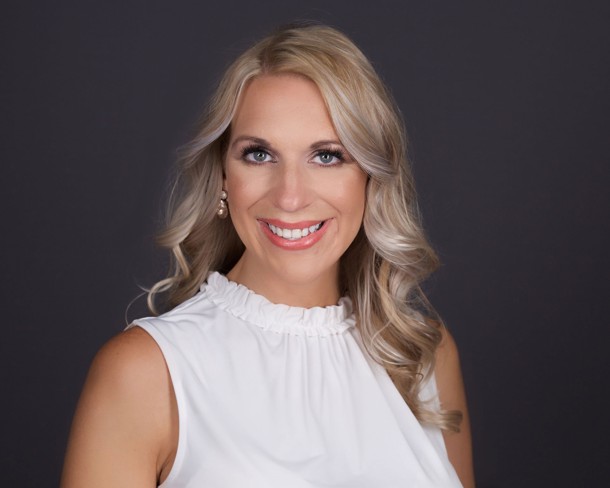
For more than 20 years, Lauryn Graves has taught ballet to Allentown-area children, modeling the grace and balance that, more figuratively, have enabled her successful government relations career.
Graves has held integral roles at Allentown-based Air Products & Chemicals over those same two decades; as senior government relations advisor, she leads political and regulatory strategy and steers community and stakeholder partnerships.
She is also an active volunteer in her hometown, devoting her energies to, among others, the American Heart Association-Eastern Pennsylvania, the Girl Scouts of Eastern Pennsylvania and Habitat for Humanity. In 2025, the Allentown Chamber named her its Volunteer of the Year, recognizing her service, which has included chairing the Downtown Allentown Business Alliance.
At Air Products, Graves has led community and government partnership efforts that supported major hydrogen, energy, and infrastructure projects critical to regional and statewide economic development. A mother of two, she also participates in a program that mentors women entrepreneurs.
“Early in my career, there were few women in senior external‑facing roles, which reinforced my commitment to mentorship and ensuring more women have access to influence and decision‑making spaces,” she says. “Over time, I’ve seen meaningful progress: greater representation, stronger networks, and more recognition of women’s collaborative leadership strengths.”
Caroline Griffin
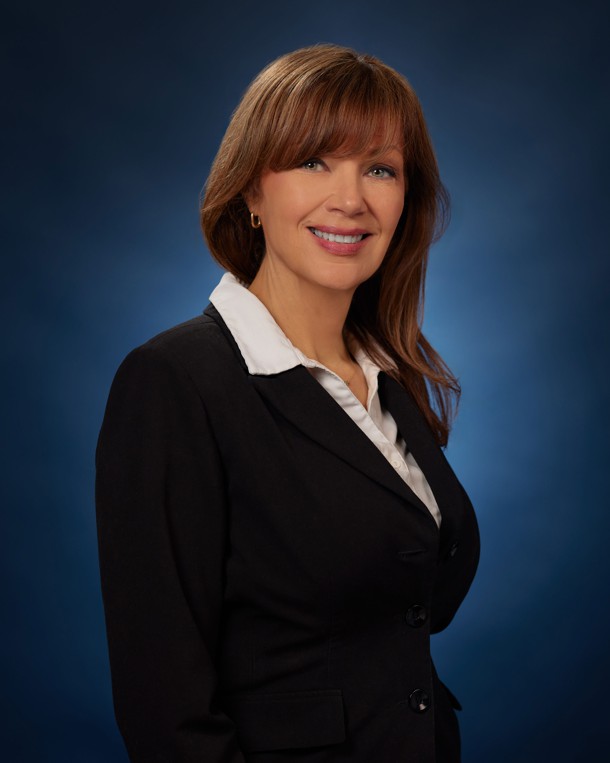
A 19-year public servant and lifelong champion of the vulnerable, Caroline Griffin has devoted her career to nurturing inclusivity in the commonwealth’s communities.
She currently directs rural and civic engagement for the Pennsylvania Human Relations Commission, tackling discrimination and building equitable ties among rural and urban communities. Previously, Griffin championed equitable spaces as the director of fair housing and community property.
“Leading the commission’s work, ensuring its resources and protections are accessible to Pennsylvanians in every corner of the state, is a highlight of my career thus far,” says Griffin. She began her career advocating for people with disabilities and the elderly, then joined state government in 2007, holding a variety of roles at the Department of Human Services.
A native of Minersville, Griffin holds an executive education certification from the Harvard Kennedy School of Government and is currently participating in the Dr. Martin Luther King Jr. Leadership Institute. She is also the mother of four daughters and cognizant of being a role model.
“If I could offer advice to others, I’d start with listening – to your kindest inner voice, to mentors that push you to grow,” reflects Griffin. “Prioritize work that aligns with your values, and set aside family time as sacred. Most importantly, lead by example for our daughters and sons – and widen the door for the next generation to walk through.”
Feben Habte
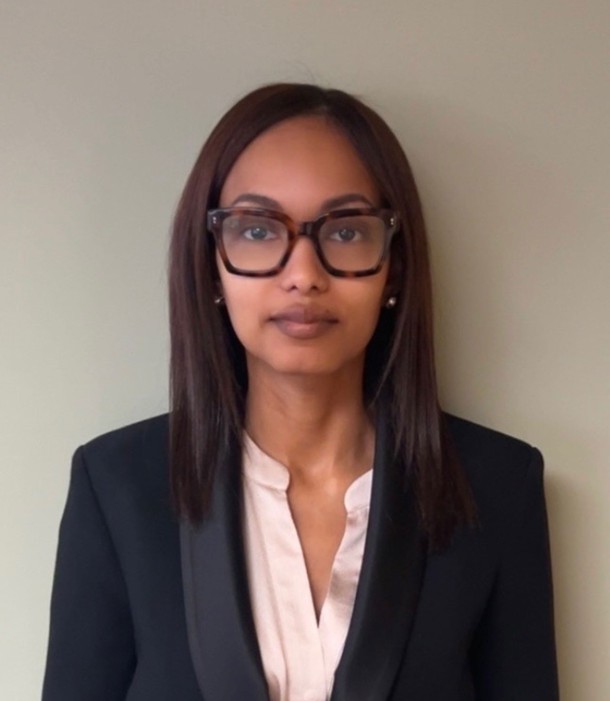
Over a decade at Moravia Health, Chief Administrative Officer Feben Habte has quietly steered the operations that have grown this home health agency into a national success story.
“Working in the home healthcare industry is deeply rewarding, and offers a strong sense of purpose,” she explains.
Born in Sudan, Habte immigrated to the United States as a young child and grew up in Pennsylvania with a deep sense of gratitude for her parents’ sacrifice. Helping to build a company that serves her community’s most vulnerable, she says, is a way of honoring that dedication.
Habte studied political science at Rosemont College, and brings that strategic lens to her work at Moravia, which she joined in 2015. At the time, Moravia’s founder, C. Frank Igwe, had just begun to roll out home health services in Philadelphia.
Working closely with the man she calls her mentor, Habte helped expand Moravia’s footprint across more than 20 states, opening new branches in Pennsylvania and handling state licensing for out-of-state locations. Thanks in part to her careful administration, Moravia Health achieved best-in-class accreditation by The Joint Commission.
Today, Habte is a leader within the growing organization, coordinating across departments and ensuring that internal systems are efficient and align with the company’s strategic goals. Now the mother of two daughters, she never forgets that families and communities are at the heart of her work and her mission: “It is truly a special privilege to support these individuals,” she says.
Maura Hesdon
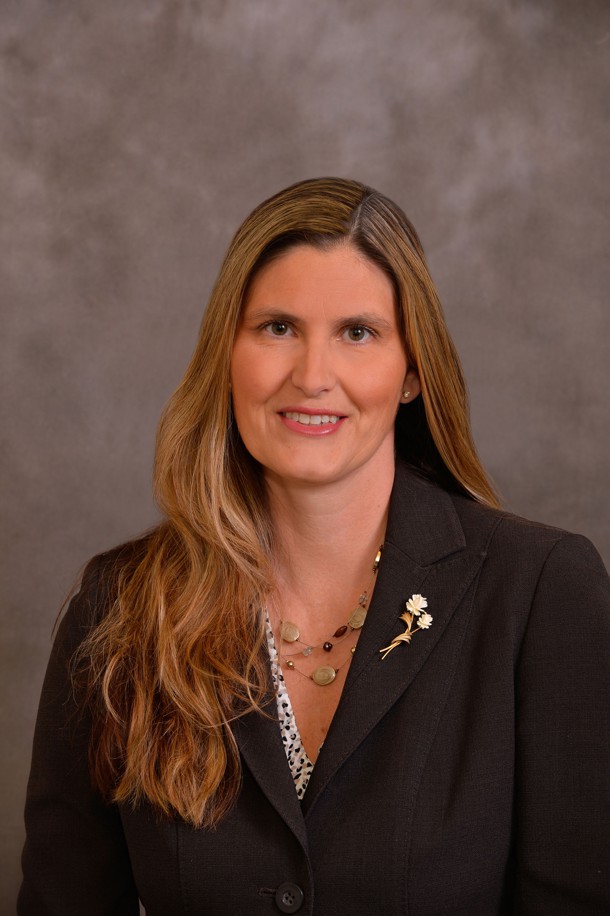
While others mostly wield the hammer nowadays, Maura Hesdon has smashed through many a glass ceiling in her quarter-century in the construction business.
A longtime general manager of the Shoemaker Construction Co., she has overseen the successful completion of dozens of projects valued at more than $1 billion. Fresh off her tenure as the chair of Philadelphia’s powerful General Building Contractors Association, she was also the first woman to chair the Building Division of AGC of America.
And next year, she’ll break ground yet again when she becomes the first woman president of America’s oldest trade guild, the 301-year-old Carpenters Company of the City and County of Philadelphia, where she is currently vice president.
“While construction is traditionally seen as a male-dominated field, that reality is changing,” notes Hesdon. “More women have been filling roles in architecture, engineering and construction management.”
In 2009, Hesdon founded the Mentoring Young Women in Construction Camp for 7th- to 12th-grade girls. Nearly 20 years in, the camp has become an effective pipeline for industry change.
“We still need to do better at showing women that the skilled trades are also a great family-sustaining career opportunity,” says Hesdon. “My outlook has always been that we need people who are excellent at their jobs, regardless of gender – who are confident in leading with the knowledge that they have, and know when they need to learn from others.”
AJ Jefferson
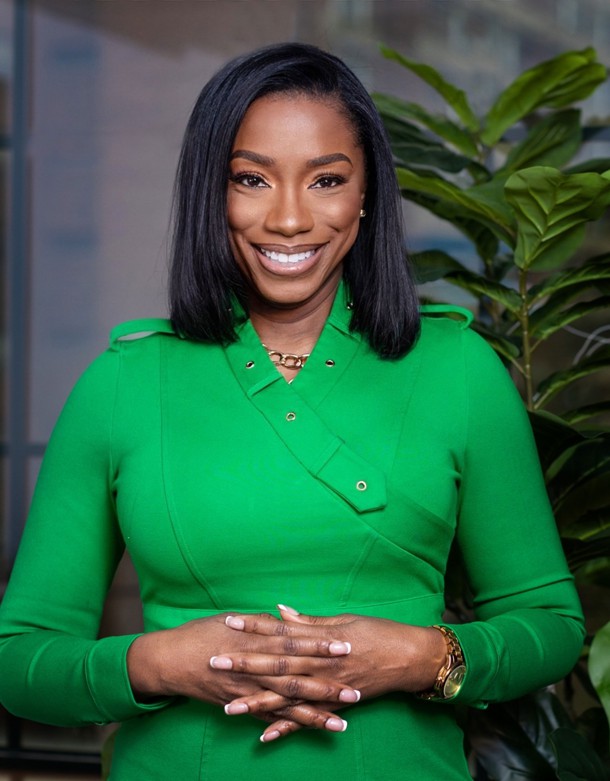
Helming a mission-driven organization like the Homeless Children’s Education Fund requires a unique combination of soft and concrete skills.
“This work asks you to be both fierce and tender,” notes AJ Jefferson, the Pittsburgh nonprofit’s president and CEO. “As a woman, I carry vision with accountability, leading with heart without lowering the bar.”
Her strategy has made a clear impact. Under her leadership, the organization saw its budget triple and expanded its reach from hundreds to over 1,000 students each year, creating a continuum of support from crisis to college and career. Jefferson has accomplished this by cultivating the support of a board and a volunteer network with deep community ties.
Key to that success has been academic and career support initiatives, such as a mobile classroom and programs like Teen CEO, which offer young people exposure to the workforce and post-secondary opportunities. Jefferson is also a sought-after speaker in nonprofit and policy circles, bringing the concerns of young homeless people to a national audience and advancing ideas grounded in her leadership experience.
A Pittsburgh native who studied communications at Seton Hill University, Jefferson has a track record of success with nonprofit youth organizations nationally. “There were rooms where audiences underestimated me,” she reflects. “I let the results speak: strong teams, clear strategy, lives changed.”
Laura Kim
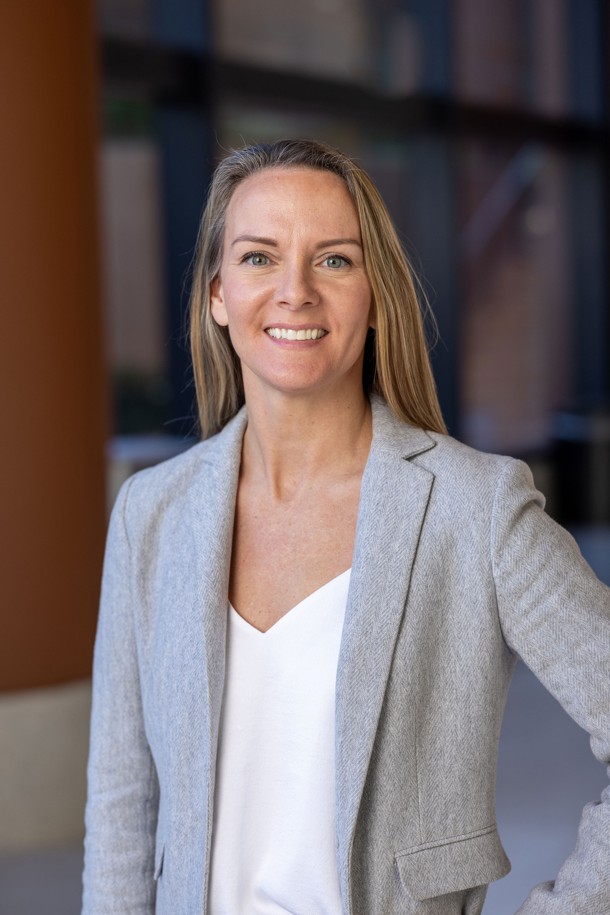
In West Philadelphia, Penn Medicine is an institution that literally towers over the surrounding neighborhoods, its logo part of the landscape. But at the grassroots level, that landscape is tended to by Laura Kim, who has devoted nearly 20 years to strengthening ties between the health system and the communities it serves.
As Penn Medicine’s associate director for community relations, she has cultivated partnerships with myriad community-based organizations, bringing local insights to the systemwide employee volunteer network she oversees. She is especially proud of the Penn Medicine CAREs Grants Program, which funds employee-driven community service initiatives.
“Over two decades in this work, I’ve seen that conversations about equity, representation, and lived experience have become increasingly central, strengthening progress,” notes Kim.
Health equity is a particular priority for Kim, who has trained in the field at Penn’s Perelman School of Medicine; she also holds degrees from the Community College of Philadelphia and Saint Joseph’s University. Reducing barriers to healthcare access in underserved and vulnerable communities, especially in West and Southwest Philadelphia, is at the heart of her mission, and she is an executive board member of the nonprofit Together for West Philadelphia.
“Being a woman has shaped how I lead, listen, and advocate,” said Kim, “and build relationships rooted in empathy, collaboration, and humility – qualities essential to meaningful community engagement. I’m grateful for the path it has opened and the communities it has allowed me to walk alongside.”
Sherri Landis
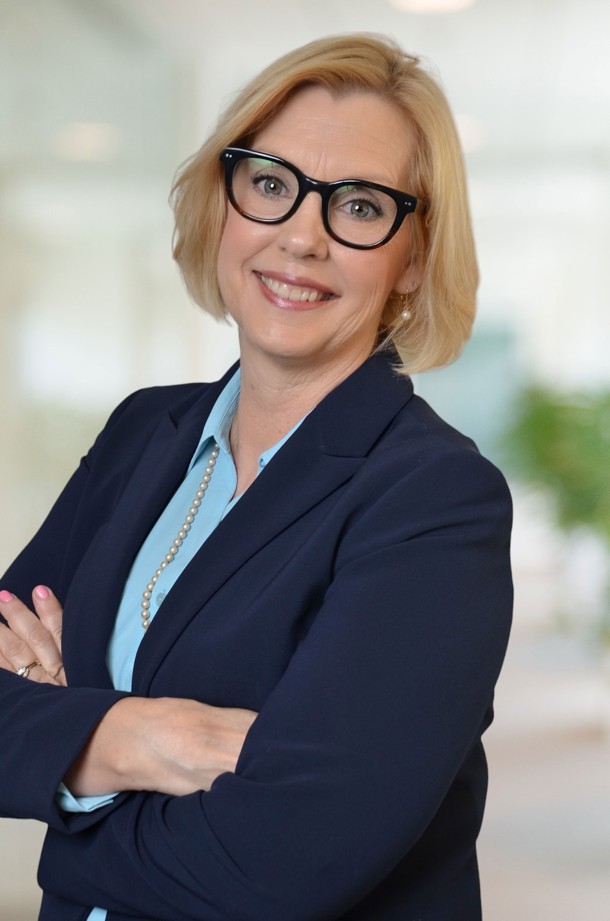
Working to further inclusion of people with disabilities, “I feel as though I’ve been entrusted with a precious jewel,” says Arc of Pennsylvania CEO Sherri Landis, “responsible for protecting its history while elevating the voices of people with intellectual and developmental disabilities and their families.”
Since 2019, Landis has led the commonwealth’s oldest advocacy organization for people with intellectual and developmental disabilities. Under her leadership, the Arc has advanced awareness and policy efforts around health disparities, employment, inclusive education and community participation for people with disabilities.
Landis, who grew up in Central Pennsylvania, began her career in campaign management, lobbying and trade association leadership. Before joining the Arc, she was the inaugural executive director of the DREAM Partnership, where she developed numerous college programs and a scholarship fund to facilitate postsecondary education for people with intellectual and developmental disabilities.
Today, she serves on the National Council of Executives for The Arc U.S., her organization’s national umbrella. “There have been significant changes for women since the 1980’s, when I began my career in the political arena,” Landis says. “Women often had to work harder to be recognized as leaders and decision-makers, but those challenges also built resilience and confidence.
“Every step of my career led me to this role,” she adds. “It’s humbling, and it’s the greatest honor of my professional life.”
Alexandra McMahon
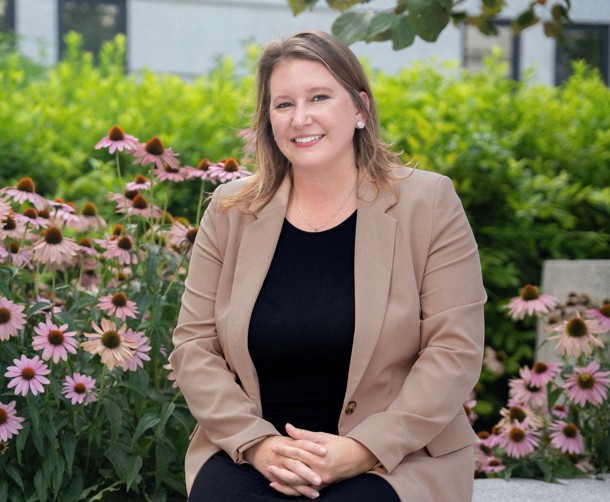
Alexandra McMahon’s commitment to advocacy began during her childhood in Harrisburg, inspired by her father’s service on the local school board and her own role as a student liaison – “fostering a belief that community involvement drives meaningful change,” she recalls. Her drive “stems from one goal: to make the world a better place.”
As an adult, McMahon brings that ethos to a high-impact career spanning Harrisburg and Washington, D.C., as the legislative director for Highmark Wholecare. She champions policies that protect and enhance Medicaid access, affordability, and quality and launched Highmark’s “Medicaid 101” statewide educational series, helping legislators understand the connection between policy decisions and the Pennsylvanians they serve.
McMahon’s previous advocacy includes roles with the Pennsylvania Homecare Association, AARP and the Pennsylvania Institute of Certified Public Accountants; she is also committed to female mentorship with Women in Pennsylvania Government Relations.
It was navigating the COVID-19 pandemic as the mother of an infant that propelled McMahon back to healthcare advocacy: “I felt a strong call to make a tangible difference, ensuring policy conversations are grounded in real-life experiences,” she says.
“Being a working mother has shaped how I lead: I bring empathy, persistence and a strong sense of responsibility. I understand the stakes personally, which allows me to connect authentically – and to frame policy as something that impacts real people.”
Susan Nicholson
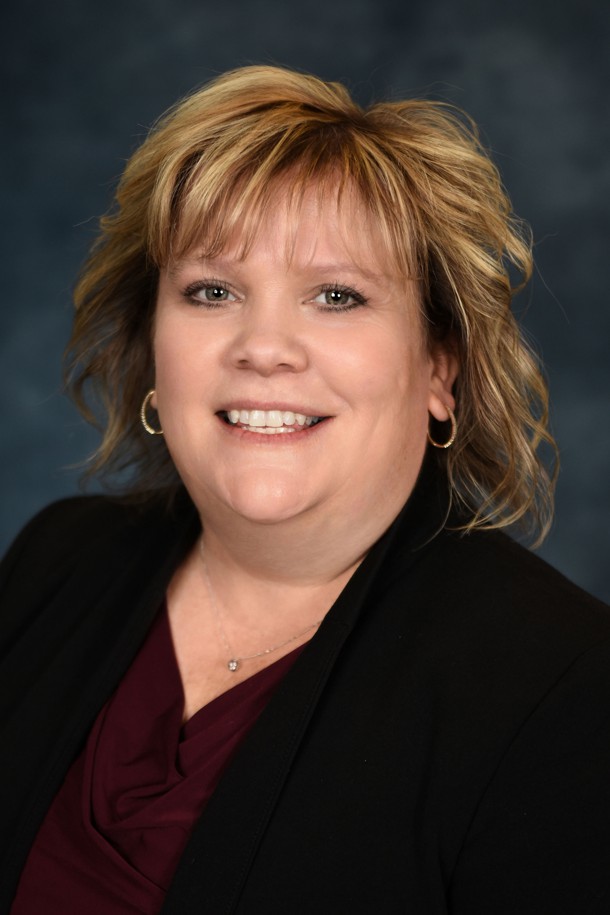
Relationships are at the heart of the career Susan Nicholson has built over nearly 30 years at S&T Bank, where she is currently executive vice president and chief human resources officer.
Some 1,300 employees at the Indiana, Pennsylvania-based bank know her simply as “Susie” – including the many who have found support and networks through the Employee Resource Groups and affinity groups she helped establish, and through the mentorship program she most recently spearheaded.
A self-described “lifelong learner,” Nicholson currently leads a 32-strong team that handles all aspects of human relations across 80 locations in the commonwealth and Ohio. The Blairsville native first joined S&T as a part-time teller while in college, holding retail branch positions and eventually becoming organizational development manager.
Most notably, Nicholson has played an integral role in the bank’s successful mergers and acquisitions – managing employee integration, training and cultural alignment.
“I hope to inspire others to add another chapter in their career with S&T,” she says, “and lead by example.”
She currently serves on the bank’s Inclusion Leadership Council and, in 2021, launched S&T’s first mentorship program, an especially meaningful project for her.
“I try to be a role model for many, but especially the women who work closely with me throughout the organization,” Nicholson reflects. “The internal and external relationships that I have built are all for the success of our business today – and building sustainability for tomorrow.”
Bryanna Pardoe
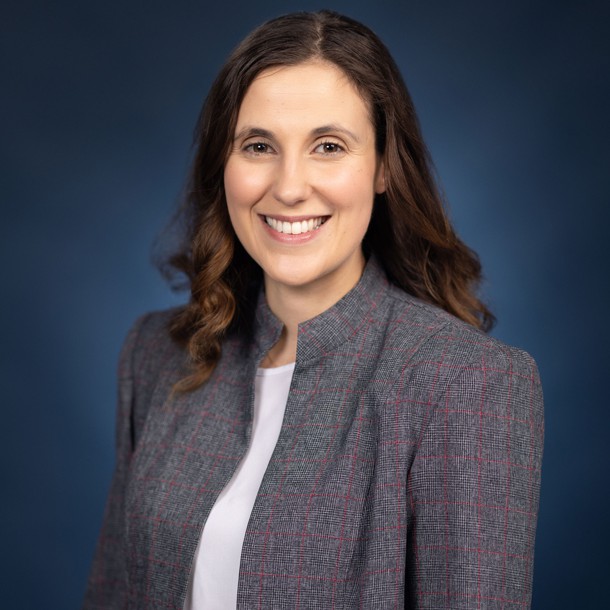
Bry Pardoe is the woman taking Pennsylvania into the digital future. Previously the executive director of the Commonwealth Office of Digital Experience, known as CODE PA, she has served as the state’s chief information officer since fall 2025, overseeing IT services for the state’s executive agencies.
At CODE PA, Pardoe focused on improving Pennsylvanians’ online interactions with state agencies. Her team upgraded and streamlined dozens of online transactions, including permitting, eligibility checks, and insurance claim appeals. To ensure constituents could easily navigate the website, she spearheaded the modernization of CODE PA’s digital infrastructure by migrating services to more efficient platforms.
Making technology user-friendly has become a calling card for Pardoe, a Milton native who previously held digital engagement leadership roles at Main Line Health and Geisinger Health System.
“Being a woman in IT, especially a young woman, can be intimidating,” reflects Pardoe, who is also a youth soccer coach. “I’ve been incredibly fortunate to have strong female mentors in every job I’ve ever had – women who not only invited me to the table, but who encouraged me to speak up and share ideas for transformation.”
Holly Pilcavage

A tireless booster of her Luzerne County community, Holly K. Pilcavage believes “meaningful change happens when people are invited to grow, not forced to fit,” as she puts it.
Within months of joining Luzerne County Community College, where she is the vice president for enrollment management and student success, Pilcavage steered the annual Foundation Scholarship Dinner through major transitions, exceeding both attendance and fundraising goals.
An expert at maximizing meals, she also reimagined the Legislative Breakfast of the Greater Wyoming Valley Chamber – which she chairs – as Legislative Advocacy and Education Day, a half-day conference with rising attendance each year.
Pilcavage also organized Wilkes-Barre’s first-ever Pride Parade in 2022, drawing 4,500 attendees – the largest parade in city history at the time. And as board chair of Dress for Success Luzerne County, she spearheaded the 31 Days of Women in Power campaign, raising over $130,000 since 2021.
What all of this has in common, she says, is “a focus on building systems that help people feel seen, supported, and capable of more than they imagined.
“Early on, I looked outward for validation,” she adds. “Over time, I’ve learned to trust my judgment, especially when making difficult or unconventional decisions…Growth sometimes requires stepping away from roles that once fit to make space for what’s next.”
Mary Kate Radomski
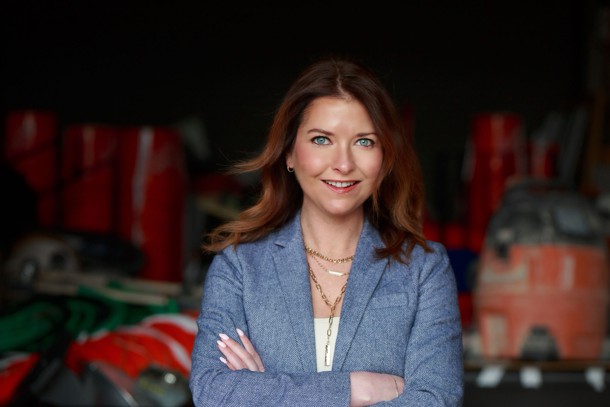
One of Mary Kate Radomski’s proudest moments came when she was named the first female president of her fourth-generation family construction outfit, Frank V. Radomski & Sons. She calls her approach “forward-looking and people-centered,” an ethos she also applies to her numerous civic leadership roles and her work to advance industry diversity.
A Temple University graduate from Erdenheim, Radomski currently serves on the boards of both The Carpenters’ Company and Philadelphia’s powerful General Building Contractors Association, where she has served on the Government Affairs Committee and previously chaired the Construction Leadership Council.
In all her roles, she is active in promoting mentorship and workforce development through partnerships with local schools and organizations, encouraging young people – especially women and underserved communities – to pursue careers in the skilled trades.
“Being a woman in the construction industry has come with both challenges and opportunities,” she says. Years ago, women struggled to prove themselves; today, Radomski sees her peers step into leadership, technical, and field roles.
“Over time, the industry has made meaningful progress,” she adds. “Now, I prioritize creating opportunities for others to see construction as a viable, rewarding career. Diverse perspectives strengthen our industry.”
Bernadette Rappold

Attorney Bernadette Rappold has been a shareholder in Greenberg Traurig’s Environmental practice since 2016, focusing on federal and state regulatory issues related to energy, manufacturing and environmental safety.
Rappold is known for litigating the “Downwinder Cases,” representing people exposed to radiation from living near nuclear weapons plants, and for drafting a groundbreaking order that paved the way for the creation of Washington, D.C.’s new Navy Yard neighborhood.
Her deep environmental and regulatory knowledge was honed over five years at the Environmental Protection Agency, where she served as a director in the Special Litigation and Projects Division. At the EPA, she led complex enforcement actions against violations of the Clean Air Act, the Clean Water Act, the Resource Conservation and Recovery Act, and other environmental statutes.
“Even in 2026, women still constitute a minority of environmental, health, and safety law practitioners,” Rappold reflects. “This comes with challenges – and opportunities. To be a woman in a smaller legal field results in opportunities for women to distinguish themselves.”
Shelley Riser
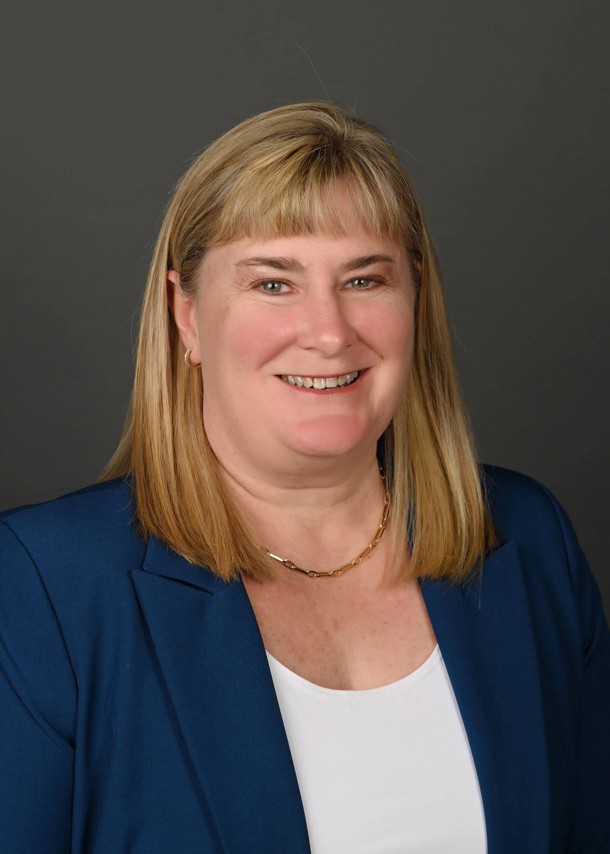
Nurse-turned-healthcare executive Shelley Riser takes great satisfaction in being “able to serve from the bedside to the board room,” as she puts it. She currently serves as CEO of both the Pennsylvania Association of Community Health Centers and the PA Health Center Technology Alliance.
“The opportunity to lead organizations, serve as a professional educator, engage across the community health care, health system and technology sectors – that has been a rewarding journey in my career,” says Riser. “And serving as a leader through times of growth and complexity.”
The Harrisburg native holds a master’s in health services administration from the University of St. Francis and a nursing degree from the University of Pittsburgh, where she is an alumni life member. A registered nurse, she remains active with the Pennsylvania Organization of Nurse Leaders and serves on the Harrisburg University of Science and Technology Nursing Advisory Board.
Riser knows she couldn’t have gotten there without the support of others. “Mentors have played a key role – to encourage, support and shine a light,” she says. “I am grateful for those that have represented me in rooms I was not yet in. As I have moved through my career, it has been my honor to serve in this role for others and give back.”
Morgan Robinson
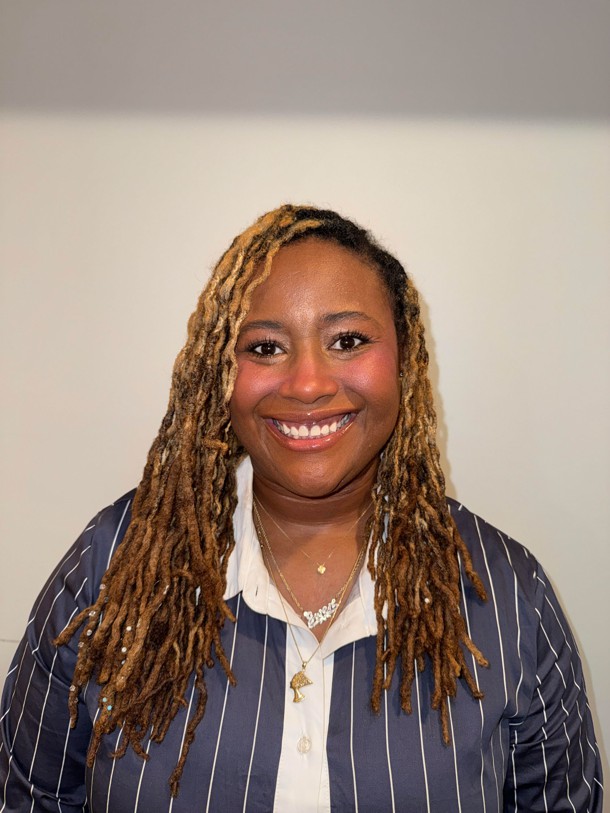
Morgan Robinson not only marshals support for the causes and institutions that make her native Philadelphia special; she also models civic engagement in her personal life, serving as president of the League of Women Voters of Philadelphia.
“At the end of the day, people give to people,” observes Robinson, whose fundraising career has spanned children’s education, healthcare advocacy and community development. “Fundraising is about real connection – over coffee, on a walk, or through shared experiences. Strategy matters, but heart makes it last.”
Robinson currently brings her impact to the American Association for Cancer Research, where she directs national partnerships with disease-specific foundations to advance breakthrough research as the associate director for foundation relations. She previously led major initiatives and secured multimillion-dollar gifts for the Please Touch Museum, Girl Scouts of Eastern Pennsylvania, and the American Cancer Society.
A Temple University graduate, she is also a former president of Young Involved Philadelphia and an alumna of the Buchholz Fellowship and PEW Emerging Leaders cohorts, and a current member of the Forum of Executive Women.
“Being a woman in fundraising and civic leadership, I’ve learned that empathy is a strength, not a weakness,” says Robinson. “We’re often expected to balance warmth with authority, but leading with kindness and strategy is what makes the work meaningful.”
Ellen Rossi
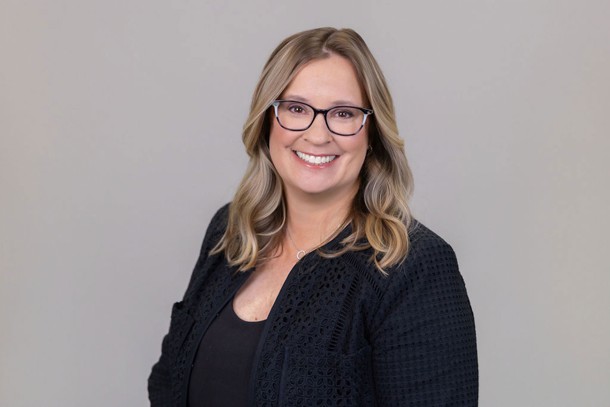
In the traditionally male-dominated energy industry, Ellen Rossi has made her mark – most recently at EQT Corporation, the nation’s leading natural gas producer.
She leads philanthropic strategy as president of the EQT Foundation, overseeing more than $8 million in annual investments that support education, workforce development, community enrichment, and the environment across Appalachia. Her Capacity Grant Program alone has awarded more than $1 million to date to supporting nonprofits across EQT’s operating footprint.
While women are still underrepresented in energy, “in philanthropy and community relations, I’ve been fortunate to work alongside many strong female leaders,” Rossi reflects. “I believe women often bring a collaborative, relationship-centered approach that strengthens this work.”
The lifelong Pittsburgher and Duquesne University alumna also directs EQT’s corporate giving and employee engagement programs. She spearheaded a Giving Tuesday match initiative that generated over $2 million in charitable giving on a single day in 2025. Under her leadership, employees also contributed more than 35,000 hours of service to their local communities, thanks to the EQT employee volunteer engagement program that Rossi built and scaled.
Rossi doesn’t just organize philanthropy; she models it, serving on numerous nonprofit boards and committees, including Elevate NP of Southwestern PA. She also makes time for other women in the energy sector. “Throughout my career, mentorship has been critical to my growth, and I feel a responsibility to pay that forward,” she says, “creating space, sharing access, and helping other women build confidence and leadership pathways within our industry.”
Kristen Rotz
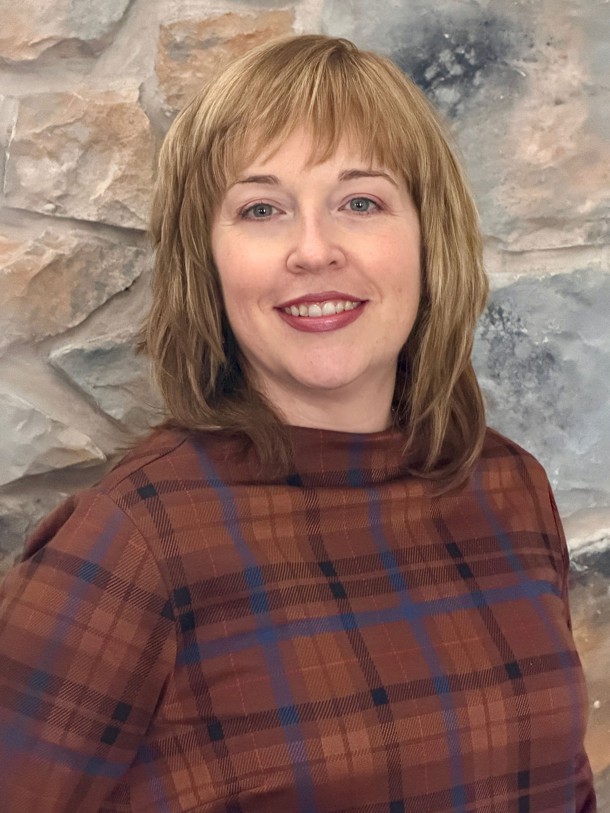
At United Way of Pennsylvania, President Kristen Rotz has led a resurgence in the organization’s policy advocacy and public impact.
Last year, after years of advocacy, she celebrated the success of the Working Pennsylvanians Tax Credit, “the first change in PA earned income tax policy in more than 50 years,” she says. Indeed, Rotz’s efforts have helped shape changes to state law and regulations for issues ranging from how county human services are funded to alternative energy credits and tax assessment benefits for farms and forestland.
Rotz was already an experienced association leader when she joined the United Way 11 years ago. In the years since, she has overseen the launch of the ALICE project, which collects data to understand modern financial hardship in working households, and helped secure state funding to expand the PA 211 service across the commonwealth.
In her spare time, the Marysville native volunteers as a tax preparer for United Way of the Capital Region’s Money in Your Pocket program, and holds several volunteer roles at National United Way and 211 committees.
“Seeing through the eyes of others is part of understanding your value and where you can play to your strengths,” Rotz observes. “Everyone can be a leader in any space they want to carve out for themselves – whether that’s at work, at home, or in the community.”
Eliza Salerno
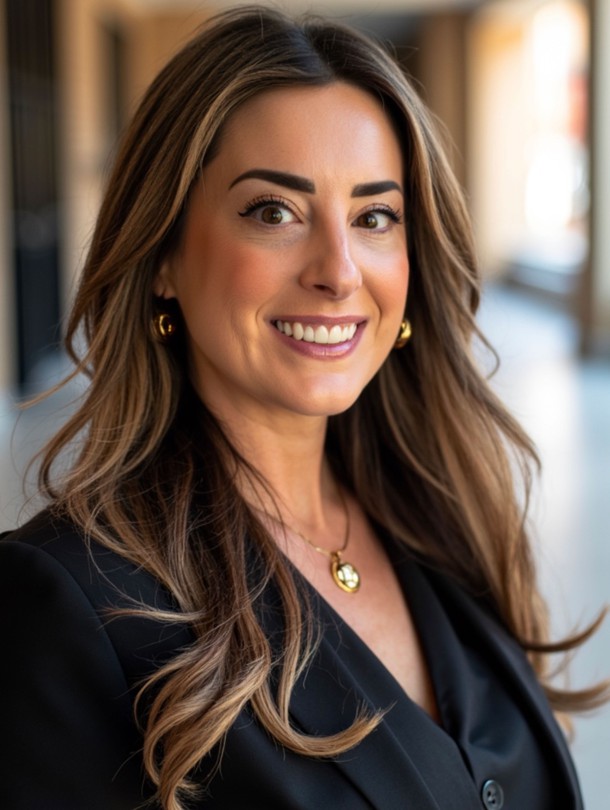
Healthcare is female-dominated, yet throughout her career, Eliza Salerno has frequently found herself among the few women leading the strategy, finances and digital innovation that power the field.
“That experience strengthened my resilience and sharpened my voice,” reflects Salerno, who is currently the chief operating officer of Medical Guardian, a healthcare technology company whose products and services empower aging adults to live independently and safely. “I’ve learned that empathy, collaboration and decisiveness are complementary strengths – and critical in transforming healthcare.”
The New Jersey native and Rutgers University graduate joined Medical Guardian nearly a decade ago as a senior information technology project manager. Helping to expand the company’s vision through technological innovation, she says, is “the defining highlight of my career.”
As Medical Guardian evolved from a reactive hardware company to an AI-driven digital health platform, Salerno took on a variety of leadership roles, helping steer successful acquisitions and strengthening financial accountability.
Hoping more women will follow in her footsteps, she is a member of the board of Evoluer House, a nonprofit dedicated to expanding girls’ educational and career opportunities, and the Women Business Leaders of the U.S. Health Care Industry Foundation.
“Representation in AI and digital health leadership remains uneven,” reflects Salerno. Mentoring other women “ensures visibility and stretches opportunities – so women’s leadership in healthcare innovation becomes standard, not exceptional.”
Debra Townsley
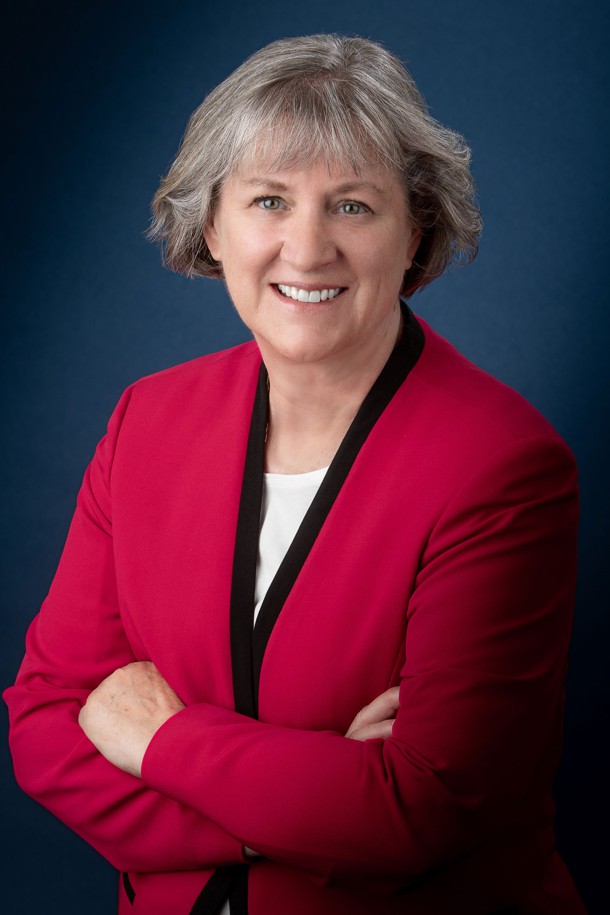
Longtime college president Debra Townsley cites a simple, compelling motivation for a career in higher education: “Working with students and alumni,” she says. “The impact of higher education on my own life was profound; I have seen firsthand how transformative it can be for students. Hearing alumni reflect on their journeys and how their experiences shaped their lives continually reaffirms why this work matters so deeply to me.”
But Townsley isn’t just a passionate educator; she’s also a savior of educational institutions – most recently Albright College, where she arrived as interim president in 2024 to oversee a turnaround. During her short tenure, the Reading college has dramatically reduced expenses, avoided new debt, aimed for a balanced budget and strengthened ties with the community.
Townsley, who holds an MBA and a doctorate in organizational psychology, combines a scholarly approach with the worldly perspective she honed in early corporate jobs. That combination of talents served her well in earlier roles as president of four colleges, where she earned a reputation for boosting enrollment and spearheading community partnerships to bolster academic programs and expand regional opportunity.
At a moment of unprecedented challenges for academia, Townsley feels her brand of business savvy is not only an asset for women leaders but essential for building credibility and influence with senior administrators and governing boards.
“I pursued leadership not only to contribute strategically, but to advocate for equity, expand pathways for the next generation of leaders, and serve as a visible role model for students,” she explains. “Institutions are strongest when leadership reflects a diversity of perspectives and experiences.”
Kala Umberger

In everything she does, Kala Umberger maintains what she calls “the consistent belief that investing in people leads to sustainable success,”
That ethos has made her an effective relationship manager at Members 1st Federal Credit Union, where she has spent more than a decade serving members, colleagues, and her community. Over the years, she has mentored branch associates and interns, led regional teams, and played a key role in integrating and training new assistant managers.
Umberger knows that success is not just about financial knowledge, but also leadership skills and confidence – three qualities she works hard to instill in new employees. She also works closely with local nonprofits, providing budgeting guidance and connecting organizations to critical resources during times of financial challenge.
She models those values outside the office as well: Umberger volunteers with Habitat for Humanity, Ronald McDonald House Charities, and Pathways Forward, an organization that provides mental health and case management services.
She is especially passionate about her mentorship through Members 1st Federal Credit Union’s development and internship programs. Earlier in her career, she worked in “environments where women, particularly working mothers, were underrepresented,” she says. Today, she is “encouraged by the industry’s progress toward greater representation and work-life balance – and passionate about supporting women through inclusive leadership, mentorship and workplace cultures that allow individuals to succeed.”
Ashley Walkowiak
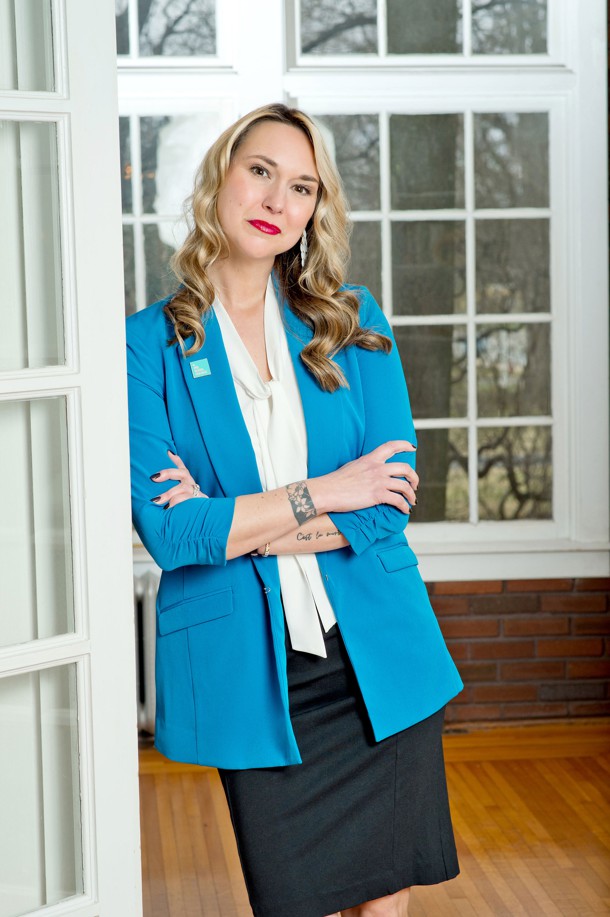
“When women are empowered and supported, entire communities are transformed,” says Ashley Walkowiak, who has put this philosophy into practice across a long career and women’s and victims’ advocacy.
Currently serving as the executive director of Gov. Josh Shapiro’s Advisory Commission on Women, Walkowiak created the first subcommittee dedicated to Violence Against Women and Prevention. A survivor of sexual violence herself, she led a first-of-its-kind domestic violence art exhibit and community toolkit in partnership with the Carnegie Museum of Art and Women’s Center & Shelter of Pittsburgh.
Walkowiak brings a wealth of experience in trauma-informed public service to her role. A native of Mechanicsburg, she is a former chair of the Cumberland County Commission for Women. At the state Office of Victim Advocate, she worked on major cases like the Catholic Church Grand Jury Report and the Bill Cosby sentencing.
“Working in women’s advocacy has shown me the power of bipartisan collaboration and the unique space women create when they share their stories honestly,” says Walkowiak, a mother of three.
“Some of the most meaningful progress I’ve seen has come from women across political and professional lines finding common ground around lived experience. That sacred space builds trust, reduces stigma, and leads to real policy change.”
Jaime Marie Whalen
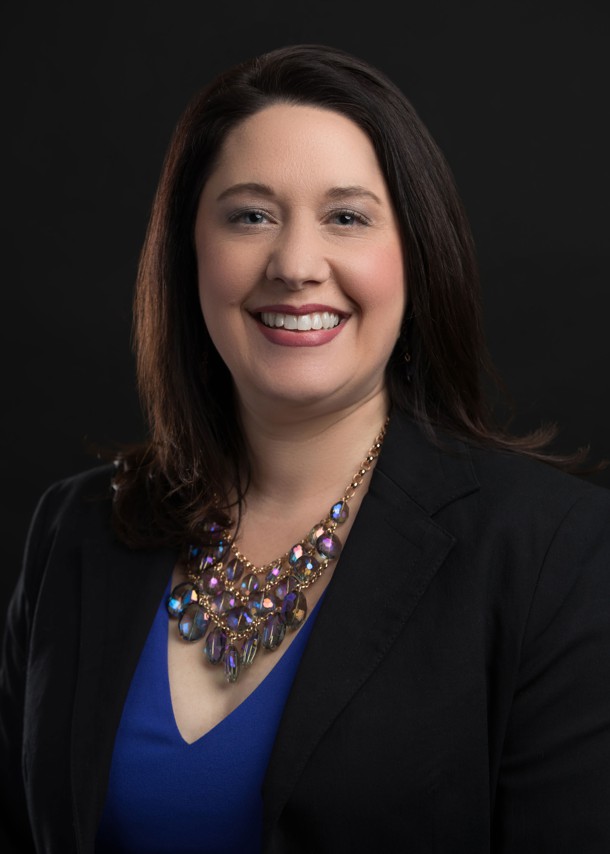
When Lehigh Valley was recently named Site Selection Magazine’s top midsized market for economic development, Jaime Marie Whalen was hardly surprised.
That’s because, for over a decade, Whalen has been a key player in driving growth across her home region with the Lehigh Valley Economic Development Corporation, where she serves as executive vice president and chief of staff. In fact, for most of Whalen’s tenure there, the region has garnered a Top 10 spot on those same rankings.
Whalen, a native of Easton, earned an economics degree from Bloomsburg University (now Commonwealth University-Bloomsburg), then spent over a decade working as a legislative staffer at the Pennsylvania House of Representatives. She joined the Economic Development Corporation in 2013 and has held a succession of finance leadership roles; in 2018, she was named a Lehigh Valley Woman of Influence.
In her current post, she helped boost fundraising by 35%, setting records and lifting the corporation out of its pandemic-era doldrums. A highlight of Whalen’s tenure was her leadership during the COVID-19 crisis, when she managed reserves and avoided layoffs while expanding business support.
“I’m proud to have earned a seat at the table,” says Whalen. “Over time, I’ve seen more women stepping into leadership roles in economic development, which is encouraging and energizing.”
Julie Wheeler
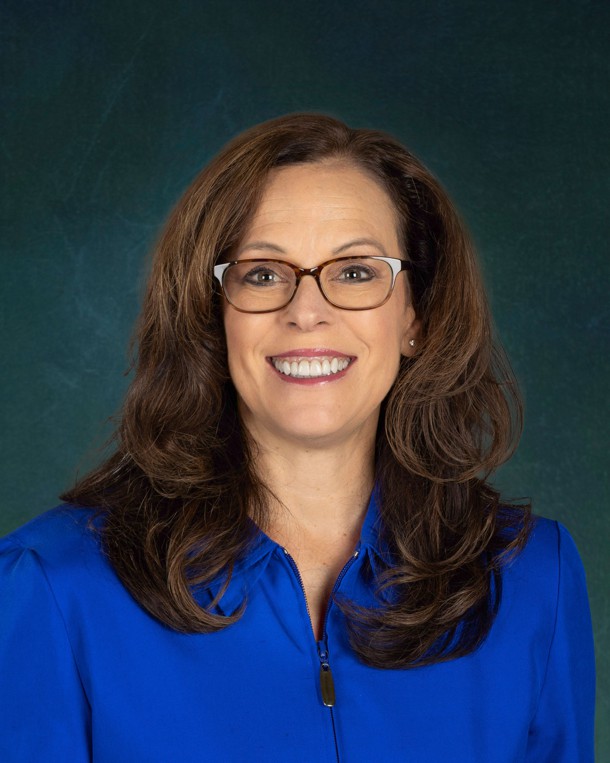
After 30 years in corporate healthcare technology, Julie Wheeler decided to devote her energies full-time to the county she has long called home. Now president commissioner of the York County Board of Commissioners, to which she was elected in 2019, she also serves as treasurer of the County Commissioners Association of Pennsylvania and is active with the National Association of Counties.
Lessons from her corporate career are never far from her mind. “Since taking office, I have brought a pragmatic, business-centered approach to York County government,” says Wheeler, who spearheaded the first-ever strategic plan for the commonwealth’s eighth-most-populous county.
Her tenure has been notable for its efforts to modernize the elections system; the deployment of a first-of-its-kind water quality monitoring system; and a tax rebate program to boost fire department volunteer recruitment and retention.
Born and raised in York County, Wheeler is a graduate of Randolph-Macon Women’s College, the Jack Welch Learning Institute and the Anne Anstine Institute for Excellence in Public Service.
“Throughout my career, I have had some remarkable mentors – and I’ve learned that collaboration is a key to success,” says Wheeler. “After all, most of the issues facing businesses, nonprofits and governments are complex and require you to bring all stakeholders to the table … That’s how innovation and creativity happen.”
Shannon Williams
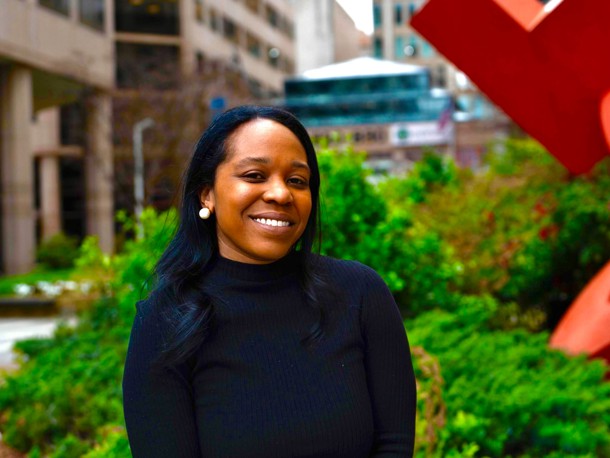
“When I first started in this field, I was told that I would be tired, in the best way,” recalls Shannon Williams, a veteran of numerous nonprofit and public policy campaigns and coalitions. “Which couldn’t be more true.”
As senior vice president for advocacy for the Chamber of Commerce for Greater Philadelphia, Williams shows no signs of fatigue. The Swarthmore native began her career working for The Urban League of Philadelphia, and later honed her talents in the nation’s capital, working for Equal Rights Advocates, a national legal advocacy organization, as the director of organizing an advocacy campaign strategy for the Children's Defense Fund.
Along the way, she is proud of having organized a national, nonpartisan campaign to increase civic engagement and maximize voter participation in minority communities. She also led a national coalition that organized efforts to close the gender and racial wage gap – including advocacy for pay equity for the U.S. women’s soccer team.
“As a woman, and as a Black woman, I am facing many of the issues that I am advocating to change,” says Williams, who finds solidarity and support in her Alpha Kappa Alpha Sorority ties. “But that also becomes the advantage of working in this field. It gives me a connection to the work that influences and impacts my strategy.”
Leslyn Williamson
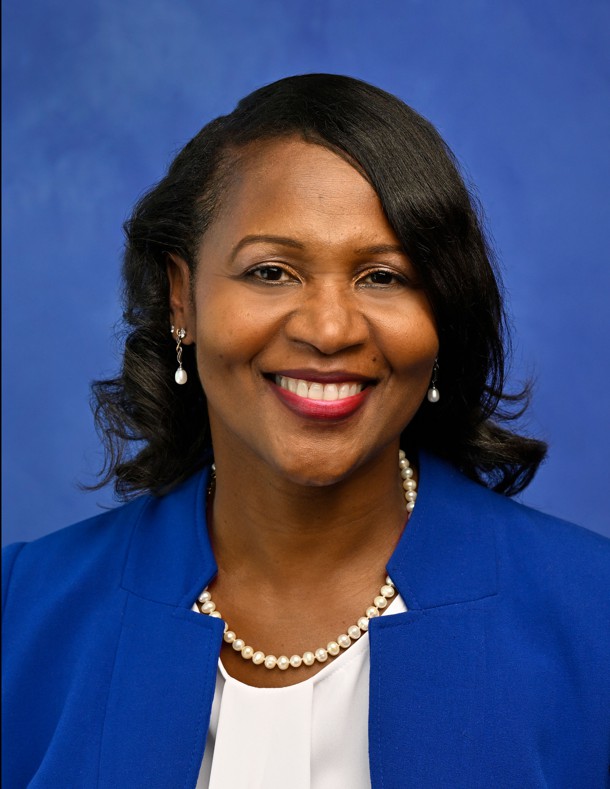
Longtime healthcare executive Leslyn Williamson currently serves as president of Penn State Health’s Hampden and Holy Spirit medical centers, where she leads transformative initiatives to elevate quality, expand services and strengthen academic partnerships.
Before becoming president, Williamson served as the chief operating officer and chief nursing officer for both medical centers. In this role, she was responsible for a variety of patient services and departments, from behavioral health and pharmacy to physical, occupational and respiratory therapy.
Williamson holds a master’s in nursing administration from Mercy College; a master’s in public health, health policy and management from New York Medical College, and a doctorate in nursing practice from Rutgers University. A board-certified advanced nurse executive, she is a fellow of the American College of Healthcare Executives and a graduate of the Wharton Nursing Leadership Education Program.
Earlier in her career, she held nurse leadership positions at Mount Sinai Beth Israel Hospital and Montefiore Medical Center, both in New York. Before joining Penn State Health, Williamson was the chief operating officer and chief nursing officer at Ellis Hospital, a 438-bed, specialized community hospital in Schenectady that is part of the Ellis Medicine System.
NEXT STORY: The City & State 2026 Black Trailblazers