

sponsor content What's this?
Sponsored Content
New Report Finds Pennsylvania Hospitals, Local Economies at Risk
With hospital funding in Pennsylvania falling behind peers, sustainable payments are now needed to stabilize care, an analysis finds.
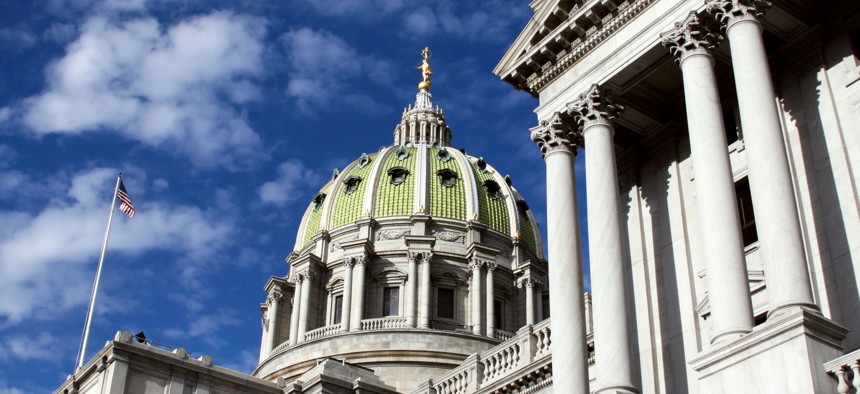
The Pennsylvania Capitol in Harrisburg Getty Images

Presented by:
Strong hospitals are essential to our communities. But a new report by a national consulting firm finds that many Pennsylvania hospitals will be at risk without support from state policymakers to ensure sustainable funding for the care communities need.
The analysis by Oliver Wyman—commissioned by The Hospital and Healthsystem Association of Pennsylvania (HAP)—finds that operating a hospital is more challenging in Pennsylvania than elsewhere, largely because the commonwealth lags behind peer states in adequately funding hospital care. Fewer than half of the state’s hospitals are operating with sustainable margins—37 percent are operating with a loss—and across the state, 25 of them have closed in the past decade. Many others have had to close essential services, like labor and delivery.
Without intervention, as many as 12–14 more hospitals could close over the next five years, adding 22 minutes to Pennsylvanians’ average drive to the nearest hospital and costing $900 million in lost wages due to job losses, the report projects. Rural hospitals are especially at risk as they serve a greater share of Medicare, Medicaid, and uninsured patients.
“Without timely, targeted state support, many Pennsylvania hospitals will struggle to maintain existing services or make the necessary investments in workforce, technology, and infrastructure that Pennsylvania needs,” the report notes.
The report identifies actions to improve Medicaid reimbursement, reform medical liability rules, and streamline administrative requirements as the greatest opportunities for state policymakers to help stabilize hospitals.
While federal cuts enacted through last year’s reconciliation bill will significantly worsen hospital reimbursement, the report finds that Pennsylvania hospitals have already been at risk due to chronic underfunding. Medicaid reimbursement in Pennsylvania is 11 percentage points lower than the national average. The state’s Medicaid program—which provides health coverage for nearly 1 in 4 Pennsylvanians—already pays hospitals only 71 cents, on average, for each dollar they spend providing care to enrollees.
“This expert analysis underscores the urgent need to safeguard access to the care communities depend on,” HAP President and CEO Nicole Stallings said. “We cannot have healthy, vibrant, and competitive communities in Pennsylvania without strong, financially stable hospitals. HAP stands ready to work with policymakers to ensure hospitals can sustainably serve their communities.”
HAP is advocating for investments in the 2026–2027 state budget to better align hospital payments with the cost of providing care.
The report notes that these challenges are despite Pennsylvania hospitals’ efforts to improve their own efficiency, keeping their cost per discharge 29 percent lower than their peers in neighboring states. In addition to their structural deficit, Pennsylvania hospitals are strained by the highest per-resident cost of medical liability payouts in the nation ($43), a projected shortage of 22,000 nurses by 2028, and outdated hospital regulations, the report found.
“Pennsylvania hospitals have made significant efforts to manage operating costs and reduce waste without compromising safety,” the report notes. “Unfortunately, these efforts are not enough to mitigate the combined effect of lower reimbursement from commercial and government insurers as well as rising labor and medical liability costs that have eroded hospital margins and financial resilience across the commonwealth.”
The report is available online at https://tinyurl.com/4k68afpv.
Liam Migdail is the vice president of strategic communications for the Hospital and Healthsystem Association of Pennsylvania.
NEXT STORY: Flexibility and Security Should Go Hand in Hand for Independent Workers