
Politics
Philadelphia’s neighborhood schools make – or break – their communities
Three Philadelphia public school alumni explain why the School District of Philadelphia needs to rip up its plans to rip out the heart of 17 city neighborhoods.
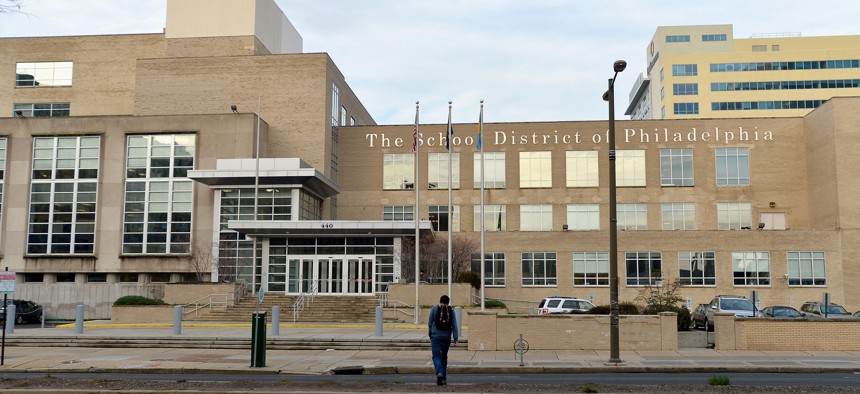
School District of Philadelphia main offices Paul Marotta/Getty Images

When invested in and supported, neighborhood schools are the promise of public education made real: a door that opens for every child who arrives, whether new to this country, new to the neighborhood, born to a family that has lived on the same block for generations, or carrying all the hope in the world and none of the connections yet.
That open door is not charity. It is a public obligation, one that Black communities fought generations to establish. We know because we have lived it.
All three of us graduated from Philadelphia public schools. We grew up attending school here in the 1990s, when there was almost no separation between school and community. We remember the classmates and kids we played with after school and on weekends. Their families knew each other. School was part of the neighborhood, and the neighborhood was part of the school.
Schools hold football games, polling places, meetings and reunions. They hold relationships between families, teachers, neighbors and generations. When one disappears, we don’t just lose classrooms. We lose another institution connecting people to one another, and one generation to the next.
That is why the School District of Philadelphia's proposal to close 17 school buildings demands more than an administrative explanation. Closing 17 schools would reshape parts of Philadelphia permanently, long after the doors are locked and the buildings are sold.
The SDP should withdraw the current closure proposal and work with the communities that would bear its consequences to develop a different plan – one centered on investing in children and neighborhoods rather than another round of closures.
There is a deeper history behind that demand.
Public education was never simply a gift handed down by the government. Black communities fought to establish public education as a public responsibility, including during Reconstruction, and generations since have fought to expand and defend that promise.
Pennsylvania is still struggling to fulfill it.
In 2023, Commonwealth Court found Pennsylvania's system for funding public education unconstitutional, concluding that students in lower-wealth districts were being deprived of the resources necessary to receive the education guaranteed to them under our state Constitution. Yet years later, our schools still do not have all the resources they need.
We should not allow decades of underinvestment to become the justification for another round of disinvestment.
For too long, Black and Brown communities have been told to accept fewer resources, fewer public institutions and fewer places where our children and families can build community. Then, after those institutions struggle under the weight of that neglect, we are told that closing them is the only responsible choice.
We reject that choice. What our neighborhood schools need is sustained public investment. And the people closest to these schools – the students, parents, educators and neighbors who depend on them – need real power in determining their future.
Communities have already given the district their time. Families have attended meetings, testified, organized and explained what their children need. Too many have walked away believing that the major decisions had already been made.
That is dangerous far beyond this particular fight.
We are living through a moment when trust in government and public institutions is already dangerously low. When people attend meetings, testify, organize and speak up, only to conclude that the outcome was predetermined, we shouldn’t be surprised when they decide the government doesn’t listen to them. This city’s politics are dominated by Democrats, the party that believes in making government work for people. In this moment, will the party let people’s cynicism continue to fester, refusing to hear the needs of people in our communities?
Imagine if we put the same urgency behind strengthening these schools that we are now putting behind deciding which ones to close.
More opportunities for students, more early childhood seats, more teachers and support staff, more academic and extracurricular programs. Buildings that are safe, welcoming and alive beyond the school day. Neighborhood schools that families choose because they are confident their children will get what they need there.
Those should be the priorities – not closures.
The school board, SDP leadership and the Mayor Cherelle Parker still have an opportunity to get this right by withdrawing the current closure proposal and going back to the communities that will bear its consequences. They must take into account what families have already said they need and build a plan with them for strengthening public education neighborhood by neighborhood.
We inherited schools that generations of Black and Brown Philadelphians fought to build, fought to fund and fought to keep open through every round of disinvestment before this one.
Before we close the doors of 17 neighborhood schools, Philadelphia should fight together to give those schools – and every child who walks through their doors – what they need to thrive.
It is time to go back to the communities that have already given the decision-makers their time, testimony and trust – and to bring them a plan worthy of what generations of Philadelphians fought to build.
Philadelphia City Councilmember Isaiah Thomas is the chair of Council’s Committee on Education. Steve Paul is the executive director of One Pennsylvania. Farah A. Muhammad is civic engagement director at One Pennsylvania.
NEXT STORY: Congress needs to stamp out the intoxicating hemp products loophole