

Opinion
PA’s approach to kratom risks making the same mistakes as before on policy and enforcement
The executive director of the Pennsylvania Chiefs of Police Association explains why any decision made about the substance requires more than simply choosing between prohibition and regulation
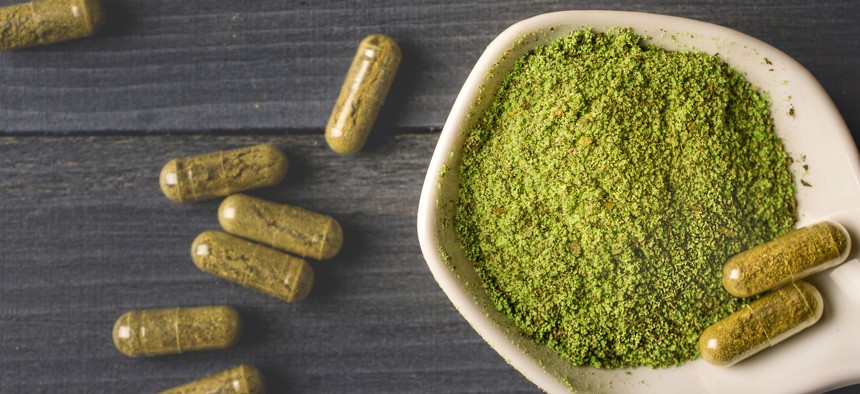
Kratom in powder form and in capsules MYSTERY SHOT/GETTY IMAGES

Pennsylvania has spent decades confronting dangerous drugs, addiction, and the human suffering that follows. We have witnessed the devastation of the opioid epidemic, the emergence of fentanyl and the consequences of failing to recognize dangerous substances before they become widespread public-safety threats.
Now Pennsylvania faces another consequential decision: whether to establish a regulated commercial marketplace for kratom before fully understanding its health and public-safety risks. Before making that decision, lawmakers need to ask one question: Why would Pennsylvania regulate first and investigate later?
Recent reporting by The Philadelphia Inquirer highlighted growing concerns surrounding kratom and its increasingly potent derivatives. Philadelphia has responded with restrictions, while state lawmakers consider legislation establishing a broader regulatory framework.
As executive director of the Pennsylvania Chiefs of Police Association, I believe this debate requires more than choosing between prohibition and regulation. It demands scientific evidence, responsible legislation and a commitment to protecting our communities. The question is not simply whether kratom should be legal; it is whether Pennsylvania has sufficient evidence to determine which products can be sold safely.
Kratom comes from a Southeast Asian tree containing compounds that interact with opioid receptors. Some individuals report using it for pain relief or managing opioid withdrawal. Those experiences deserve consideration. However, personal testimonials cannot replace scientific evidence establishing safety and effectiveness. More concerning are products containing concentrated or chemically enhanced alkaloids, particularly 7-hydroxymitragynine, commonly called 7-OH. These products can produce substantially stronger opioid-like effects than traditional kratom preparations, raising concerns about dependence, withdrawal, overdose and interactions with other substances.
In July 2025, the Food and Drug Administration recommended federal scheduling of certain concentrated 7-OH products while distinguishing them from natural kratom leaf. That distinction matters. Not every kratom product presents identical risks, but neither should natural origins automatically establish safety.
In August 2025, the Pennsylvania Department of Health issued an advisory concerning increasing poison-control activity involving kratom and 7-OH. Although poison-control reports do not necessarily indicate widespread dangerous use, they are legitimate warning signs that demand investigation. Law enforcement has learned a difficult lesson from previous drug crises: Waiting for overwhelming evidence of harm can mean waiting until prevention becomes considerably more difficult. Pennsylvania should not repeat that mistake.
Pennsylvania already possesses statutory authority to temporarily schedule emerging substances when specific legal criteria are satisfied and an imminent public-safety hazard exists. The commonwealth previously exercised this authority involving xylazine and, more recently, synthetic opioids known as nitazenes.
The state Department of Health should be directed to immediately evaluate whether concentrated 7-OH and chemically enhanced kratom alkaloids meet Pennsylvania’s statutory requirements for temporary scheduling. If they do, the health secretary should initiate appropriate action while the commonwealth conducts a comprehensive scientific and public-safety review. Natural kratom, meanwhile, warrants a different approach: Pennsylvania should temporarily pause legislation that establishes or expands its commercial marketplace until adequate scientific analysis and enforceable safeguards are in place.
This is not an argument for permanent prohibition without evidence. It is an argument against prematurely granting commercial legitimacy.
In April 2026, Pennsylvania’s Liquor Control Board clarified that licensed beer distributors and importing distributors may not sell kratom, synthetic kratom, 7-OH and certain other unregulated substances. That raises an important question: If one commonwealth agency restricts these products within its regulated retail environment, why should Pennsylvania establish a broader commercial marketplace without first resolving the underlying safety questions?
Government policy should reflect a consistent commitment to public protection. Any statewide framework must address product composition, concentration limits, laboratory testing, labeling, age verification, inspection authority, penalties, and enforcement resources.
Police officers cannot reasonably distinguish chemically enhanced substances from traditional preparations based solely on packaging. Nor should local departments inherit complicated enforcement responsibilities without clear statutory standards, training, laboratory capabilities and adequate funding.
A regulatory framework that cannot be effectively enforced offers little meaningful protection. House Bill 2657, which passed the Pennsylvania House in October, recognizes distinctions between natural kratom and synthetic or semi-synthetic formulations. That distinction is constructive, but it does not establish whether proposed safeguards are sufficient.
Pennsylvania should follow a deliberate sequence: First, evaluate concentrated and chemically enhanced substances for temporary scheduling under existing law. Second, conduct an independent assessment of kratom’s risks, including impairment, dependence, overdose potential and drug interactions. Third, establish enforceable standards for product testing, labeling, retail and accountability. Finally, determine whether to authorize commercial sales and under what conditions. Individuals experiencing substance dependence also deserve treatment and support. Effective policy must balance public protection with appropriate healthcare responses.
Reasonable people disagree about kratom. Some believe traditional products offer benefits deserving further research. Others advocate prohibition because of growing safety concerns. Both perspectives warrant consideration. But commercial interests should not determine the timetable for public-safety decisions. Pennsylvania has repeatedly experienced the consequences of responding to emerging drug threats after they became established crises.
We have an opportunity to take a different approach: Investigate first, then establish meaningful safeguards before deciding what should be permitted. That is not an unreasonable standard; it is responsible government. And it is what Pennsylvania's communities deserve.
Scott L. Bohn is the executive director of the Pennsylvania Chiefs of Police Association.
NEXT STORY: Data centers can power up employment in PA – if done right