
Interviews & Profiles
Ask the Experts: Local transit leaders mind the gaps
Public transportation heads from across the state talk about how shortfalls in funding, staffing, routes and more are impacting services
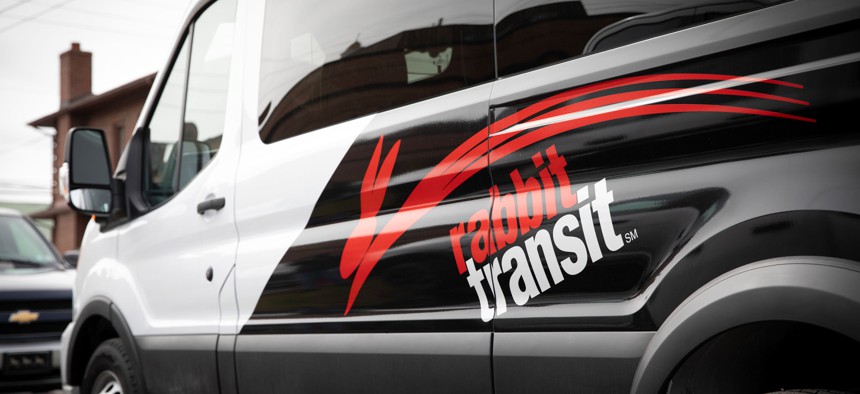
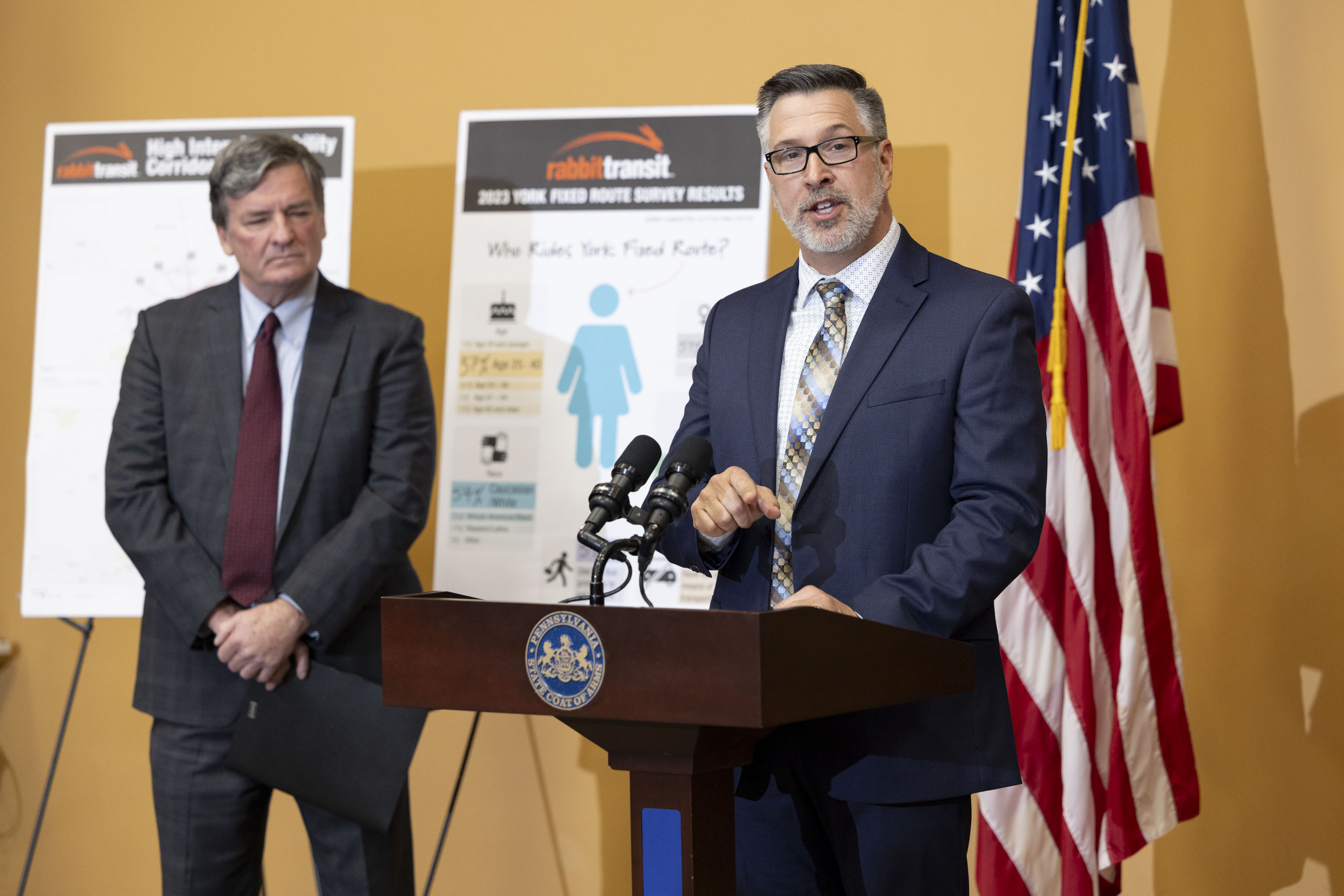
Rabbittransit is a public transportation providers that serves more than 9,000 daily riders across central Pennsylvania. Commonwealth Media Services

Transit talks aren’t taking a back seat in 2026.
Coming off last year’s budget season, which was dominated by the transit funding debate, local transit leaders and riders across the commonwealth are seeking answers. With systems large and small having to make tough decisions to stay afloat and maintain adequate service levels, eyes are on the State Capitol and what transportation funding approach lawmakers can agree on.
Gov. Josh Shapiro offered one solution, proposing to transfer an additional 1.75% of sales and use tax revenues to the Pennsylvania Transportation Trust Fund beginning July 1, 2027, which would provide more than $300 million annually in funding for mass transit.
City & State spoke with Owen O’Neill, executive director of the Lehigh and Northampton Transportation Authority, Greg Downing, executive director of the South Central Transit Authority, Bob Fiume, executive director of the Luzerne County Transportation Authority and Rich Farr, executive director of Rabbittransit in Central Pennsylvania – about ongoing transit talks and where costs and services are becoming issues.
These conversations have been edited for clarity and length.
Are your transit systems approaching a fiscal cliff?
Rich Farr: We're a couple of years out, but we can see it coming; every year it gets closer. There are concerns in our shared-ride program (paratransit shuttles often offering on-demand, curb-to-curb service). We're robbing the fixed-route program (for buses with set schedules and routes) to support the shared-ride program because it has a structural deficit. We're over the cliff in shared-ride – long over the cliff, like I see the rocks coming. It's really terrible. And because we're stealing from the fixed-route program to balance the budget and the shared-ride program, we're creating a fixed-route problem.
We're advocating that part of the transit solution be a redesign. The shared-ride program began in 1980 and hasn't been touched – it is time to revisit it. It could do better for communities, and we need to change how it's funded structurally. And it's not just us – every shared-ride provider in the state is having the same issue.
Bob Fiume: We haven't made any cuts or fare increases in the last few years. Across the state, every agency has a different timeline for reaching its fiscal cliff. In November 2024, we implemented some route changes and added micro-transit (on-demand shuttles). That was a result of our transit development plan – it had been a while since the routes were really overhauled and looked at. We wanted to become more efficient, so we shifted service from some areas.
We are currently gathering information and assessing ridership. We're looking at our authority as a whole, where we could be a little more efficient and where we can cut back a little to save some funding and last a little longer before we hit a fiscal cliff. That's why we're working with our peers across the state to try to get our legislature to adopt some of the funding requested and the funding principles the governor requested.
Greg Downing: We're probably at, right now, about 80% of what our pre-COVID ridership was. We’ve been gradually improving over the years. We did not put out a lot of new service because we were waiting on our transit development plan, which was completed last March. We were then able to combine some routes to be more efficient … We were able to right-size our routes, transport people more efficiently with fewer resources, and still provide the same level of service. That has pushed our fiscal cliff out a good little bit. If we didn't get any more funding, we would probably be a little less than two years away from meeting a fiscal cliff.
Owen O’Neill: We were on this path prior to COVID, when we probably would have been in this position in 2020 or 2021. But then many of the systems received COVID relief funding, so we were able to use those dollars to push the timeline back a few years – but those dollars have been expended and exhausted.
We received some stabilization funding from PennDOT, so we were able to bridge most of that gap for this year and the coming year, too. We have adjusted our service level to keep expenses in line so we can get through the next year, and we expect a new funding bill for the fiscal year starting July 1, 2027.
The phrase we’ve been hearing a lot is that you’re “robbing Peter to pay Paul.” Is that the case within your system?
RF: That's what we're doing. It's really awful, and the shared-ride program is really important. It's how seniors remain independent, and it's how individuals with disabilities get to work. We have to fix it.
BF: We could use that phrase. We're taking fixed-route funds to run the shared-ride program, but shared-ride is very, very important, too. We’re helping a lot of people – you've got seniors, you've got persons with disabilities, you've got medical assistance, and these people have to get out to their doctor appointments and to the grocery store. Especially when their shared-ride goes into the more rural counties, it's a lifeline for people. It keeps them independent and moving – it's a bridge for them, just as fixed-route transit is for a lot of people.
GD: We had a deficit of over $3 million with our shared-ride program last year. That's a difficult pill to swallow because if we could fix our shared-ride problem, there would be no fixed-route problem for me. SEPTA is totally different from SCTA: We run in Lancaster and Reading – that is basically just West Philly, to put it in perspective.
How do you fix the shared-ride problem? That's the million-dollar question.
What are the biggest budget challenges your system is facing?
RF: For the larger systems, the pandemic and the loss of fare revenue had a huge impact on their budgets, which will take them forever to recover from. The shared-ride program is fee-for-service – it's not deficit-funded like the fixed-route – so, no trips, no money. We used almost all of our CARES Act funds to support the shared-ride program; very little was needed for the fixed-route program. We were able to weather the storm with those federal funds.
OO: Our fare increases weren't necessarily tied to the funding issue. We were going to generally return to base fare every five years or so. We're actually required under state law to ensure we're doing things to keep increasing the revenue we get from fares and non-grant sources. We were going to raise our fare in 2020, and then COVID hit, so we decided to put it off. We've waited a few years to support the recovery of ridership and the system, so we feel like this is the time to go ahead and make that adjustment to our fare structure. We're trying to make sure that we are adjusting our service level so that even if we do get a fare increase or a new funding bill, it's going to have to last a while.
BF: There's no doubt that since the pandemic, the ridership has decreased. It is coming back in a lot of areas here, both in fixed-route and shared-ride. We're still not at the level we were pre-COVID in terms of ridership, but those fares wouldn't make the total funding difference we need. Every year, everything goes up. You have contracts with drivers, healthcare and insurance – all the expenses to run an agency are increasing every year.
GD: We were in a very good financial state coming out of the pandemic because we got COVID relief funding and we were able to stay with the service that we were providing. Our ridership dropped to roughly 25-30% of our pre-COVID level, so we were holding on and we are still able to provide the same level of service.
Are rising wages a concern?
RF: We were paying our Commercial Driver’s License drivers $15 an hour. They ripped the flyer off the front door of the Dunkin Donuts, where they are paying people $17 an hour to pour coffee, and said, “I have a CDL, that person is pouring coffee, and they're making more than me.” We raised their wage by $1.50 in the rural counties – it was a $4 million hit to my budget.
We are all wages and benefits. We're a service industry, so the wage war that everybody experienced hit us hard: The cost of parts, the cost of goods and services we buy to operate, all of that has increased more than the rate of inflation. The culmination of all those pieces, and the fact that we haven't had regular fare increases because the people who buy our services, such as the Area Agencies on Aging and the Department of Aging, haven't seen meaningful increases in their budgets in decades. So if we raise our rates, we price out the seniors for whom the program is intended. It is really a menagerie of a mess – a multilayered problem that I think we can solve by going back to the foundation of the shared-ride program.
OO: Obviously, wages have gone up since the end of COVID, along with the cost of people's benefits, medical care and things like that. But the parts we use for our vehicles have also gone up in cost, and fuel prices go up and down. There are many components of our costs that have made the cost structure more difficult, given the amount of funding … It's especially hard on the paratransit side, because those are non-CDL drivers, so those wages tend to be a little lower – in some of the more rural parts of the region, the paratransit system struggles to maintain a driver staff. You're right in that wage level, where there's a lot of competition, especially in the Lehigh Valley, where you have a lot of warehouses and logistics centers that are paying the same, and so there's a lot of different places that people can go.
How do you make fare decisions while still maintaining adequate, accessible service?
RF: It usually is a combination of the two. We can never raise our fares to get us out of a deficit. If you look at our fixed-route bus in York and Harrisburg, the typical rider is a female between the ages of 24 and 40, earning $20,000 a year and with two children. That's who we're raising the fares on, so we have to be mindful. We’d be targeting the folks who need it most, who need help maintaining their livelihoods. By the way, it doesn't solve the problem. We can implement service reductions, but, fortunately, we have another year and a half before we have to make a decision … I'm going to have to pull the money out of the shared-ride program and put it back in the fixed-route program, so I don't have a fixed-route problem. Then, I'm going to have to double the fares on the shared-ride program and reduce service. So if you live in X community right now and you have a weekly service, you'll get service on Monday and Wednesday. So if you need to go to the doctor, you'd better make it on Monday or Wednesday, because that's where this is headed. This is taking us back to the 1980s, when the program started. It's going to be very difficult for consumers to live in that world.
BF: A fare increase would be part of it. However, you have to realize that a fare increase is nominal and doesn’t generate much revenue. I'd have to check what percentage of our budget is fares, but it's not that great compared to the rest of the operating budget. So just by increasing fares by, say, a quarter, you’re not really bringing a lot of money into the system. It obviously would help, but it's not going to be a fix. So it would have to be a combination of some sort of tightening the belt, such as cuts in service, along with fare increases, to make a difference … We have to balance our shared-ride department with money from fixed-route funds. Things are changing, and more people are riding a lot of different programs for longer distances, so there needs to be some sort of either streamlining or funding for shared-ride.
GD: Fixed-route service is not where SCTA has a problem. We are bleeding money on our paratransit service. The intention of the paratransit program was to pay for trips at a clip – some at 70, 75% or 85% at most – so that they pay for the trip. You have some people who need paratransit but don't have a program to help them pay, so they pay 100% for the trip … So when PennDOT makes us charge, we can only charge a certain amount for the trip. That said, gas prices have risen significantly over the last week. Well, that means the trip will cost more. Who pays that? That's the transit agency. And how do we pay for it? We pay it using the fixed-route money.
Where do funding conversations stand in Harrisburg now and what are your thoughts on Gov. Shapiro’s budget proposal?
BF: The governor’s proposal is to move an additional 1.75% of the sales tax over to public transit. Public transit is funded by a formula, and a couple of factors go into it: your hours, your ridership, your miles, etc. That's how you determine what your allocation from the state is for operating and it's held harmless, so you're not going to get any less next year than you did this year.
That 1.75% increase would be applied statewide based on your formula and what you're currently receiving. So everyone would get their share that way. So that's one way to help us with the fixed-route system. The other way, again, is some sort of a fix with shared-ride.
RF: If I’m an entry-level, low-income worker who's not disabled, clearly not a senior, there's no transit for me in rural Pennsylvania. If we're out picking up Mabel, why can't we pick up Joey across the street and take him to work? The current program doesn't allow you to do that because it's a fee-for-service. It's a huge fare, and the lottery buys down the fare so seniors can afford it. We need to restructure this where we take the money away as a fee-for-service and just give it to us as a block grant of some sort, to charge a universal fare for everyone and provide service to those who need it. That is easier said than done.
The second part of our plans is to identify potential service delivery models that could be used and potentially piloted to see how they work. That study is stalled in the governor's office. We need authorization to get that relief so we can get working on it. That's how we will collectively – state officials, transit providers and community stakeholders – sit around the table and talk about how we can make this as effective as possible at the lowest cost possible. That's what needs to happen, and it's not happening.
OO: It's very encouraging that it's still a priority for the administration. This will be the third year in a row that the governor has proposed a similar funding package, so it is obviously very encouraging that he still sees this as a priority in the budget talks.
GD: I have been a loud proponent of Gov. Shapiro’s budgets in the past, and I still am a loud proponent of his budgets. I do understand the other side of it – that it costs for these things. But I would definitely tell you that to be efficient and smart with everything we're talking about, we do need to come up with a plan for a shared-ride program … We need to figure out how to transport our most vulnerable populations without them losing their life savings on transportation. The governor's budget talks a lot about money for transit, and it's allowing us to look at the problem and fund solutions. But in all actuality, we really need to be searching for a solution to that problem.
NEXT STORY: Q&A with SEPTA General Manager Scott Sauer