
Interviews & Profiles
NFL Draft Week Q&A with VisitPittsburgh CEO Jerad Bachar
Pittsburgh has prepared to be the center of the football world this week
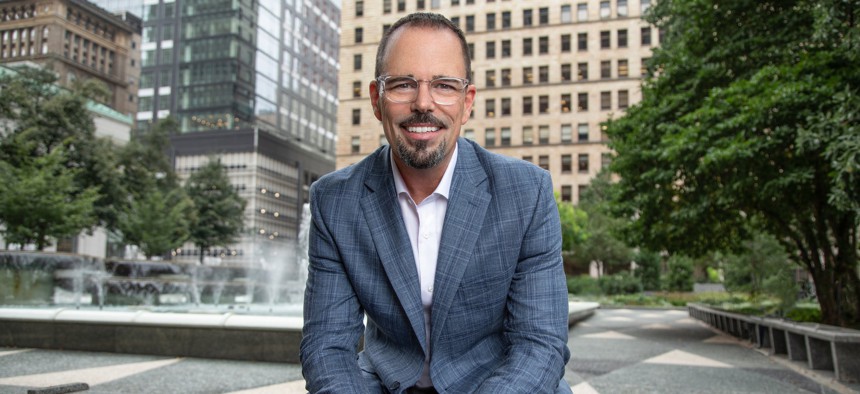
Jerad Bachar VisitPITTSBURGH

It’s officially NFL Draft Week – a pivotal moment for the City of Pittsburgh, which has been preparing to be the center of the football world for years.
One of the leading figures in Pittsburgh’s push is Jerad Bachar, president and CEO of Visit Pittsburgh. City & State spoke with Bachar about the city’s bidding process, preparations and the economic impact the events and investment can have within Pittsburgh.
The conversation has been edited for length and clarity.
How did the city prepare and win its bid for the draft?
We actually started the official process in the summer of 2022. That July, we submitted our letter of interest, along with the Steelers', to the NFL, stating that we’d like to put our name in the mix for future site selection. We then followed up the next year by attending the draft – along with Visit Pittsburgh was a small delegation from the Steelers, who went to Kansas City, attended the draft and attended some of the briefings that the NFL provides to future host cities. At that point, we were engaging directly with the league’s operations site selection group. We were then invited to submit an official bid, which we submitted over the summer of 2023 and then followed up on that by attending the Detroit draft in April 2024. We were awarded the 2026 draft shortly after, in May 2024 – and then we were off to the races into the planning phase.
Did you talk with previous host organizers about their experiences and lessons learned?
Throughout the bid process, we engaged with previous host cities, including our friends in Philadelphia. Along with the Steelers, we had a small group go to Nashville and meet with them. In particular, Nashville was of interest, because it is the only other site where the NFL has hosted the draft where it’s actually split between two different areas by a river. So that’s obviously the case here in Pittsburgh …Since winning the bid, we’ve had a lot of conversations with Kansas City, Detroit and Green Bay, both with the teams and the tourism agencies in those cities.
What were the biggest takeaways from your conversations with them, and how you can apply those to Pittsburgh’s preparations?
The NFL follows a process for the draft. Some dynamics of the draft are consistent across all cities in terms of what they want to bring to the fan experience. But what is completely different is the footprint and the site.
The draft is not something that just comes out of a box, gets set up, is hosted and then goes back in the box. It is really very much designed for each city, and that’s certainly the case when you think about the last four, from Kansas City to Pittsburgh.
Kansas City’s host site was just outside of the downtown area in a municipal park, and included Union Station, which was an incredible draft backdrop for Kansas City, but also very disruptive from a public transportation standpoint. That was an interesting aspect for them to manage.
Detroit’s site, similar to Pittsburgh’s, sat in the center of downtown, a very dense urban core. You’ve got a lot of disruption that comes with trying to put that event in the middle of Detroit. There again, they had a municipal property that they put the draft on, and then built around it. Green Bay is very different; the draft was all around Lambeau Field, not in the urban core, so they had a little more freedom to set up the draft without having to move around a city that already had a lot going on in and around the site.
In Pittsburgh, a lot of the property where this draft is taking place is owned and operated by private entities. Point State Park is the exception, but with everything else, we had to go through a really long acquisition process with each of those property owners. We also have a river in the middle of it, so what does that mean for logistics and security? All of that adds to the complexity of planning an event like this.
What have you done to ensure the draft’s economic benefits spread citywide?
There’s been a lot of focus on exactly that. One of the initiatives that we put in place early on – it started about 18 months ago – is working with the NFL to bring the NFL source program to Pittsburgh. What that program aims to do is to try to identify as many small businesses within the region that provide products and services for a draft-type event. Imagine anything from janitorial services to security or furniture rental and construction, even down to porta-potties – everything you can think of that you need for an event like this, they went out and worked through our various chambers of commerce and different economic agencies to identify 1,700 companies here locally that are small businesses that are minority-owned, women-owned, LGBTQ+-owned. So we’re making sure that all of these small businesses can participate in the NFL's procurement process.
Through that process, we’ve built up a really strong database of companies that work in this space, which is really fantastic, and that database will live on between Visit Pittsburgh, the Steelers and Allegheny County. We’re going to continue to continue to maintain that database and make it available for other event organizers of all sizes. So that is really exciting. When they started with those 1,700 companies and the NFL, they went through a qualification process and narrowed it down to 165 companies that were procurement-ready. They started engaging with those companies on procurement opportunities, which we’ll continue to do so throughout the full event.
The other thing that’s really important to us are some of the other neighborhoods. At the end of the day, it’s important to remember this is an NFL event. They want the fan experience inside their footprint to be great. They want the programming, the broadcast, to be fantastic, so as they’re entertaining, hopefully somewhere around 700,000 fans over three days, they’re also entertaining over 55 million viewers on screens worldwide. We have created a sub-brand called “The pick is in Pittsburgh.” That umbrella brand helps us capture all of those other activities going on, whether it’s a neighborhood celebration, a private event, something happening at one of our restaurants, bars or breweries, so then we can upload those onto ourcalendar of events that goes onto the NFL One Pass app, so we’re helping spread the word of all of these events going on in various neighborhoods.
What attendance and spending numbers are your team projecting from this week of events?
We’ve done a lot of analysis of the last three host cities – Kansas City, Detroit and Green Bay. What we took away from that assessment is a benchmark for what we could expect here in Pittsburgh, both from an economic benefit perspective and an attendance perspective. Looking at the last three cities, the lowest attendance was around 350,000 to 400,000 for Kansas City, and the highest was about 725,000 for Detroit. We know that we’re going to be closer to Detroit just based on where we are – within an easy drive to 11 other NFL markets, including Chicago, Baltimore and Philly.
For the event itself, looking at the past three cities, we’re still on a very broad range of what our expectations are, from economic benefits on the lower end somewhere around $120 million all the way up to $200 million of new direct economic impact. That’s all related to the draft: people coming here to stay in hotels and restaurants and so forth during the draft. But there’s also the tremendous investment that the NFL is making in the local market. So I’m looking out my window at this gigantic stage structure that’s being constructed from nothing, and all of the infrastructure that’s being built around it over at Point State Park. They’re investing a ton in just the site preparation and making sure that they can host the fans when they show up on Thursday. Even the NFL’s direct spend here in the local market adds into that, because all of that is new money coming into the market.
Can you speak about the importance of public transit and the impact that mobility has on a city’s ability to host?
Transit is absolutely critical to an event like this, with around 250,000 people entering the core of downtown every day for three days. When people are coming into downtown, you have a lot of parking garages, especially privately owned parking garages, that increase their rates pretty dramatically. So it can get a little bit expensive for people if they’re not really keeping a close eye on where they’re parking and planning ahead. City garages, of course, will still be very affordable. But we can’t control all the private entities that manage their own parking structures – so we work really hard to ensure that PRT, in particular, is a strong partner in this process. PRT has been phenomenal: They added four dedicated park-and-ride locations from all four cardinal directions, and they’ve ensured there’s ample capacity and frequency on those routes. We have worked with the Pittsburgh Foundation and Sheetz to ensure that those rides are also free for fans. So when they’re coming in on those four parking rides, they’re able to get on them for free. And then once you get to the site, it’s also free.
It’s a really affordable experience for families in the region to come downtown with easy access. Those buses will use the bus transit routes, so they’re not on the main thoroughfares coming into downtown that can often get clogged up with traffic, especially if you’re coming through a tunnel. The express routes they can use will be beneficial, and they let them out about two blocks from the site entrance – it’s just phenomenal access for people. The light rail is also free of charge, thanks to Sheetz's sponsorship; it's just a much easier, safer way for families to get in and out of downtown.
NEXT STORY: This week’s biggest Winners & Losers