

Agriculture
PA farmers, plagued by bumper crop of crises, turn to legislators for help
Legislators aim to ease the challenges facing commonwealth farmers, from soaring fertilizer and diesel prices to a freakish freeze and a shortage of immigrant labor.
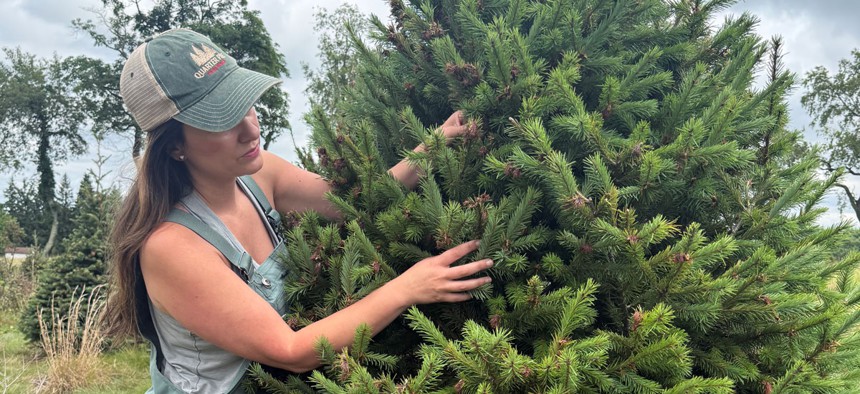
Beth Bossio inspects her freeze-damaged Douglas firs at the Smithfield Christmas-tree farm she runs. Provided

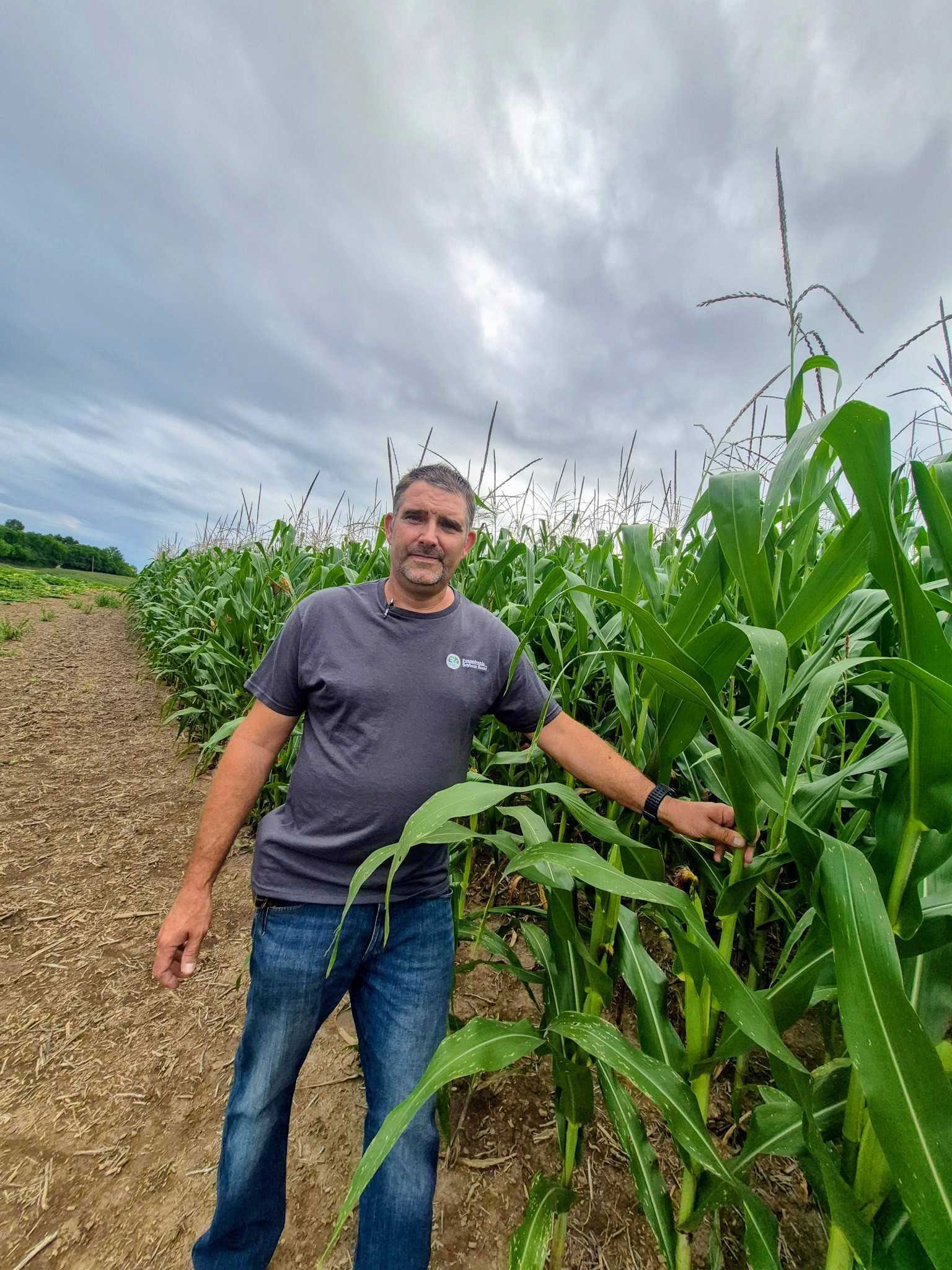
In his nearly quarter-century harvesting corn, soy and wheat in Fayette County, Mike Reskovac has rarely experienced the kind of sticker shock he felt buying fertilizer this year.
Nitrogen fertilizer, manufactured from the oil that has become a scarcer commodity during the U.S.-Iran war, increased from $500 to $700 per ton within the first weeks of the conflict. “And it didn’t stop there. I talked to a few farmers several weeks later, and it was close to $1,000 a ton,” recalled Reskovac, who has had to borrow more than $10,000 to meet the additional fertilizer costs that keep his 800-acre enterprise going. “It essentially doubled.”
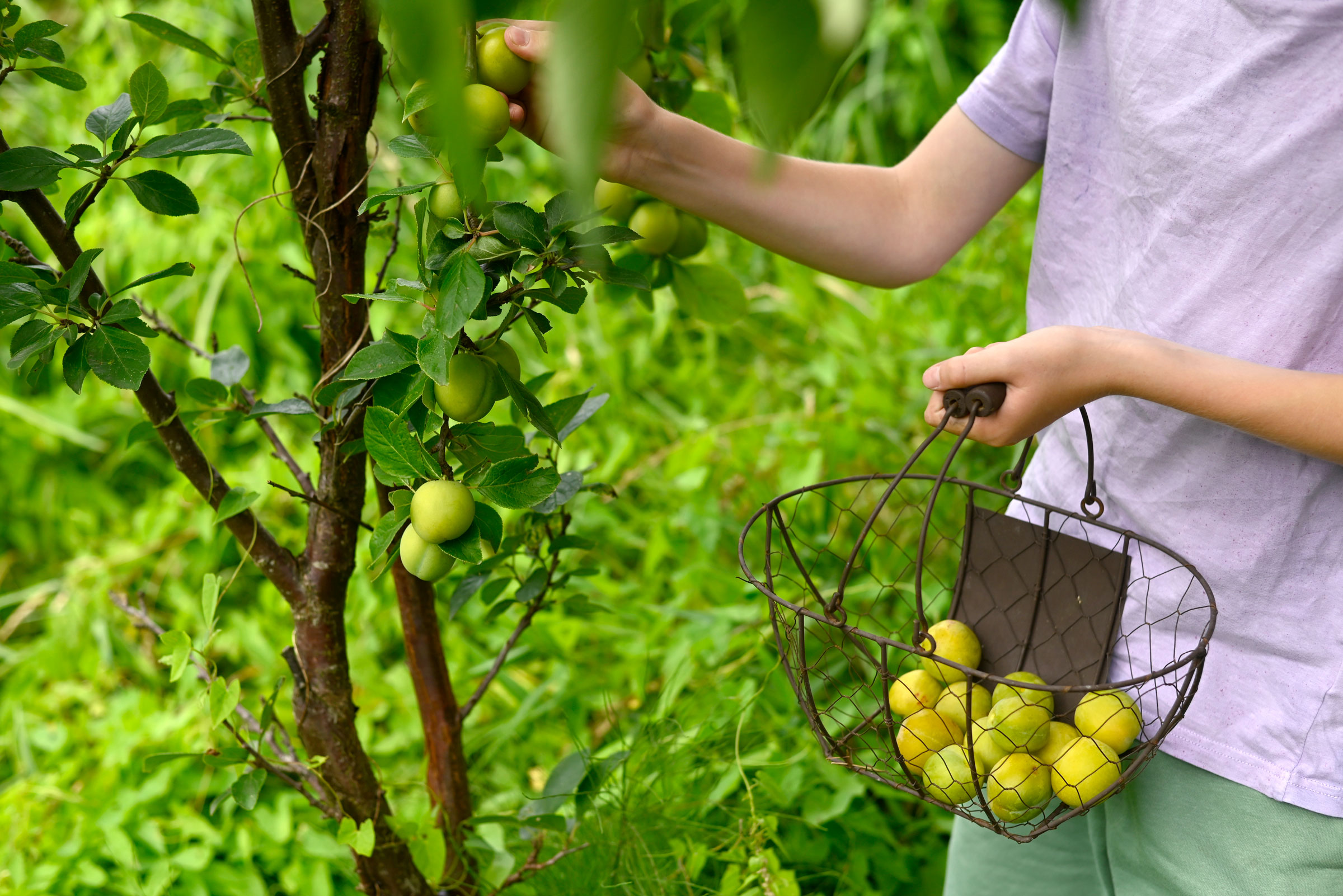
Rising fertilizer costs haven’t been the only obstacle for Stacey Mullen at The Berry Farm and Orchard, the 40-acre pick-your-own fruit business she runs in Kutztown. In April, she lost nearly all her peach, apple and apricot crops due to a freakish spell of weather that sent temperatures into the 90s, then below freezing a few days later, causing prematurely ripening fruit to wither and blacken.
Statewide, fruit growers have reported losses of nearly 100% of key crops like apples, peaches and cherries due to the freeze. That amounts to $150 to $200 million in lost revenue for agritourism businesses like Mullen’s, according to the Pennsylvania Department of Agriculture.
“I’m out at farms every day,” said Mullen, who is also an agricultural consultant for a fertilizer company. “Some maybe will have a 40% crop, some have zero – but nobody has a full crop this year.”
Throw in the soaring price of diesel fuel – caused, like fertilizer inflation, by the Iran war – along with a severe labor shortage caused by the federal immigration crackdown, and it all adds up to a uniquely challenging year for the commonwealth’s farmers. While they cross their fingers for an end to the war – and a corresponding drop in next season’s fertilizer and fuel costs – their elected lawmakers, aided by the nation’s only state-level Farm Bill, are responding with policy proposals aimed at buoying the $133 billion agricultural sector through choppy economic waters.
“Whether you’re in the poultry industry or whether you’re in the fruit industry, we need to keep you in business,” explained state Rep. Dan Moul of Adams County, the Republican co-chair of the state House Agriculture & Rural Affairs Committee, of legislators’ guiding philosophy. “We can’t make you whole, right? We can’t give you a big profit. But we want to keep you alive.”
FERTILIZER IN FLUX
Many Americans only learned that oil is the raw material for most of the world’s fertilizer when the Iran war closed the Strait of Hormuz to oil export traffic – including 30% of the world’s fertilizer supply – this past spring. That bottleneck resulted in a winnowed global fertilizer supply that drove up the price worldwide, including in the U.S. – which, while far less dependent on Middle East oil than many countries, is nonetheless sensitive to the supply-and-demand fluctuations of global commodity markets.
To make matters worse, the fertilizer crunch hit squarely during the spring planting season – precisely the moment when farmers throughout Pennsylvania and the mid-Atlantic needed it most. “Fertilizer affects every farmer out there,” said Moul, pointing out how livestock farmers are affected: They feed their animals with the soy, corn and hay that pricier fertilizer has made more costly.
Chris Herr, the longtime president of PennAg Industries Association, told City & State that roughly 60% of the state’s farmers have reported cutting back on their fertilizer usage due to the price runup. That figure is lower than the 70% of farmers nationally who have reported limiting fertilizer – a disparity that reflects Pennsylvania’s unusually strong support for its agriculture sector – but it is still substantial enough to potentially impact yield. And, notes Herr, it is also an unsustainable strategy – it’s “not something you can do for years on end.”
Increased fertilizer costs are coinciding with this year’s relatively low prices for staple commodity crops like corn and soybeans, making it even harder for crop farmers to recoup their investment in raw materials. “So it’s a real big challenge – coupled again with high diesel costs, directly related to the same issues in the Middle East,” said Herr, “and has put farmers at the level where just maintaining is a real challenge.”
In Fayette County, Reskovac matter-of-factly tallied up this year’s additional costs to fertilize his crops, which also include pumpkins, sunflowers and hay. Thirty-five tons of urea fertilizer, which this year cost an additional $5,500. Fifty tons of liquid nitrogen: another $5,000 extra. “We probably spent $10,000 to $11,000 more than we needed to, just because of the war,” he said.
And that’s just fertilizer. Reskovac estimates he used 3,000 gallons of diesel fuel, which has increased by up to $2 per gallon.
How has he afforded this all? “We just borrowed more money,” he said, adding that he took loans from Horizon Farm Credit and the USDA’s Farm Service Agency. “We had to spend more money that wasn’t really in the budget.”
Moul’s Democratic co-chair, Luzerne County state Rep. Eddie Day Pashinski, expressed frustration over the man-made nature of the fertilizer crisis – one of several downstream effects of President Donald Trump’s decision to wage war on Iran, he said, adding that farmers were already suffering from higher prices on a variety of goods due to the administration’s tariffs.
“It’s disturbing to me that decisions were made which have now thrown us into this form of emergency-type situation, which we really didn’t need to be in,” Pashinski said.
He bemoaned an upward spiral of costs, in which higher fertilizer and diesel prices raise costs for farmers – “and then it costs us at the grocery store.”
INADVERTENTLY FROZEN FOODS
In contrast, the devastating April freeze was genuinely a natural disaster. At The Berry Farm and Orchard, Mullen said that at least it was theoretically possible to compensate for higher fertilizer costs by raising prices. With withered and blackened fruit, it’s simply a loss.
Such losses are particularly hard on small growers like her husband, whose sole income is derived from his few acres of peaches, apples and cherries. While this year’s state budget allocated $10 million in emergency aid to affected farmers through the Pennsylvania Farm Bill, Mullen thinks her business is likely too small to qualify – and has had to pivot to balance her budget.
She said The Berry Farm is compensating by doing “basically what a lot of other people are doing: We went bigger on cut-your-own flowers. We went bigger on vegetables,” including novelty items like purple green beans. Mullen has also started offering workshops on topics like growing berries in the backyard – “whatever extra stuff I could do to bring in income.”
At Quarter Pine Tree Farm, a family Christmas-tree business in Smithfield, Beth Bossio is already looking past this year’s holiday season – and considering alternatives to the Douglas firs that are a Christmas mainstay.
While April’s freeze didn’t destroy her farm’s Douglas firs outright, it did affect their looks – and Christmas trees are all about appearance. “The new growth that came out on them was damaged from that freeze,” explained Bossio. “That growth is brown and not pretty.”
For next year, she is considering replacing Douglas crops with hardier conifers like the Turkish fir: “We are looking to see, if these extreme weather patterns continue to happen, what species can handle them?”
Chris Herr said the “million-dollar question” is whether farmers will see ongoing impact from this year’s crop damage. In addition to specialty crops like Christmas trees, later crops, like the fall grape harvest, may be affected – which, in turn, impacts the region’s wine industry, he added.
CULTIVATING SUPPORT
Both the fertilizer and fruit crises are on the radars of state lawmakers, who have moved swiftly to respond to farmers’ needs.
Pashinski and Moul praise the bipartisan cooperation that has facilitated efforts like the $10 million allocated in this year’s state budget to compensate fruit growers. Through the Pennsylvania Farm Bill, legislators used the same type of rapid-response funding mechanism as they recently did to shore up poultry farms during the avian influenza outbreak.
The General Assembly also passed a bill with bipartisan support regulating the use of so-called “food processing residuals” – byproducts of food production that, with their nutrient value, can be used as fertilizer. A sticking point had been the need to mitigate foul odors emitted by some residuals, which might come from dairy or vegetable processing facilities or meatpacking plants.
“The bottom line is that there’s been no legislature in America, and no administration in America, who has stepped up higher than what Pennsylvania has done over the last three or four years … financially on behalf of farmers,” said Herr, referring not only to the fruit and fertilizer responses but also to the efforts around bird flu.
Both Moul and Pashinski affirm the efficacy of their working relationship, and praise bipartisan support for the farming sector. “There’s a good rapport,” said Pashinski of the General Assembly, state Agriculture Secretary Russell Redding and U.S. Rep. Glenn “GT” Thompson, a Republican who chairs the U.S. House Committee on Agriculture.
At the state level, he said, “we have tried to be prepared for any number of problems that may occur … We’re very fortunate: We have a reserve fund of approximately $8 billion. So as a result, I think we do have money that might be available if there’s no federal aid … if we go through some kind of catastrophe. But I also think the feds have to come across and recognize what’s transpired. They have to play a role as well.”
For their part, federal officials say they are responding directly to this year’s exigencies – most notably with the $500 million Fertilizer Investment & Expansion for Long-Term Domestic Supply Program.
Administered through USDA Rural Development, the FIELDS program, as it is known, aims to bolster the fertilizer supply chain by subsidizing the construction of production facilities and, therefore, expanding domestic manufacturing capacity.
“While we don’t necessarily have 100% access to all of the nutrients that we need in the United States,” said a policy spokesperson for the U.S. House Agriculture Committee, “we do want to make sure that we have as much of that production capacity happening domestically as possible, so that we’re not going to be as impacted by some of this global volatility.”
The spokesperson also told City & State that the USDA recently hired its first-ever crop input economist to scrutinize the fertilizer marketplace, with an eye on potential price gouging. The agency is also collaborating with other federal departments to streamline permitting for energy products, which many legislators say could lower the price of fertilizer production.
That’s a solution favored by Moul, who said the price hike has been exacerbated by what he characterized as longtime burdensome regulations around fertilizer manufacturing, as well as environmental restrictions on energy production.
“Fertilizer started going through the roof – that way precedes the Iranian conflict,” he said. “The cost of obeying all the regulations that come with it, and now throw on top of it the cost of oil and the cost of all the other ingredients … Plus, now the cost of labor is just running through the roof.”
SHORING UP LABOR
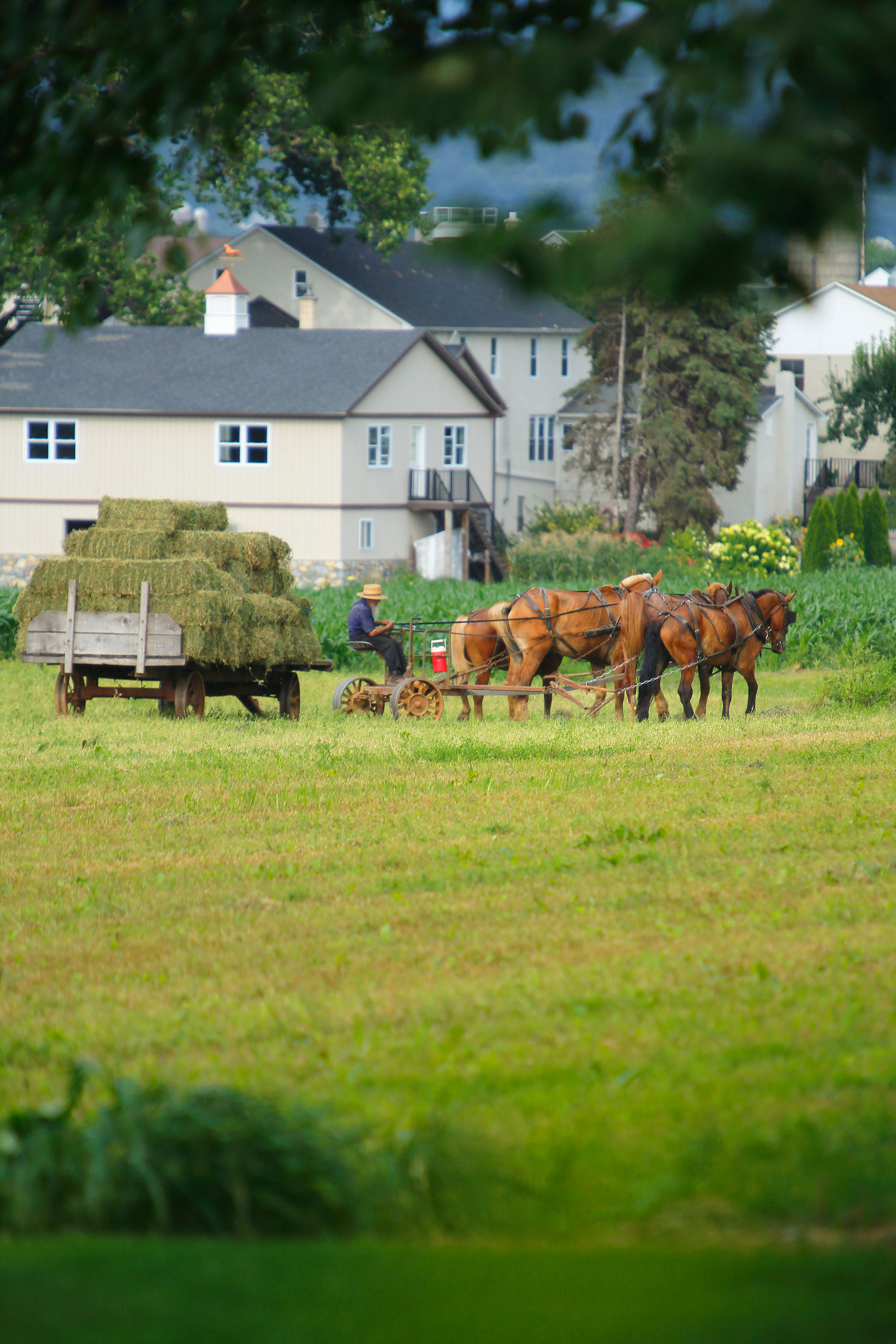
Labor is a longtime challenge for Pennsylvania’s agriculture sector, which is dealing with an aging workforce and a dearth of younger people to replace them. Since the Trump administration cracked down on immigration last year, the situation has been exacerbated by a shortage of the foreign workers farms have come to rely on for a variety of jobs.
“So much of the (farm) work ... is done by H2A workers,” observed Herr, referring to the U.S. visa program for the temporary foreign laborers who pick fruit and process meat. “It’s mostly immigrant help, and they do a phenomenal job – and it’s got to be part of the national discussion.
“We rely on it for year-round labor,” he added. “It used to be that it was just seasonal, but because of the need in the poultry industry and the swine industry and the dairy industry – you know, Pennsylvania is the fourth-largest egg producer in the country – we really need a year-round solution.”
In late June, Thompson – a longtime crusader on this issue – introduced the bipartisan Securing Agriculture’s Workforce Act to reform the H2A program, expanding access to year-round foreign labor. The bill also proposes streamlining the paperwork around immigrant hiring, which many complain has become overly burdensome for employers and has led to costly delays in farm staffing.
“Producers have been sounding the alarm for years that Congress needs to address the workforce crisis we have on our hands in farm country,” Thompson said in a statement announcing the legislation. “The H-2A visa program is woefully outdated, and it no longer meets the needs of American agricultural production.”
After what he calls “two bad years” of poorly timed droughts, Reskovac has gotten used to coping with adversity. Going into the 2026 planting season, he’d saved $20,000 by switching both his seed mix and the farm’s crop insurance premiums. “But now we have $15,000 more that we had to spend between fertilizer and fuel,” he reflected. “So at the end of the day, we’ve spent about the same amount of money that we did last year.”
Still, as farmers like to say, it’s a profession that relies on optimism – the eternal belief that this season will be better than last. “Luckily, this year we’ve been getting some pretty timely rain … The crop looks fairly good at the moment,” Reskovac noted. “Which I know, at any point, can change.”