
Philadelphia
Failure to communicate: How the job cut saga exposed School District of Philadelphia-City Council rift
After months of intense public debate and legislative back-and-forth, the district determined that it would not make classroom job cuts after all
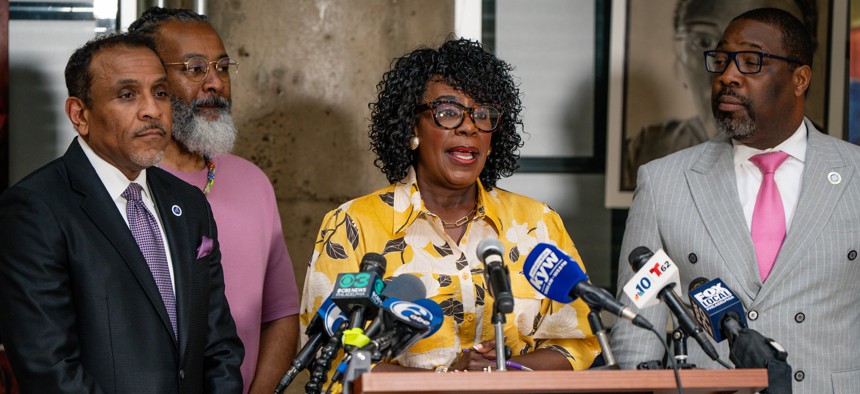
City of Philadelphia Flickr // Photograph by Byron Purnell III

For the School District of Philadelphia, the past month-plus has laid bare its fraught relationship with Philadelphia City Council.
Facing budget cuts – and potential school closures and job losses – Superintendent Tony B. Watlington Sr. and the school board have faced nonstop criticism from City Council and education advocates over its approach to addressing an uncertain fiscal future.
Now that the district has ended tumultuous weeks of will-they-or-won’t-they speculation over the fate of 340 classroom-based jobs by confirming those jobs will remain, it’s time to see how we got here – and what’s next:
SDP says cuts are on the way
Starting off on the wrong foot with contentious school board meetings in April, the school district, facing a $300 million structural deficit, attempted to right-size its budget, formalizing Watlington’s long-term spending plans that included closing 17 schools, renovating 169 others and eliminating 148 teaching jobs and 119 climate staff positions.
The meetings included shouting matches between city councilmembers – including Councilmembers Jamie Gauthier and Isaiah Thomas – and the school district board. Emotions ran so high that Councilmembers disrupted the board meeting discussion of the facilities plan, prompting the board to hold a closed-door session, where it completed its initial vote via video call.
“We are asking them to come back to the table,” Thomas said at the time. “Politics is a happy compromise. What you saw at the last meeting was our response to them walking away from the negotiating table.”
The board moved ahead with its facilities plan, which included the closures, putting political pressure on city lawmakers to play ball – or find another solution to boost school district funding.
Parker’s rideshare tax sparks intense debate
With the school district’s cuts in motion, leaders in City Hall put their heads together to come up with additional revenue sources to help fund the struggling district.
Parker had introduced a tax on rideshare services like Uber and Lyft in an attempt to remedy the situation. The initial proposal, floated at $0.20 per trip, was quickly upped to $1 per trip. Parker said the increase would generate $48 million for the school district in new recurring funds and insisted that, if approved, the tax would save the 340 school-based jobs on the district’s chopping block.
The mayor’s proposal was greeted with widespread skepticism, with councilmembers questioning whether the tax would make tech giants like Uber “pay their fair share,” as Parker pitched, or make trips in the city more expensive for residents.
Uber immediately pushed back on the proposal, launching a lobbying campaign against the tax, arguing it would raise prices, reduce demand and ultimately lower driver earnings in the city.
Conversely, the Philadelphia Federation of Teachers called on City Council to pass the rideshare tax as the best option for saving classroom jobs.
“The academic, attendance, and enrollment progress made in our schools is real, and fragile. Philadelphia public schools have long been under-resourced and understaffed. Forcing schools to cut math teachers, reading tutors, special education assistants, and safety personnel because of a budget shortfall will absolutely worsen learning conditions for 198,000 students,” the educators union said in a statement in May, adding that Parker’s rideshare tax is the “only solution that has been proposed that provides both new and recurring dedicated funding.”
“Philadelphia public school students deserve the world. They deserve a District and City government that shows them that their futures are precious and important,” PFT added in the statement.
City Council President Kenyatta Johnson initially indicated he would be willing to use the rideshare tax to leverage an amended facilities plan from the school board.
On top of concerns about implementing a new tax, there were plenty of questions surrounding the district’s financial situation and whether the fates of the rideshare tax and district job cuts were tied together.
Meanwhile, Parker largely stayed mum following the school closure vote. She continued to tout the rideshare tax as a viable solution, but stayed out of the broader debate and seemed to be in lockstep with Watlington as he lobbied Council for support for the facilities plan.
School board passes $4.6B budget with classroom cuts
On May 28, the school board unanimously passed Watlington’s spending plan that included roughly $50 million in classroom cuts and $169 million in central-office cuts on top of the loss of 148 teaching positions and 117 climate positions. The $1.3 billion multiyear district plan, which would entail 17 school closures, 169 modernization projects and one new school building, went largely against the wishes of several councilmembers, who made their outrage over the closures loud and clear.
Watlington, who pointed to rising salaries, healthcare premiums and charter school payments as drivers of the budget cuts, said that no staff would be laid off, but teachers and school-based staff might be reassigned to other vacant positions across the district. At the time, he said if the $1-per-trip rideshare tax were to pass, the school district's position would be restored.
Facing substantial opposition from Councilmembers, school board members blamed state and federal underfunding for the district’s financial position.
City budget passes with alternative education funding
The city’s own budget negotiations were yet another turn in this school district saga.
After days of behind-closed-doors talks between the Parker administration and Council leadership, Council gave initial approval to a more than $7.1 billion budget – notably without Parker’s rideshare tax.
Instead, Council took an alternative route, allocating an additional $48 million to the district for the year through a grab bag of savings initiatives from a variety of departments, including $10 million from the Commerce Department’s contracts with outside venders and $9 million in savings from debt service.
“We heard loud and clear from Philadelphians that raising taxes is not an option right now. Residents are concerned about the cost of living – and with good reason. Many Philadelphians are struggling financially and, as a body, we could not in good conscience move forward with the proposed taxes,” City Council Majority Leader Katherine Gilmore Richardson said in a statement. “At the same time, we recognize we must address the deep, systemic and long-standing issues with the School District of Philadelphia and its structural deficit.”
Parker admitted that the tech companies “won Round 1” in the funding negotiations, but the battle won’t end with this year’s budget. She also assured that her administration and City Council are “not at war over public education” but that there continues to be a “disagreement here about who should pay.” The mayor added that she is awaiting a “second round” of negotiations.
District says cuts will still take place
Following passage of the city’s budget, Watlington sent a letter to city officials saying the school district’s cuts would go forward, explaining that his position was based on the additional funding for the school district being a one-time revenue and not a long-term fix.
The letter immediately sparked outrage from Councilmembers who said they did their part in finding funding for the district.
“For them to make a decision and say, ‘Oh, no, we’re not going to restore the cuts,’ it’s just short-sighted,”Johnson told reporters after the letter was sent. “The question should be to them: ‘What are you going to do with the $50 million? Why not save the positions?’ I think that’s what the parents should be asking the Philadelphia School District.”
Educators didn’t take the news well, either.
PFT President Arthur Steinberg said it was “deplorable and really absurd” that district leadership wouldn’t use the additional dollars to prevent the classroom cuts.
“Never once did they say, ‘If we only got it for one year, we’re not going to restore the cuts,’” Steinberg said at a June 5 press conference.
Watlington tried to defend the district’s position, saying the district has to “live within our means” and that he was clear about the need for funding to be recurring and not temporary.
Parker, Watlington announce deal to prevent job cuts
As the school year came to a close, the school district saga took one last turn, with Parker and Watlington announcing on June 10 that the 340 classroom-based jobs would not be cut.
At the press conference, the two stood alongside Johnson and school board president Reginald Streeter to share that they had identified existing funds to stave off the cuts.
“We have delivered for the School District of Philadelphia today,” Parker said, adding that they “made some tough decisions” to pledge $216 million over five years to keep funding the school district workers.
Parker and Johnson, who said they worked “around the clock” after budget approval to find additional dollars for the district, said lawmakers will look for new, recurring revenue sources in the future, but, as it stands, the funding would come from the city’s capital spending and other sources.
With the sudden reversal, the school district – which had moved forward with budget plans based on the cuts – must now work with PFT to restore the 340 positions.
Following the announcement, PFT said in a statement that the union is “thrilled and relieved to end this school year with optimism.”
Future funding in flux
Details of the city’s number-crunching and budget-tweaking reveal that much more work remains to secure the $216 million in funding committed to the district.
According to the Philadelphia Inquirer, if the dollars aren't identified by July 1, 2027, the city will be on the hook for the additional funding. Without offering specifics, Parker said her administration has already identified the potential funding options that will be reflected in the five-year plan when it is up for approval next month with the Pennsylvania Intergovernmental Cooperation Authority.
Parker said potential dollars could come from from the city’s capital budget, refinancing the borrowing related to her signature housing program, Housing Opportunities Made Easy and, city lawmakers hope, additional state funds from the budget in Harrisburg.