

News & Politics
Stitch, please: Philadelphia’s Chinatown hopes a highway cap can reconnect the community
Local leaders see the Chinatown Stitch as a way to bridge communities divided by the Vine Street Expressway.
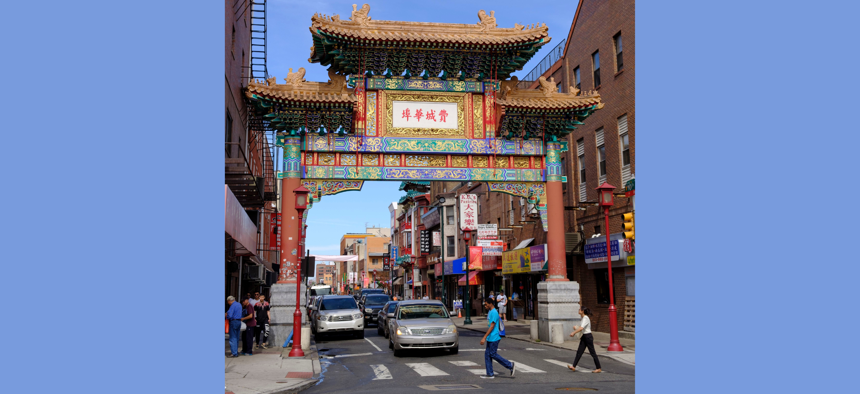
Local leaders believe a highway cap could bridge Chinatown communities divided by the Vine Street Expressway. Jumping Rocks/Universal Images Group/Getty Images

When John Chin took the microphone on Aug. 6 at Philadelphia's Chinatown Community Park, it was the culmination of years of hard work, hard-won partnerships and hard lessons.
“Tonight, we celebrate our collective work to bring this once-in-a-lifetime project to this point: the Chinatown Stitch,” Chin, executive director of the Philadelphia Chinatown Development Corporation, said to the crowd. “Chinatown Stitch grew out of a desire to reconnect Chinatown over the Vine Street Expressway. The Stitch is our solution for Chinatown, which has been harmed for several decades.”
That harm Chin mentioned so prominently has its origins in the 1970s – and Chinatown residents and PCDC fought against the Vine Street Expressway from the beginning. In 1977, when an environmental impact statement related to connecting I-76 and I-95, PCDC was vehemently opposed, arguing the expressway would negatively impact the physical, economic, and cultural character of the neighborhood. Despite neighborhood pushback, expressway construction began in the 1980s and was completed in 1991.
Sarah McEneaney, who moved to the nearby Callowhill neighborhood in 1979, has seen the area’s evolution over more than four decades. She said that even prior to the expressway’s construction, Vine Street’s width was a “deterrent” for pedestrians and bicyclists.
“There's been many things that have caused the divide between parts of Chinatown,” McEneaney told City & State. “Vine Street has always been an issue (with) getting across it, especially walking or biking.”
McEneaney, a founding member of the Callowhill Neighborhood Association, has been a community activist for years and has worked alongside PCDC and neighborhood organizations to advocate for residents and the local community.
She said the Callowhill neighborhood and the nearby areas, including Chinatown, have improved drastically since she first moved there.
“In the neighborhood, in the early days, nighttime was especially desolate and empty and scary,” McEneaney told City & State. “Nowadays, I have tons of neighbors and people walking, day and night, through the neighborhood. (They’re) walking their dogs and going to different restaurants and going to the rail park – it's a very different place.”
A major barrier – both literally and metaphorically – to truly connecting the community is the expressway cutting through Chinatown.
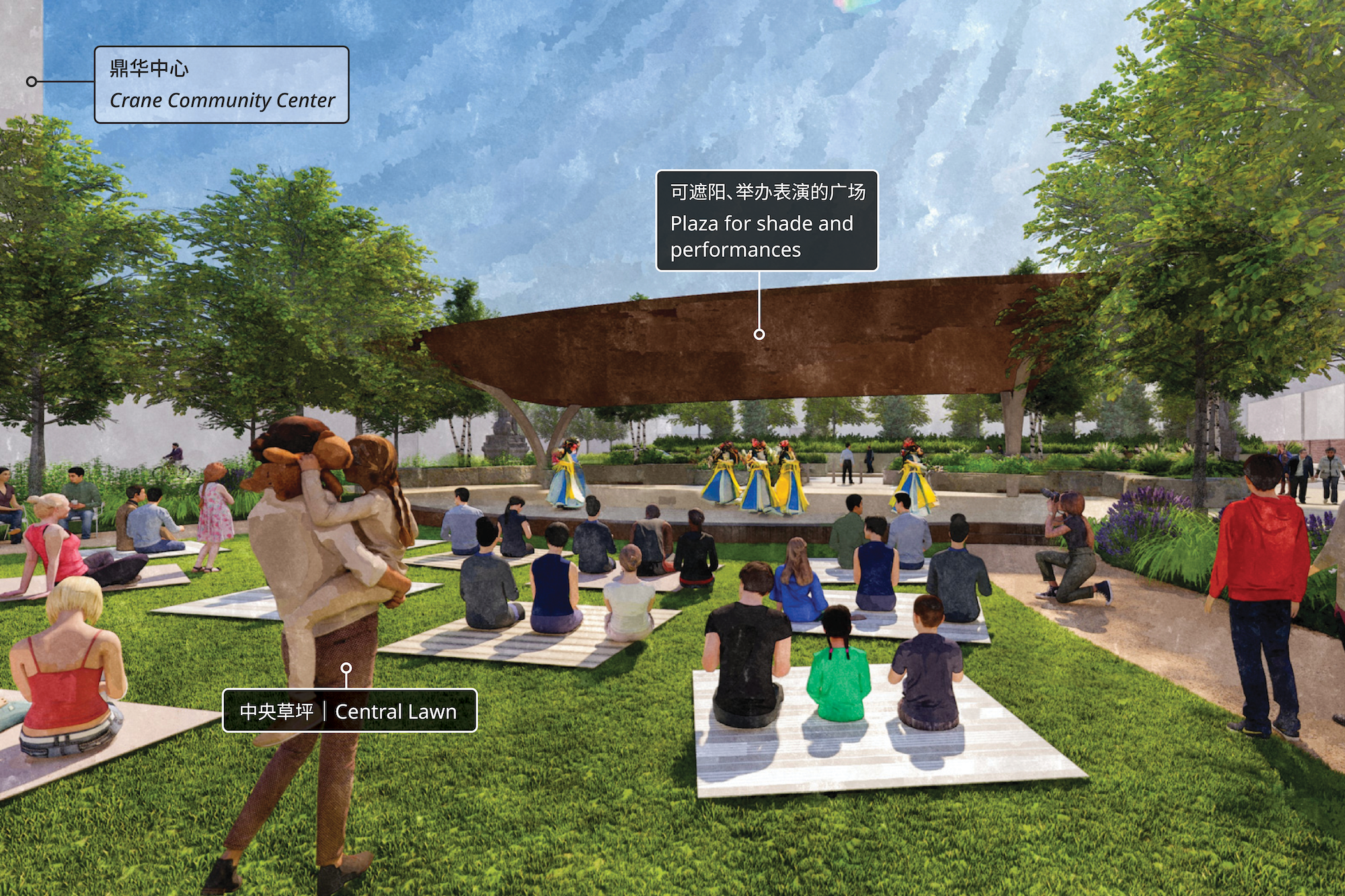
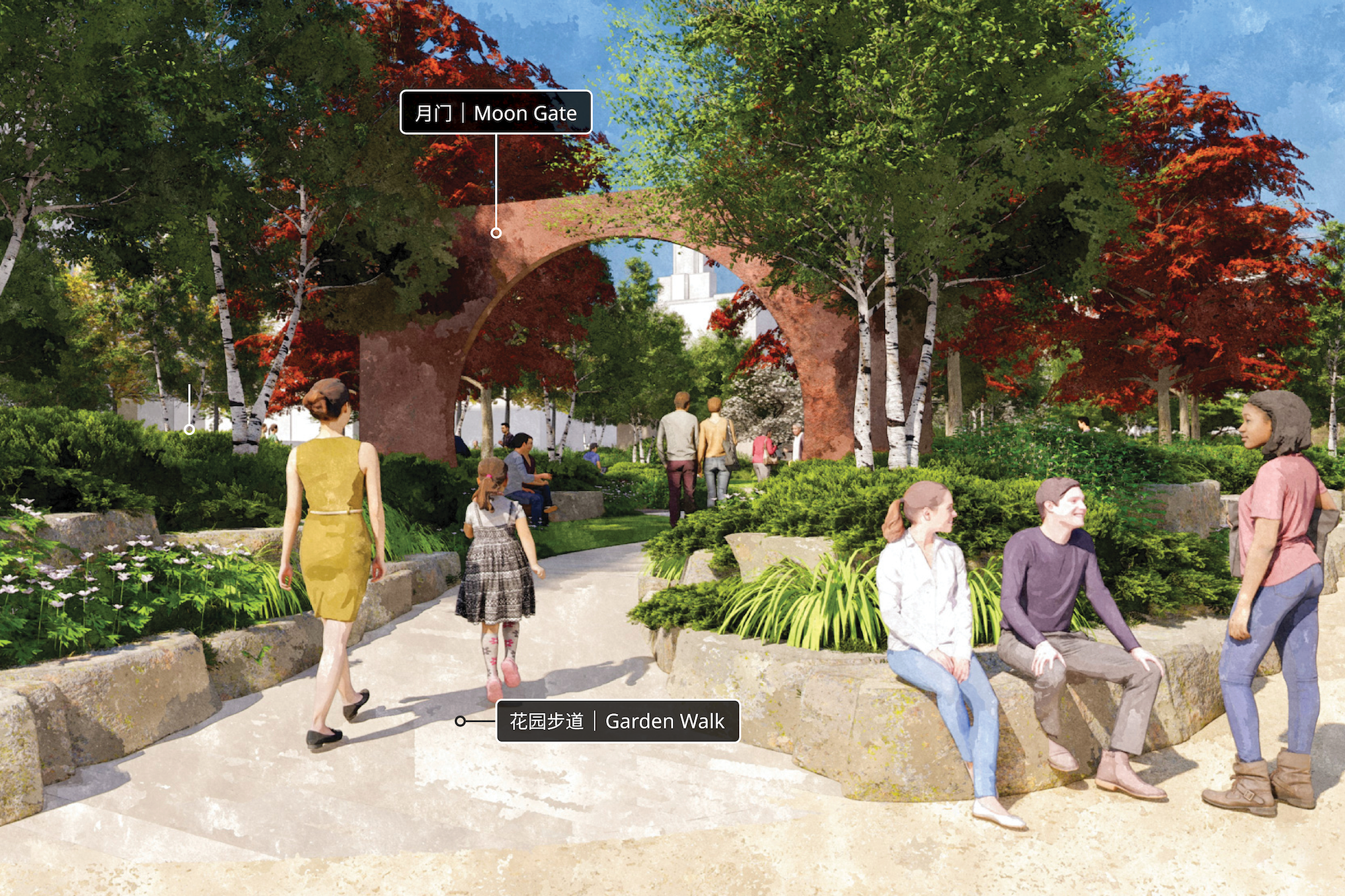
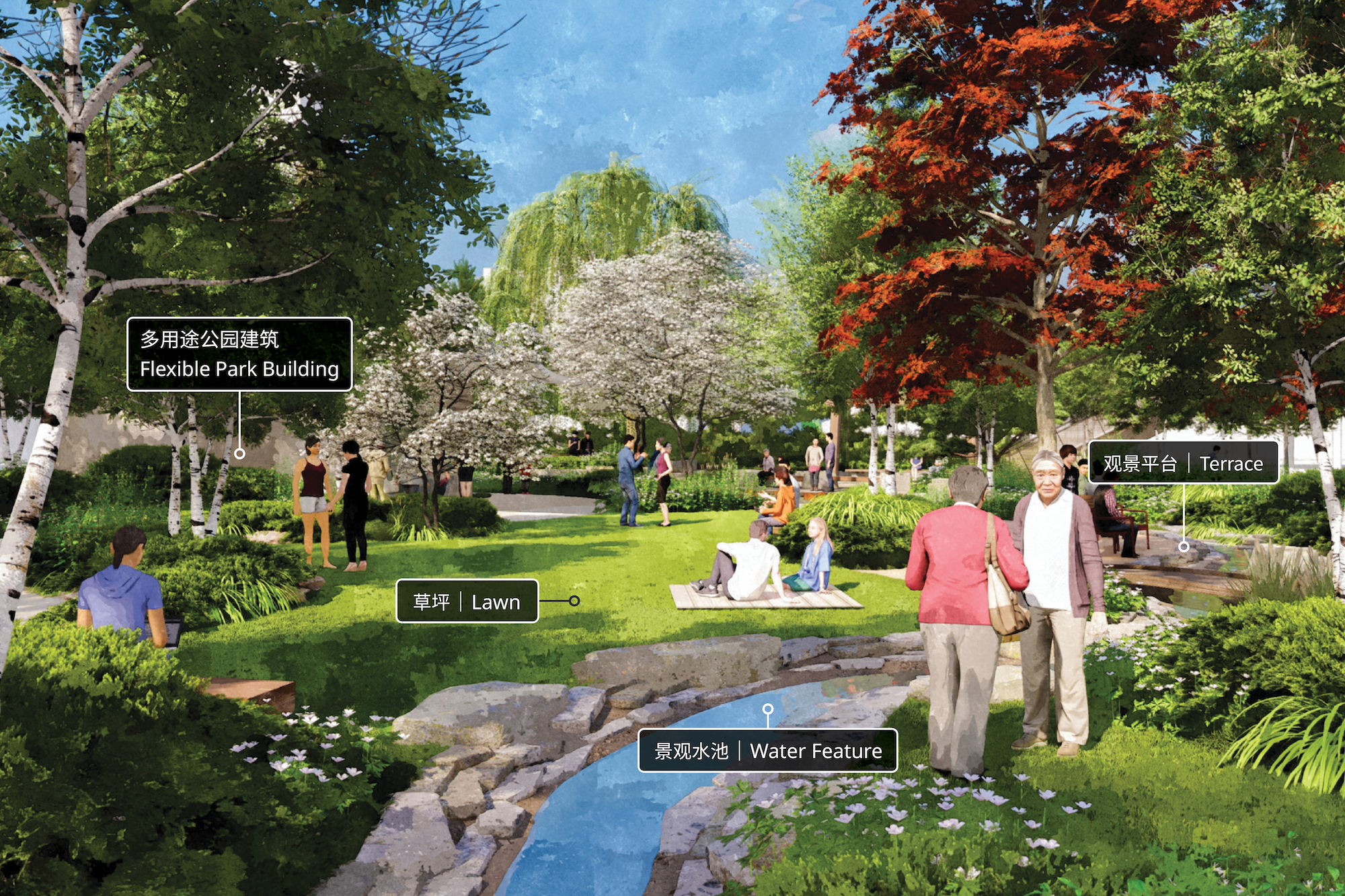
Now, decades later, the same community organizations are leading the charge to bridge the gap in Chinatown that the expressway created. Years in the making, the Chinatown Stitch is a highway-capping project, first pitched more than a decade ago, that’s expected to reconnect the two halves of Chinatown divided by the expressway construction, creating a neighborhood-focused park in the process.
“We’re all so excited about the Stitch because that's a real improvement that would make a real, real difference,” McEneaney added. “Anybody I talk to about it totally wants it to happen.”
The project faced a major setback last year when President Donald Trump’s administration rescinded nearly all the federal funding project organizers received through community connectivity grants. The rollback took away $150.5 million from the project, which is estimated to cost roughly $200 million.
Despite the funding rug getting pulled out from underneath them, organizers like Chin — and city officials — are convinced the project’s momentum and community-focused design will get it across the finish line sooner rather than later.
“It’s all about reconnection,” Chin said as he stood in front of the market stalls designed to be used inside the street-level park plaza – a first glimpse at some of the infrastructure that has resulted from years of community engagement.
Kara Medow, the City of Philadelphia Office of Transportation and Infrastructure Systems (OTIS) senior capital projects manager, said that partnerships and community engagement are “all critical to the success of the Chinatown Stitch project.”
“These market stalls … show the project’s potential and offer a preview of the new community spaces the stitch will bring,” Medow said at the Aug. 6 event. “Together, we can reunite Chinatown and give this community a beautiful green space it has long deserved.”
District divided
Ever since the construction of I-676, Chinatown North and Chinatown South – the main commercial corridor in the neighborhood – have been separated by a multi-lane barrier that sees more than 100,000 vehicles a day.
Erick Guerra, a professor of regional planning at the University of Pennsylvania and associate dean for research at the Weitzman School of Design, told City & State there’s a long history of “destruction of urban neighborhoods for the construction of urban highways” — and Philadelphia’s Chinatown is a prime example.
“I think things like the Vine Street Expressway never should’ve been built,” Guerra said, adding that urban highways “are worth less than the land that they take up, particularly when you account for all the damage that they do — and there are neighborhoods like Chinatown that bear a disproportionate brunt of those kinds of costs.”
Philadelphia isn’t the only city working to rectify past highway divisions. The stitch concept – utilized in projects including Seattle’s Freeway Park and the ongoing Penn’s Landing Park over I-95 and Columbus Boulevard – has become a modern piece of urban infrastructure built to reconnect neighborhoods and create green space above existing highways.
PCDC and neighborhood organizers have long fought against disruptive developments, including stadium proposals and more.
“The people who lived on the north side felt disconnected to the south side,” Chin told City & State. “The north side is still very underdeveloped, and people who live on the north side feel like they’re living in a place that has less amenities and services … I think once Stitch is implemented, they're going to feel and see this natural connection.”
Funding frenzy
The Stitch saga has taken a number of turns since the design was pitched roughly a decade ago.
The massive infrastructure project, which would create a two-and-a-half-block street-level park on top of I-676, is seen by many as the perfect opportunity for PCDC and neighborhood activists to reconnect the divided district.
PCDC collaborated with city and state officials and received two grants in 2022 and 2024 to secure the funding needed to move the project out of the design phase and into reality. The project received $1.8 million from the Bipartisan Infrastructure Law’s Reconnecting Communities Pilot program and, two years later, $158.9 million from the Inflation Reduction Act.
With funding in place, the project moved ahead and is now on the verge of finalizing designs and construction documents. But last year, the Trump-backed One Big Beautiful Bill undid many environmental and reconnectivity programs passed under the Biden administration.
The Chinatown Stitch was one of many projects to have nearly all of its federal funding rescinded. City officials said while it’s highly unusual to see these types of grants rescinded, it’s not common for federal funds to be held up for one reason or another.
“These are the kinds of punches that you need to roll with whenever you have a large infrastructure project,” Chris Puchalsky, director of policy and strategic initiatives at OTIS, told City & State. “The silver lining is that we have more time to design it in a thoughtful way, working with the community.”
Preliminary funding had already been allocated for the planning process and final construction documents. Only the construction cost – in the range of $150 million, according to officials – is standing in the way of organizers getting the project across the finish line.
After the federal funding was pulled, local leaders had to scramble – looking to the city and the Delaware Valley Regional Planning Commission to step up. Both did their part, with DVRPC allocating $10 million and the city offering a $2.5 million local match – the figure needed to fund the rest of the design process and final construction documents, which could take six months to a year.
"This funding will be sufficient for the project to complete engineering plans and be shovel-ready,” an OTIS spokesperson said in a statement. “Every day, we move the project forward, thanks to partners like PennDOT, DVRCP staff, and suburban counties who have all been supportive of the Stitch. We will continue to work with community partners like the Philadelphia Chinatown Development Corporation and elected officials to secure future funding."
Puchalsky said the first draft plans were submitted back to the city and state agencies in May and that they can move toward final design plans after they get environmental approval, which is expected in the coming weeks.
He said that Philadelphia – alongside localities who also saw their project funding get pulled last year – will advocate for reconnecting community funds to be reinstated.
“There are projects in Oregon and in New York and in Arkansas and a bunch of other places that lost funding, and so we're all trying to work together,” he added. “(We hope to work) with those folks to form something of a national coalition to advocate for restoration.”
Cap construction
Nevertheless, Chinatown persisted.
With preliminary funding in tow, the project is moving forward as the design process is finalized and aspects of the park – such as the market stalls – are constructed.
City Councilmember Mark Squilla, who represents Chinatown as part of his district, said both the city and the Chinatown community remain excited and committed to keeping the project “shovel-ready.”
“The excitement from the community was over the top (when it was announced), and people really looked at it as a great opportunity to right a wrong,” Squilla told City & State. “To see that the government came in and did this (damage with the highway), but now they're going to help us fix it.”
Guerra told City & State that highway caps are becoming a more common means to “undo” some of the harm urban highways have caused. These projects, he said, should “focus on the social impacts, the economic impacts, and to a lesser extent, the environmental impacts.”
“One of the challenges of capping is that it rarely kind of frees up more land for real estate,” Guerra said. “It creates a nice environment, better urban design, but it’s not creating the kinds of private land uses that the highway replaced that generate tax revenue (and) add substantial value to the city.”
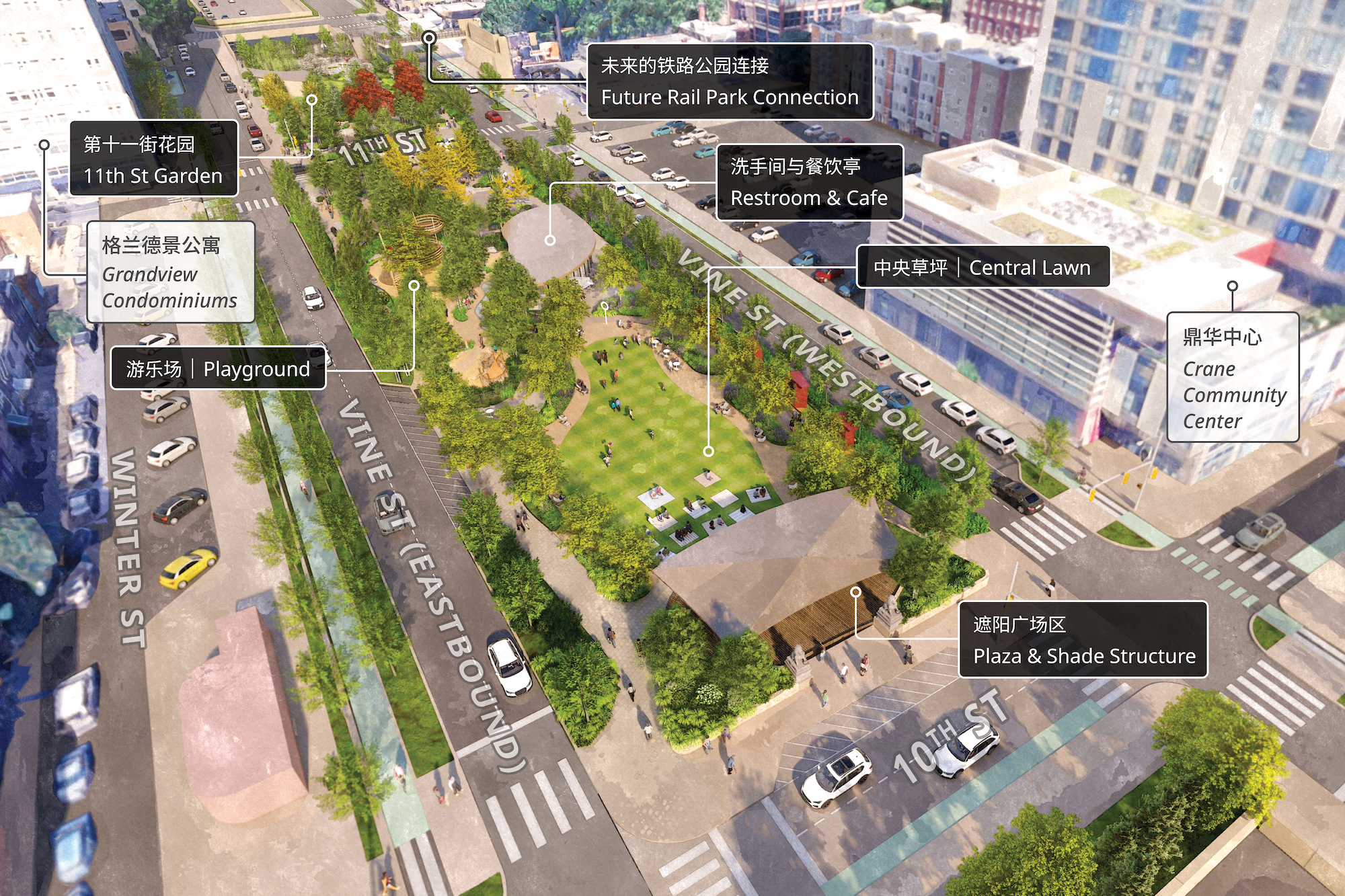
The Stitch “is much more about reconnecting a community, a public infrastructure investment offsetting some harm,” he added.
The latest design for the capped park between 10th and 12th streets includes landscaped pathways; a playground, plaza and shaded pavilion; and a stream. The cap will also create a road diet for the surrounding Vine Street area, which Chin called “significant safety improvements” for pedestrians and cyclists navigating in and around the park. The road diet is said to include a reduction in lanes to two in each direction, the addition of curb-protected bike lanes and bump-outs, and the shortening of pedestrian crossings across Vine Street.
Speaking at the Chinatown Community Park on Aug. 6, Chin assured the audience that the “designs reflect your desires.”
“As far as the Stitch design, we’re near the finish line,” Chin said. “You have said that you want a gathering space, celebration space and just a place to be with others.”
Federal funding isn’t out of the question going forward – but organizers believe it will take contributions from a variety of sources, including public and philanthropic funds, to make up for the nearly $200 million that was rescinded.
Congress restored $30 million in funding for larger Reconnecting Communities grants, a pot that Stitch organizers could tap into to get a portion of the funding back. Meanwhile, city officials expect to receive federal environmental approval this spring, based on review of already completed studies and plans.
The goal for Chin, Puchalsky, Squilla and others is to have the project as “shovel-ready” as possible. That way, Squilla said, public officials will jump at the opportunity to fund it when the dollars become available.
“I know we hit some roadblocks, but we're not letting that slow us down. We're going to continue to move forward and find the resources,” Squilla told City & State. “When we have it shovel-ready, when there is any opportunity to fund any of these infrastructure projects, (I believe) that would be one of the top priorities for the feds or anybody else.”
When asked if the project is up in the air, Chin said that given the momentum they have, nothing will stop them from getting the Chinatown Stitch they’ve long dreamed of.
“Back in 2016, it was an ‘if’ question, but we got some significant federal resources,” Chin told City & State. Now, he added, “it’s really ‘when.’”