
News & Politics
Trash, tech and talking arena: What to watch for during Philadelphia City Council’s return
Council ended last year’s budget negotiations bucking Mayor Cherelle Parker’s tax proposals
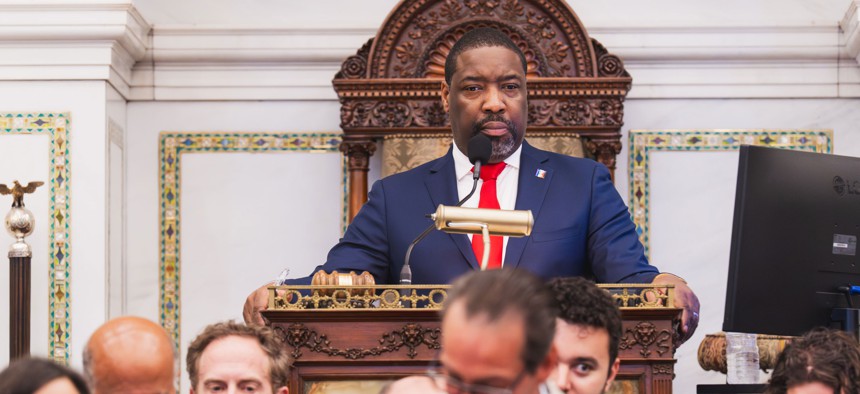
Philadelphia City Council President Kenyatta Johnsons presides over a Council meeting on June 11, 2026 Chris Mansfield | PHL City Council

Philadelphia City Council returns Thursday from a summer break saturated with America250 and FIFA World Cup fanfare.
But now, it’s back to business.
Council comes back to legislative session in City Hall after approving an annual budget in June that nixed Mayor Cherelle Parker’s proposed taxes on rideshare apps, retail delivery services and short-term rentals. This fall, councilmembers will pick up where they left off – and try to deal with issues that sprang up over the summer.
Here’s what to watch for:
Trash incineration talks
Trash talk will certainly continue in the fall. Councilmember Jamie Gauthier’s “Stop Trashing Our Air Act,” introduced in September 2025, has been an ongoing public and private debate around City Hall. Gauthier, who represents the 3rd councilmanic district, and environmental advocates have called for the city to stop sending its trash to Chester to be incinerated at a waste-to-energy facility known as the Delaware Valley Resource Recovery Facility.
The ordinance sparked heated debate and public comment throughout the year, but has failed to receive the support needed to get it across the legislative finish line. At the same time, the Parker administration began moving forward with a contract renewal with the incinerator in July.
The four-year contract would continue the city’s waste disposal processes in what City iof Philadelphia Managing Director Carlton Williams has said is a “financially sound, environmentally safe” deal.
On Wednesday, Williams and city officials announced new short- and long-term plans the city is undertaking to address the ongoing environmental and trash disposal concerns.
At the press conference, Councilmember Mark Squilla unveiled plans to introduce legislation that he said would “modernize” the city’s solid waste disposal process and more. The legislation, which has been coined the “Zero Waste and Circular Economy Act,” authorizes the administration to “develop a comprehensive, goal-oriented and data-driven plan to reduce and divert municipal solid waste for traditional disposal methods, including landfilling and incineration.”
Squilla, who represents the 1st councilmanic district, was joined by Councilmember Quetcy Lozada, Williams and members of the Parker administration in announcing the broader plans to overhaul how the city handles everything from trash and disposal to waste reduction and compost.
The long-term plans include developing an organic composting and processing capacity, implementing waste reduction policies, investigating the expansion of municipal food waste reduction and supporting food waste composting programs initiated by businesses and city agencies.
“Our ultimate goal is to (reduce) our reliance on outdated disposal facilities, including landfills and incinerators,” Williams said Wednesday. “We are extremely pleased to support Councilmember Squilla’s bill. It offers a real solution to reduce waste in a way that protects the environment. It converts waste to energy safely, without harming our city and our neighbors.”
Squilla emphasized the plan will focus on waste reduction as well as rethinking “how we collect, recycle, reuse and ultimately dispose of our waste.”
“It calls for the best way to responsibly transition from those current waste disposal practices that we do today to take advantage of new systems that can help reduce our emissions, improve public health, and drive economic (growth and) benefit job creation.”
Several councilmembers and community advocates – all of whom argue the incinerator’s pollution is an example of ongoing environmental racism – are holding a press conference Thursday morning outside City Hall to call on Council to reject Parker’s plans to renew the contract.
Council will need to approve legislation to move ahead with the city waste contract, setting the stage for what could be a messy month between lawmakers who won’t want trash delays to impact residents and those who want the city to do better with its waste disposal.
Sports arena saga
There’s always room for sports talk in Philly. Council may begin to consider legislation related to the proposed 76ers and Flyers arena in the South Philadelphia stadium complex – a proposal that came after Parker and Council leaders expended plenty of political capital giving initial approval to the controversial arena proposal in Center City.
Comcast Spectacor and Harris Blitzer Sports & Entertainment, which owns the Sixers, unveiled their plans for the new South Philadelphia arena last week, a project expected to be complete by 2030 – just in time for Philadelphia’s WNBA team’s inaugural season.
The organizations said the 50-50 joint venture will be the largest fully privately funded project in city history. The arena is expected to cost roughly $1.5 billion – a figure that is higher than the price tag of the original Center City arena design, which also faced questions over the use of public dollars.
Council President Kenyatta Johnson, whose Second Councilmanic District includes the stadium complex in South Philadelphia, said any future arena legislation will focus on community concerns with the potential project.
“The proposed arena is an exciting project for Philadelphia’s future,” Johnson said in a statement. “No zoning legislation is scheduled for introduction in Philadelphia City Council at this time, but the conversations are ongoing."
Big Tech takeover
With their enormous energy needs and pollution generation, data centers have quickly become a huge political talking point, and now the nationwide discussion has made its way to Philadelphia.
On Monday, roughly 100 protestors gathered outside City Hall to demand a moratorium on data center construction. So far, there are no artificial intelligence data centers proposed for Philadelphia. However, the city’s planning commission said last month there are two sites that could potentially support data centers – a city-owned site near the Northeast Philadelphia Airport and the site of the former PES refinery, now known as the Bellwether District.
And while Johnson hasn’t committed to a moratorium, his office said Council will continue to have discussions on the future of data centers in the city.
Education enigma
The School District of Philadelphia’s financial challenges – and its facilities plan, which includes the closure of 17 schools – will once again be atop the reading list for legislators. Council’s relationship with SDP and its leaders was put on full display last year as Superintendent Tony B. Watlington Sr. and school board members drew the ire of councilmembers and community advocates by questioning SDP’s fiscal transparency.
As part of the June budget agreement, Council allocated an additional $48 million to SDP to prevent short-term staffing cuts. But those one-time funds won’t prevent future cuts, meaning Council and the district must work to find both a short- and long-term solution for the district as it begins to rightsize its facility portfolio.
Johnson said Council will work to identify recurring funding for SDP, but it’s likely the ongoing funding talks will once again be leveraged throughout the year – and in city budget negotiations.
“One of councilmembers’ priorities will be securing recurring funding for the School District of Philadelphia in the Fiscal Year 2028 operating budget,” Johnson said. “In August, all members of City Council requested that City Controller Christy Brady conduct a comprehensive performance audit of the SDP’s management and operations. I know that the results of Controller Brady’s ongoing audit will help Council identify any available funds to support recurring funding for the SDP.”