

News & Politics
5 things we learned from Pennsylvania’s midterm elections
Democrats saw major wins across the state, while ballot measures received a mixed response.
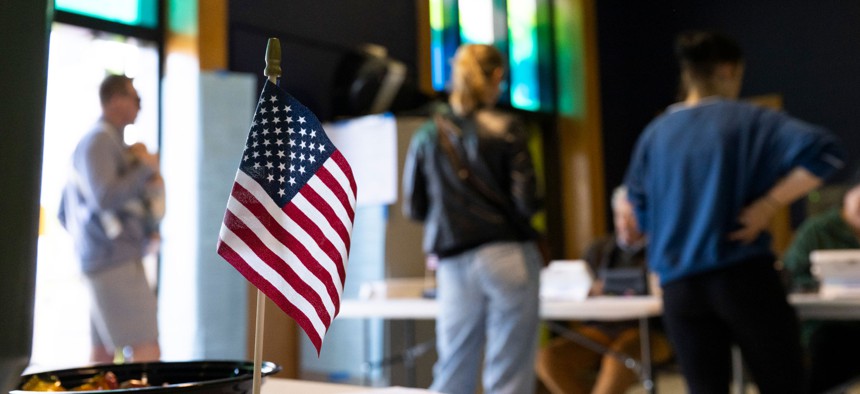
Voters check into a polling place in Philadelphia, Pennsylvania. Joe Lamberti/Getty Images

Democrats pulled off historic wins across Pennsylvania in this year’s midterm elections, flipping four congressional seats and giving Gov. Josh Shapiro a Democratic trifecta in Harrisburg. With so much information to sift through in the wake of Election Day, City & State takes a look at five major takeaways from the 2026 midterm elections in Pennsylvania.
Shapiro coasts to reelection
En route to a 21-point victory over Republican challenger Stacy Garrity, Gov. Josh Shapiro made history on several fronts. On election night, Shapiro became one of only two governors in the state to win by more than 1 million votes. Unofficial tallies show Shapiro winning by 1.1 million votes; the only other candidate to secure a 1-million-vote margin was former Gov. Robert P. Casey, who defeated Republican Barbara Hafer by 1.07 million votes in 1990. Shapiro also became the first Democrat to win Lancaster County since 1990, when, you guessed it, Casey won the county by a 41,500-vote margin. According to unofficial returns, Shapiro is on track to win the county by more than 9,400 votes.
Democrats will have a trifecta in Harrisburg for the first time in decades
It’s been a week of celebration for Democrats in Harrisburg, as the party will have total control of the General Assembly for the first time in decades. Shapiro and Democratic leaders gathered at the Governor’s Residence this week to outline some of their key priorities, while promising to unveil a more detailed legislative agenda in the coming weeks. At the top of their agenda is raising the state’s minimum wage, funding mass transit systems, codifying abortion rights in the state constitution and giving child sexual abuse survivors a window to sue their abusers.
Pennsylvania voters oust congressmen old and new
Democrats swept four competitive congressional races with GOP incumbents this week, flipping all four seats blue. Firefighters’ union leader Bob Brooks unseated Lehigh Valley U.S. Rep. Ryan Mackenzie, while Scranton Mayor Paige Cognetti beat U.S. Rep. Rob Bresnahan. Democrats also unseated two longtime GOP congressmen – U.S. Reps. Brian Fitzpatrick and Scott Perry – who faced aggressive challenges from Bucks County Commissioner Bob Harvie and former news anchor Janelle Stelson, respectively, helping the party regain control of the U.S. House of Representatives. Rumor has it that Perry is already eyeing a 2028 rematch against Stelson.
Dems make gains across demographic groups
Democrats really put the “Dem” in demographics this cycle, improving their standing across a variety of demographics in this year’s midterms compared to two years ago. According to New York Times data, Democrats saw a 17-point increase in male voters compared to 2024, and a 13-point increase among female voters. The Times estimated that 61% of Pennsylvania women voted for Democrats, compared to 38% for Republicans. Democrats also outperformed Republicans across all age groups, with a particularly strong showing among voters ages 18-44. Black and Hispanic voters also overwhelmingly voted for Democrats. When it comes to education level, Democrats outperformed the GOP among voters with some college experience, a college degree or a postgraduate degree, though Republicans received 52% of the vote from voters with a high school education, compared to 48% for Democrats.
Ballot measures receive a mixed response
Voters weighed in on a series of ballot measures across the state, with many of them receiving approval. In Philadelphia, voters approved ballot questions that will create a permanent arts and culture office in the city and prioritize small and local businesses when awarding contracts. In Lehigh County, voters approved a measure that will expand the county’s Election and Registration Commission from three to five members and require one member to be unaffiliated with the county’s two major parties. Lehigh voters also approved a measure that will remove the chair of the County’s Board of Commissioners from the county’s retirement board and instead have another commissioner in the role. In Allegheny County, however, voters rejected a ballot measure that sought to expand the benefits and powers available to members of County Council. The proposed measure would have eliminated restrictions on councilmembers’ ability to receive pensions and healthcare benefits, and would have allowed them to hire support staff and district offices, according to the Pittsburgh Tribune-Review. At press time, unofficial election returns show nearly 68% of Allegheny County voters rejecting the measure, compared to 32% in support.