
Politics
Any changes to state gaming tax structure must factor in casino jobs
An op-ed by a former deputy secretary at the Department of Community and Economic Development details the importance of both stabilizing industry employment and taxing skill games.
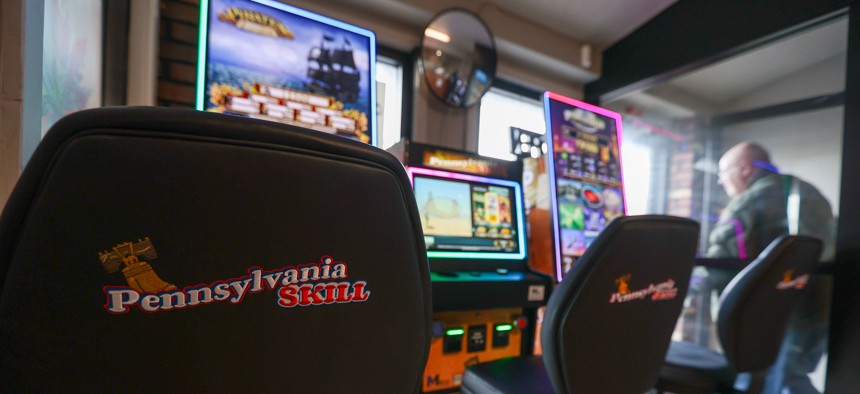
Pennsylvania Skill machines inside Wilkes-Barre Gold in Wilkes-Barre. Jason Ardan/The Citizens' Voice via Getty Images

Twenty years after the first casino opened in Pennsylvania, Gov. Josh Shapiro is rightly calling for the inclusion of all modern-day gaming options – including skill games – to generate more tax revenue for the commonwealth.
As someone who has dedicated much of his career to job creation, I believe it would be wise to make policy decisions that not only expand the gaming tax base, but also consider Pennsylvania workers who rely on casino jobs for their livelihoods.
The governor’s position is clear: if you profit from gaming in Pennsylvania, you should contribute to the commonwealth’s priorities. Over time, that principle has eroded, as has the number of jobs that support the casino industry. Of course, gaming in Pennsylvania today looks a whole lot different from what it did when it was first legalized.
More than 20 years ago, then-Gov. Ed Rendell championed the expansion of gambling into Pennsylvania. Students of Pennsylvania politics will recall it was a key 2002 campaign promise Rendell made to rescue the state’s failing horse racing industry, boost the economy, modernize the state’s entertainment and tourism industries, and create jobs.
Back then, gambling in Pennsylvania was in its infancy, with slot machines located at a handful of casinos in communities across the Commonwealth.
Today, gaming options are all around us, from the cell phone in our pockets to the gas station where we fuel up – but only skill games are unregulated and untaxed.
Gov. Shapiro is proposing to tax skill games – which can now be found at thousands of Pennsylvania bars, restaurants, convenience stores, and clubs – to bring about tax relief and to close a significant state budget gap.
The governor believes the state can raise $2 billion in annual revenue, with a tax on skill games as part of the mix. The companies behind skill games, which look and sound a lot like slot machines, have avoided having to pay their fair share in state taxes, as well as avoiding regulation from the Pennsylvania Gaming Control Board or any other state regulatory agency. Back in the early 2000s, policymakers could not have predicted that the proliferation of these games, along with the explosion of new online gaming options for Pennsylvanians, would contribute to the loss of thousands of local jobs at Pennsylvania’s brick-and-mortar casinos, which was a core principle of the original policy behind the legalization of gambling.
An analysis of records kept by the Pennsylvania Gaming Control Board finds that competition from these new gaming options has already resulted in thousands of lost jobs across Pennsylvania.
From 2019 to 2025, there has been a 27% reduction in jobs at the 12 casinos in operation during that time. The job losses have impacted casinos in cities and in rural destinations that can least afford to lose jobs, like Nemacolin Resort in Western Pennsylvania, which recently announced 140 layoffs.
Gov. Shapiro is correct when he calls for fairness in taxing and regulating Pennsylvania's various gaming operators, at whatever rate is ultimately decided. Doing so will create a more level playing field. It's worth noting that while online casino gambling, sports wagering and skill-based games are soaring in popularity, none of them provide actual job opportunities for Pennsylvanians like casinos do.
The jobs data back that up: In 2019, those 12 casinos in Pennsylvania employed 15,400 people; that figure is now 11,200 employees.
This is simply about fairness – fairness for Pennsylvanians, fairness for Pennsylvania jobs, and fairness for determining revenue sources. Discussing the acceptable level of taxation is a great place to start these negotiations. The final product should prioritize not just a fair tax structure, but also the thousands of Pennsylvanians working at our casinos today – and the casino workforce of the future.
David Black is the former longtime CEO of the Harrisburg Regional Chamber & CREDC. He also served as Deputy Secretary at the PA Department of Community and Economic Development under Governor Tom Ridge.
NEXT STORY: Before rehabbing Philly school buildings, we must rework the Separations Act