

Politics
Before rehabbing Philly school buildings, we must rework the Separations Act
Without updating the century-old legislation dictating how work is done, the much-needed construction projects will be unnecessarily hindered and expensive.
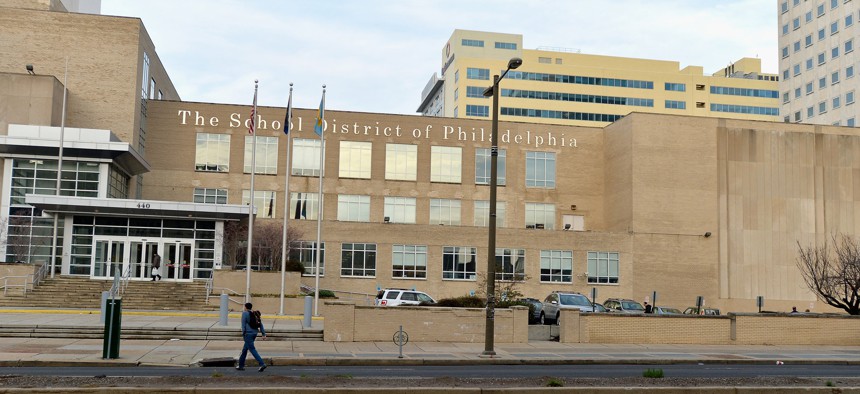
Paul Marotta/Getty Images

As parents and construction professionals, we at the General Building Contractors Association were eager to help when we first heard about the School District of Philadelphia's long-awaited $2.8 billion facilities plan. The school facilities update is critical to creating high-quality buildings for our kids and teachers.
But like many Philadelphians, we were concerned about the decade-plus timeline for the update. The current law governing this proposed construction work, Pennsylvania’s Separations Act, puts the School District of Philadelphia and our members at risk of work delays, unintended costs and legal challenges.
Philadelphia Mayor Cherelle Parker and SDP Superintendent Tony Watlington said of the facilities plan: “Change is never easy.” As the contractors behind most major construction projects in the region, GBCA agrees and urges the General Assembly to modernize the Separations Act; it’s the only way we can safely and efficiently build modern schools without unfairly burdening taxpayers.
The Separations Act became law in 1913 and requires as much updating and modernization as the city’s school buildings – many of which are in need of repair and yet are still not as old as this law. The act requires at least four separate contractors, each working directly for the district with no contractual responsibility for the overall project.
As contractors who work on job sites, we know that this is a recipe for delays, finger‑pointing, unexpected costs and overall frustration. If a steamfitter encounters a problem that requires an electrician, there’s no single responsible party empowered to coordinate a solution. Instead, you get work delays, change orders and lost time. Meanwhile, it is our children who suffer and taxpayers who shoulder unnecessary, avoidable costs.
Other community institutions that Philadelphians rely on, like hospitals, housing, churches and universities, choose collaborative construction delivery methods. These projects benefit from quickly assembled teams and high-quality buildings constructed within a realistic budget and in an expedited timeframe. We want the same results for our kids, who deserve high-quality, modern school buildings.
Philadelphia students and teachers are hard-working, passionate people. They deserve to learn and grow in modern spaces with modern capabilities. We can’t expect to deliver quality, 21st-century buildings without using quality, 21st-century guidance. To truly modernize our school buildings for Philadelphians, we need Harrisburg’s help to modernize the Separations Act.
The School District’s facilities plan is ambitious, and it should be. “By building better schools, we are building a stronger Philadelphia – for this generation and the next,” Mayor Parker and Superintendent Watlington said of this important plan. That vision becomes nearly impossible when the law requires the district to manage multiple disconnected contractors while ignoring their experience and expertise as selection factors.
The tough reality is that the current plan requires about 10 years and $2.8 billion. That timeline and price tag assume there will be no construction issues or unexpected costs, and that all professionals can complete their parts of the project on schedule. This feels nearly impossible without a dedicated contractor with experience on sites of this magnitude on board from the beginning of the design process.
Philadelphians deserve high-quality, timely and affordable construction projects. This could transform and grow our city for generations to come, but the current Separations Act is one of the biggest hurdles to achieving that goal.
The bottom line is that no private institution, other state, or even the federal government chooses to build using this antiquated method, yet our public schools are required to use it. As Superintendent Watlington says, this is a once-in-a-lifetime opportunity – so let’s get this right, right now. Pennsylvania has a responsibility to remove a barrier that prevents professionals from building modern, safe and fiscally responsible public school buildings that Philadelphia students and teachers deserve.
Maura Hesdon is the chair of the board for the General Building Contractors Association.
NEXT STORY: It’s elementary: Restrict use of mobile devices at school