

Politics
The next state budget must do better by older Pennsylvanians
State Sen. Maria Collett makes the case for changing how long-term care is funded in Pennsylvania.
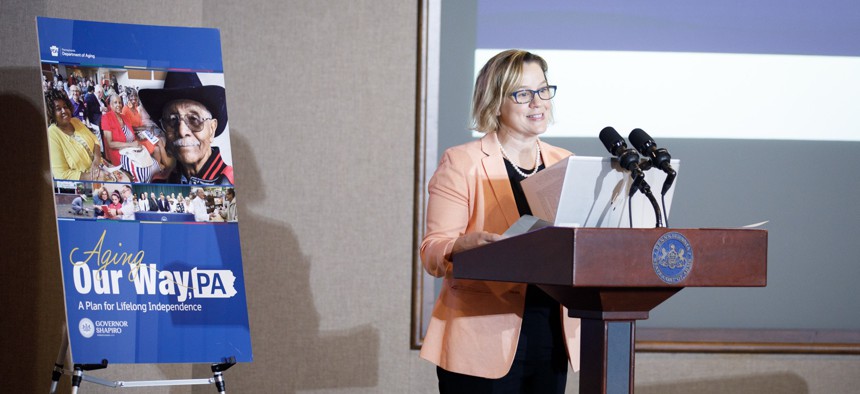
State Sen. Maria Collett speaks at an event in Fort Washington, Pennsylvania. Commonwealth Media Services

Before I ever ran for office, I spent years at the bedside of Pennsylvanians as a nurse. From maternity care to hospice, our health systems play an integral role across our whole lives. But for our seniors, that system is on the verge of collapse.
We all know that Pennsylvania has an older population compared to other states, and we’re getting older. Rural hospitals are strained, suburban hospitals are also closing, and nursing homes are no different. It’s time to address sustainable funding for the high level of care that our seniors need.
In recent years, we’ve increased the baseline funding we send to nursing homes and raised the requirements for nursing ratios. I’ve reached across the aisle to Senator Judy Ward regarding a resolution to recognize Skilled Nursing Week in May. The theme this year is Moments in Bloom, and it honors the small moments of compassion that caretakers make at the bedside every day – the acts of kindness for our seniors that improve their lives immeasurably.
But the state does not fund eldercare with compassion. Hundreds of thousands of seniors rely on Medicaid to pay for long-term care, and when the state receives the bills for that essential care, they return just 80 percent of it – leaving facilities to figure out how to cover care, maintain their buildings in pristine condition, offer activities and high-quality food, and keep qualified health professionals at the bedside.
What’s worse is that the reimbursement rate isn't even permanent: it can change quarterly, leaving these homes unable to plan. The rate is recalculated based on average costs over several years, and then divided by the amount of money that we have left in our Medicaid allotment. It’s called the Budget Adjustment Factor, and it forces long-term care facilities to divvy up pennies instead of fully, fairly, and predictably funding them.
That Budget Adjustment Factor expires this July 1, and while I’ll be supporting an increase in the line item for our seniors’ care, I also want to see a change in how we fund – not just how much we fund. If we eliminated this budget adjustor, or even set a reasonable floor of 0.9 that allows centers to plan for the reimbursement they can expect, our seniors would be in far better shape.
These folks have often lived in Pennsylvania their whole lives, raised families, had careers and paid taxes. And now, in their final years, they have earned our deepest compassion for their contributions – and for their inherent human dignity. It’s unconscionable for us to put them in this funding bind.
I’ve seen this issue as a lawmaker and as a caregiver, and I know there’s a solution that honors patients and also our state funding realities. As we return to Harrisburg in June to make big funding decisions, I will have older adults in mind.
State Sen. Maria Collett is the minority chair of the chamber’s Aging & Youth Committee.
NEXT STORY: Passing school safety measures: a matter of life and death