

Politics
The City & State Q&A: Kristen Welker
The longtime journalist and host of NBC’s “Meet the Press” weighs in on the merits of growing up Philly, landing interviews and what to watch for in the midterms and in 2028.
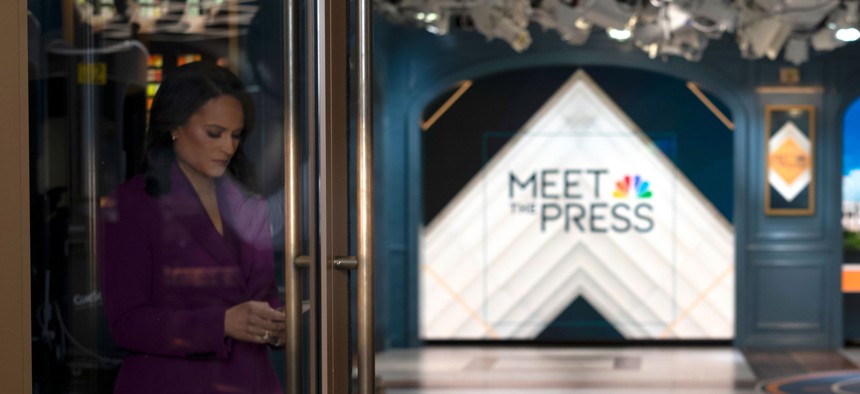
“Meet the Press” Moderator Kristen Welker on set in NBC’s Washington, D.C. studio in January 2026. CHERISS MAY

“If it’s Sunday, it’s ‘Meet the Press.’” For decades, those words, spoken by the NBC program’s moderator each week, have signaled to millions of viewers looking to learn more about the key political battles of the moment – and the elected and appointed officials on the front lines – that they’re in the right place.
Since 2023, the person speaking those words – and interviewing presidents, mayors and anyone else playing a crucial role in the state of the union and beyond – has been Kristen Welker, the second woman and first journalist of color to helm the longest-running show in television history (the show premiered in 1947).
Welker’s current gig is just the latest and most high-profile in a career that includes moderating presidential debates, covering presidential administrations, hosting “Weekend Today,” and writing for The Earthquake, the student newspaper at Germantown Friends School in Philadelphia.
The Philadelphia native – whose Instagram account lists her “Meet the Press” role first and her “Philly girl” status second – sat down with City & State to discuss hometown heroes, the relationship between the media and the public, the midterms and more.
This interview has been edited for length and clarity.
What do you carry with you from your Philadelphia upbringing?
Growing up in Philadelphia, you were reminded over and over that it is the birthplace of our democracy, so I was infused with a sense of pride in the city. My parents were active participants in the community – my mom’s a realtor, my dad’s an engineer. When I was growing up, my mom would take me to meetings with her, particularly the women’s groups that she was a part of that honored African Americans. We would always go to the city-wide lunch honoring Martin Luther King Jr. And I remember one year, I actually met Rosa Parks; that is a moment that has stayed with me forever.
When I was in high school, my mom ran for Philadelphia City Council. She didn’t win, but I got to see what a campaign was like. I had a front-row seat to that entire process, and I think all those different factors combined to make me the woman, the mom, and the journalist I am. Constantly hearing from and interacting with women, people of color, who would set goals for themselves, break barriers and serve as inspirations in their own communities, really set me on a path to engage with my community. It sparked my love of journalism and politics. The lesson from all of it was that you have to be an active participant in your community and in the world around you. I take that very seriously, and it’s part of what I really strive to do every day.
How does your early work experience influence your current role?
My first on-air job was in Redding, California. My news director at the time said that it was like graduate school with a stipend. It was an extraordinary experience, both in terms of the friendships that I formed there and the lessons that I learned. I operated my own camera, I edited everything, I was the weekend anchor. I would write and edit the entire show, and operate the teleprompter with my foot. I even did the weather there for a period of time. I came to understand the inner workings of broadcast news, but more importantly, I gained a deeper understanding of journalism’s role as a foundational principle of our democracy.
I raised my hand to cover every political story, which, in Redding meant covering something called “brown-bag City Council lunches,” where people in the community would bring their brown bag lunches and sit down to talk with the mayor and the members to express their concerns and desires. One of the big debates was over whether to build a community pool. And in some ways, what was happening in Redding was, on a smaller scale, what I cover in Washington today: these debates about what kind of world we want to live in and how we can be active participants. Everything I learned in Redding stays with me to this very day: You have to stick to the basics – the who, what, when, where, why, of the story – and hold elected officials to account.
An October 2025 Gallup poll showed that public trust in media had dropped to 28%, down from 40% just five years ago. How did we get here, and what can be done to change that trajectory?
I think people are losing faith in their institutions, broadly speaking, and the media is part of that. I think part of why we’re seeing that is because there’s a lot of misinformation and disinformation online; there’s a very fractured media ecosystem. It’s the challenge of our time to help restore faith in journalism. There is no more important goal, so: How do we do that?
One way is to hold ourselves to the highest standards. We try to never get it wrong. And I know that every journalist feels that way. Every good journalist wants to get it right and make sure they are providing the best version of the truth to the American public – and if we do get it wrong, we have to say so. I’ve had one moment on “Meet the Press” where I made a mistake, and I had to painfully come out and admit it. We quickly decided it was important to come out and acknowledge the mistake and move on. When you do that, you’re sending a message to the audience that we care about getting it right. We take this really seriously. We’re going to hold elected officials to account, and we’re going to hold ourselves to account as well.
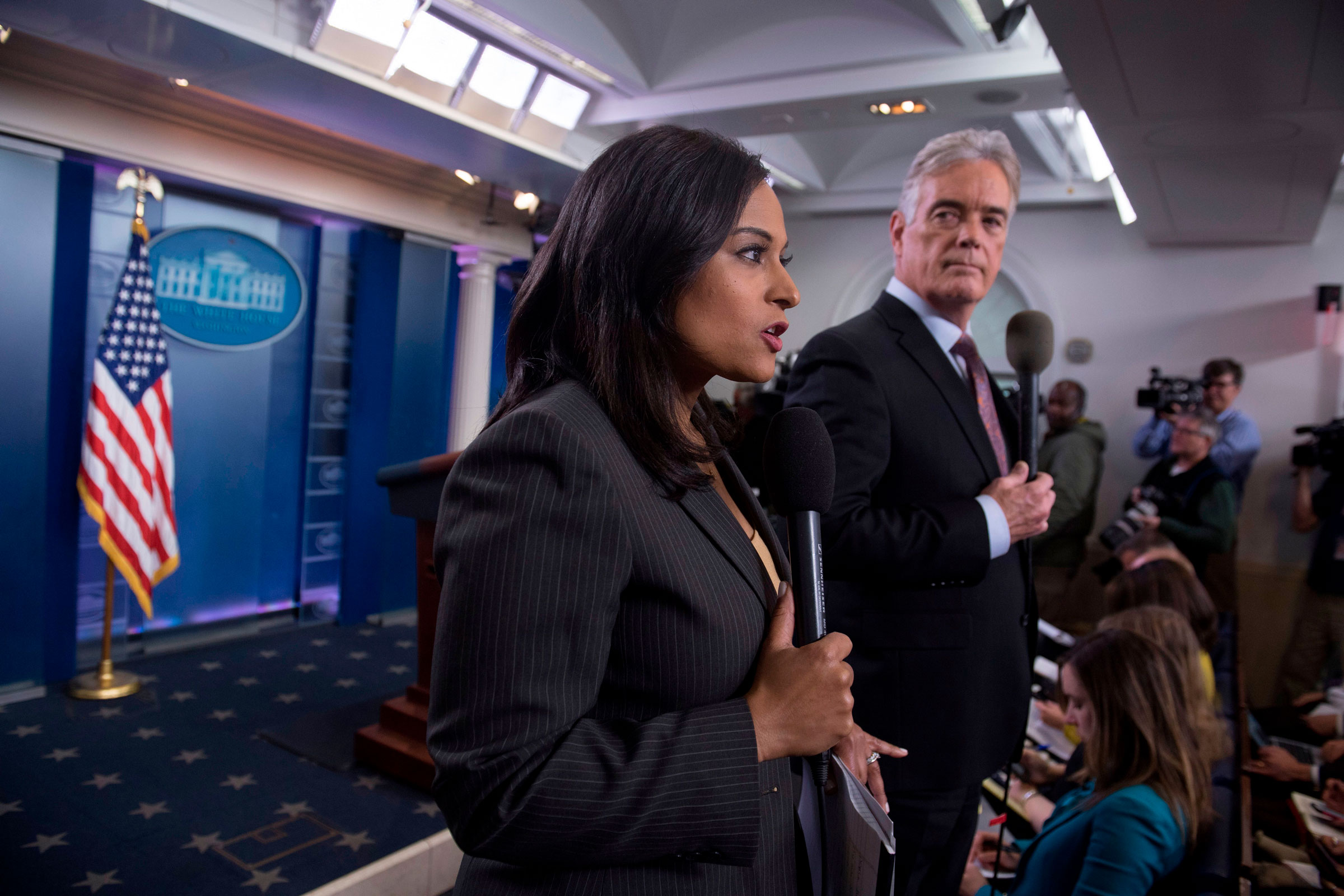
It’s also about making sure we are hearing from a wide range of voices. Every Sunday, we often have three guests because the conversations we’re having are so complex and robust, and we want to make sure we’re hearing from as many voices and perspectives as possible. It might be someone they agree with or someone they disagree with, but if they can listen to the conversation, I think that takes a step toward hopefully repairing that trust.
Last month, CBS News Editor-in-Chief Bari Weiss held an all-hands meeting in which she said CBS News was “not doing enough to meet audiences where they are, so they’re leaving us.” How does the continuing migration away from mainstream media to alternative information sources affect your approach to what you do?
I do think we have a responsibility as journalists right now to meet viewers where they are, and I think we have been doing that at NBC News, both through our on-air product and our streaming product, NBC News NOW, where I anchor “Meet the Press Now” three days a week. We’re incredibly proud of that broadcast, which allows me to continue the conversations that we’re having on Sunday throughout the course of the week – it allows viewers to pick up their phones and to watch our broadcast at any time, in any place.
Before I step off the air on Sundays, our team – we are a small but mighty team – is posting content to social media so that people can see some of the most significant exchanges that have happened on the program. We are constantly thinking about: “How do we meet people exactly where they are?” We’re doing that both in how we share our content and in the content we provide.
Does anyone say no to an interview with you?
Absolutely. People say no every week, but we don’t give up. We pursue guests vigorously, from a place of wanting them to share their perspectives and making sure we’re hearing from a broad array of voices. Our guiding light is Martin Luther King, Jr. It took “Meet the Press” three years to book him (for his first appearance on the show in 1960). Part of the reason for that was because at the time, there were so many security concerns around having him do an appearance on the show. They never gave up then, and we don’t give up now on booking guests who we think are fundamental to the broader conversation we’re having. That first interview with Martin Luther King, Jr. is a guiding light for us that we can never give up on trying to get to yes with the guests that we want to interview.
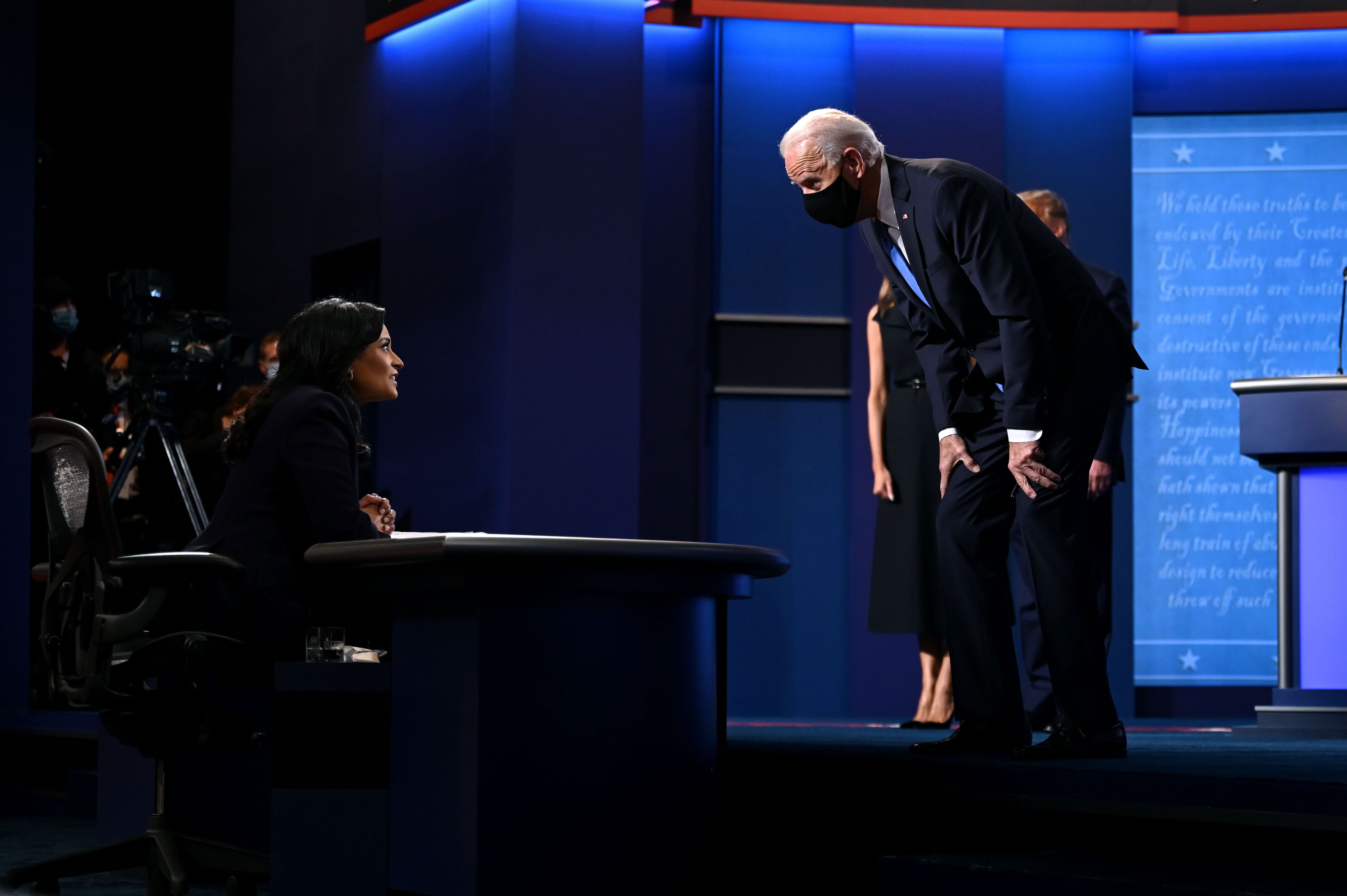
In 2024, you saw the key issues in the election as being the economy, abortion rights and gun control and climate change. What do you think the key issues are going to be for the midterms?
I think the biggest issue for the midterms is going to be affordability. We find that in election after election, going back decades, and we have seen both parties try to shift their messaging around. You saw that in some of the off-year elections – the gubernatorial races, certainly in New Jersey and Virginia, and in the mayor’s race in New York City. You’re starting to see that in some of the primary races, where candidates are putting affordability front and center.
What I’ll be watching for closely in these midterms is, how do these candidates deal with the Trump agenda? What we’re seeing, for example, in Minneapolis: How do Republicans talk about that? How do Democrats talk about that? How much do they make that a part of their platform, as compared to the issue of affordability? How do we see the various issues get juggled?
You could make the case that in 2024, Democrats got a little sidetracked from their message that was focused on the economy. They started to focus on Trump. And in hindsight, several strategists say there wasn’t enough focus on the economy, which remains the No. 1 issue based on all our polling. People still feel like they don’t have enough money in their pockets. So, how do the candidates, whether it’s in Pennsylvania or other battleground states, choose to talk about those critical issues?
What can the midterms tell us about the 2028 election cycle?
In addition to seeing if Democrats can win back the House and/or the Senate – and there are obviously a lot of important congressional races in Pennsylvania that will determine that, like the Ryan Mackenzie race and the Rob Bresnahan race, just to name a few – is that 2026 is, in many ways, going to be a dress rehearsal for 2028. Gov. Josh Shapiro is running for reelection, and we’ll be watching very closely to see what he does in this campaign cycle. I had the opportunity to interview him and I asked him point-blank: Are you running for president in 2028? He said, “I’m focused on my reelection campaign.” So he didn’t rule it out, which I thought was very notable. And he’s obviously been someone who has been on the national stage for quite some time.
One of the things that will be fascinating about 2028 is that it will be the first open presidential race since 2016. From a political journalist’s perspective, it doesn’t get more exciting. I think there’s going to be a crowded field on both sides. In addition to Gov. Shapiro, if he does decide to run, we’re watching the other governors very closely. California Gov. Gavin Newsom, Illinois Gov. J.B. Pritzker … certainly the senators, including Sen. Mark Kelly, Congresswoman Alexandria Ocasio-Cortez, could decide to run. On the Republican side, I think it’s incredibly dynamic as well. You have Vice President JD Vance, but notably, when I’ve interviewed President Trump, I’ve asked him who is going to take the baton, he says, “Look, of course, the Vice President is someone who’s at the top of the list,” but he also mentions Secretary of State Marco Rubio, who’s taken on a huge portfolio with his role in the Trump administration. And then there are other names to watch, like Sen. Ted Cruz, who’s been very outspoken. It’s going to be an exciting political cycle, with that big question: Do Democrats regain their momentum coming off of really tough losses in 2024?
How do you stay informed?
I try to read as much as I possibly can throughout the course of the day. Sometimes that’s a little challenging before I get to work because I have two young children, a 4-year-old and an 18-month-old. I try to set my alarm before they get up, but I’m not always effective at waking up before them. The second – and arguably the most important – part is staying in touch with my sources, whom I’ve developed since I first arrived in Washington.
I’ve been here since 2011, when I covered the Obama administration, and I’m constantly on the phone. This is not just about crafting interviews for Sunday. I’m always talking to sources, trying to infuse my own reporting into my interviews and the show, and contributing to the reporting our team of political reporters at NBC is working on. I think that’s one of the most important ways of staying informed, because you’re literally keeping your finger on the pulse of what’s happening.
Last month, following the devastating shooting death of Alex Pretti, one of the people I reached out to was one of my best law enforcement sources to help me to understand, from the perspective of a former law enforcement official, what we are looking at so that I could have confidence to discuss the video when I interviewed Deputy Attorney General Todd Blanche about it. If I’m doing a segment on the economy, I often reach out to economists. If I’m doing a segment on foreign policy, I try to reach out to people who’ve worked on those specific issues so that I have a deeper understanding, beyond what’s been reported throughout the course of the week, of what’s actually happening, so that someone can say to me, “Look, if I were you, these are some of the big issues I’d be thinking about heading into this meeting.” That really helps broaden my approach to any discussion I have on Sunday.
How do you unplug?
When I finish the show on Sunday, I get off the set and start making phone calls for the following Sunday. But when I walk through the door of my house, I try to put the phone down. I have my 4-year-old daughter, Margo, my 18-month-old son, John Zachary, my husband, John … I try to just be present with them, because we work on the weekends. I have Mondays and Tuesdays off, which is wonderful, and I can spend quality time with the kids. I try to have mommy-Margo afternoons with my daughter after she gets out of school, where I take her to do something special and take her to her gym class. Our dinner time is also so important: It teaches my kids that when I’m with them, I don’t have my phone, and it’s important for me mentally, because it helps me to recharge so that I can bring 150% when I go back to work on Wednesdays.
NEXT STORY: This week’s biggest Winners & Losers