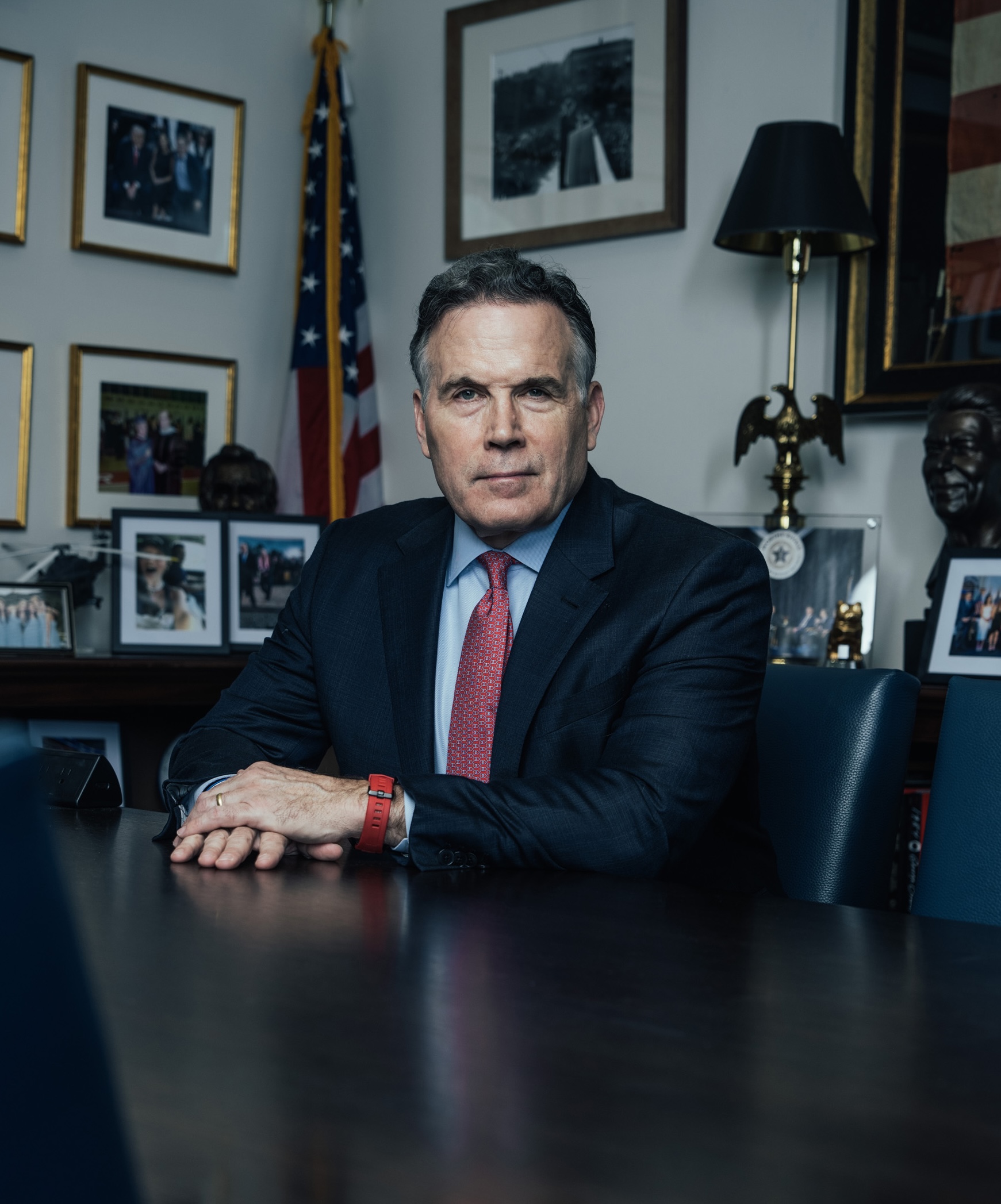
Dave McCormick
The City & State Q&A: Dave McCormick
An in-depth interview with the U.S. senator reveals how he approaches everything from bipartisanship to data centers.
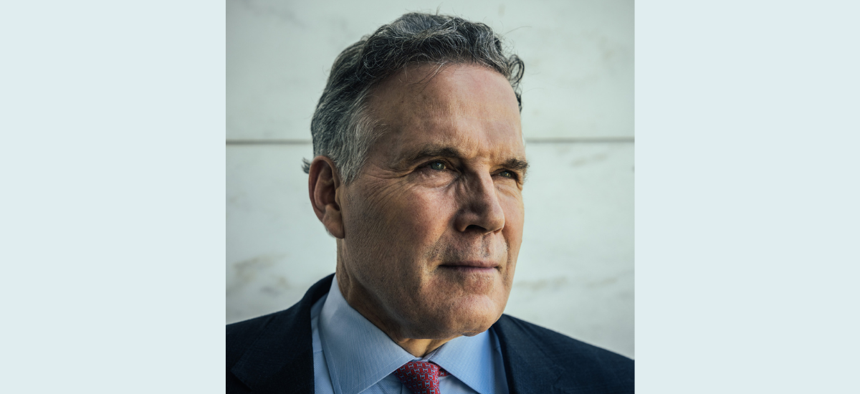
U.S. Sen. Dave McCormick Stephen Voss

America’s 250th anniversary cast a considerable spotlight on Pennsylvania’s pivotal role in the nation’s dawning days. And while the summer of celebration continues, U.S. Sen. Dave McCormick is already focused on how Pennsylvania can build on its record of innovation and ingenuity to shape what the American experiment will look like over the next 250 years.
Last year, McCormick helped secure $90 billion in private investments in AI and energy-related projects across Pennsylvania, and followed up this year with another $10 billion in investments announced at a convening of the nation’s top defense and technology leaders at the U.S. Army War College in Carlisle. For McCormick, it’s all part of a larger plan to position Pennsylvania for success by leaning on the commonwealth’s strengths: its first-class universities, its skilled workforce and the array of businesses that support nearly every aspect of the U.S. economy.
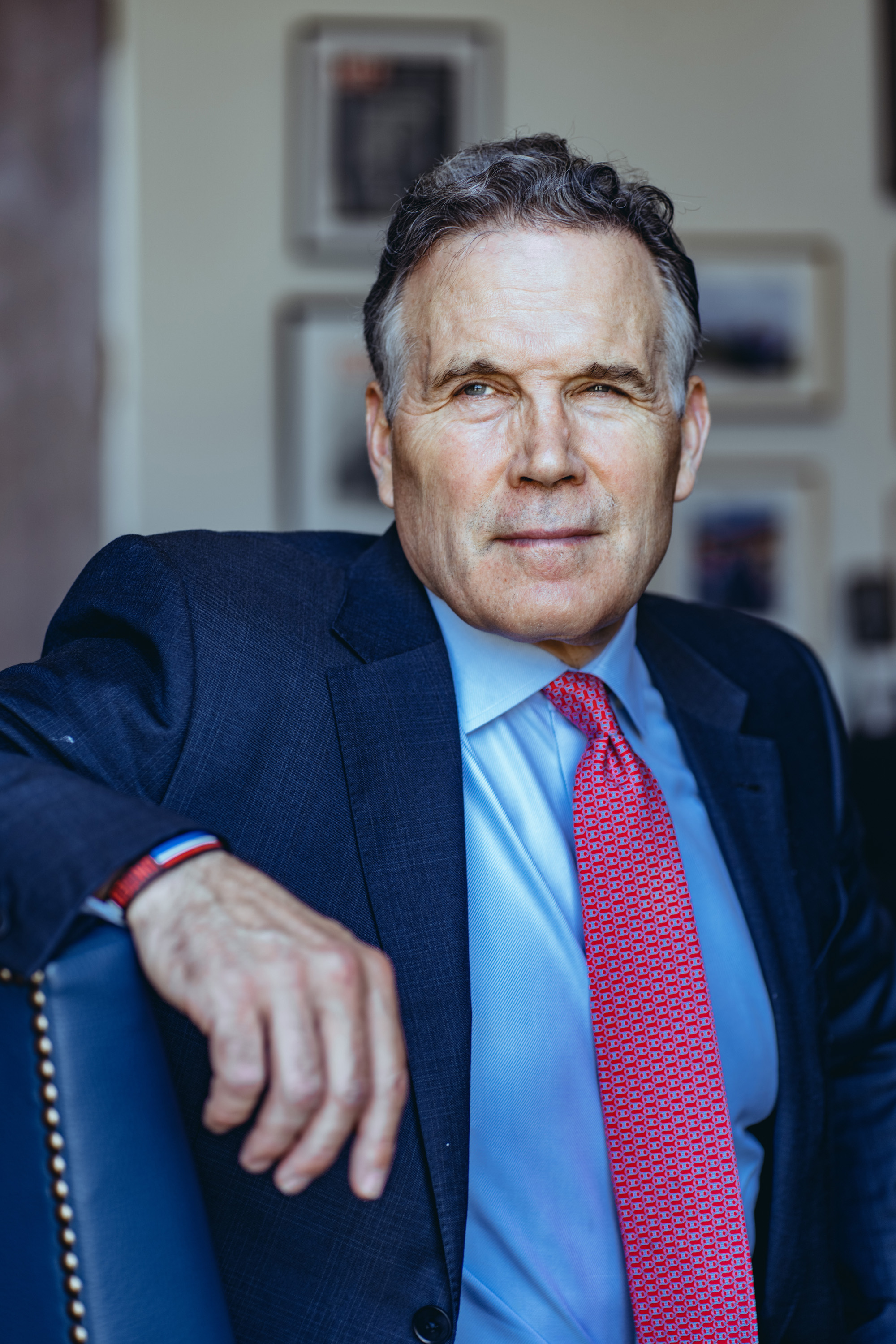
City & State recently sat down with McCormick to discuss his time in office, his top priorities in the U.S. Senate and how his cross-sector background influences his approach to policymaking.
The following conversation has been edited and condensed for length and clarity.
You just wrapped up an 11-day tour of the commonwealth. You've hit all 67 counties since you've been elected. What did you learn?
I did 26 counties and 2,000 miles in 11 days. Most of those were rural counties, and there’s just nothing like hearing and seeing it for yourself. The biggest takeaway for me was the challenge we face in healthcare; a lot of these rural healthcare systems are struggling, and some of them are going out of business. The challenge in a lot of counties is that they don't have maternal health care, they don't have an ER … you have a heart attack in the middle of the night, you have to drive an hour. That's an area we're trying to address with this Rural Healthcare Transformation Fund in the Working Families Tax Cut Act (also known as the One Big Beautiful Bill Act). I came away with a profound sense of that challenge, and a desire to make sure that money is going to things that make sense.
The second big thing was the Invest America Accounts – the Trump Accounts – which are this huge opportunity to address the growing problem of wealth concentration. As the economy grows, some people are able to take advantage of that, in the best sense of the word, under capitalism – but many are just living paycheck to paycheck and aren't able to generate any wealth or savings. A big part of that is inflation. But the American Dream is getting further out of reach for many Pennsylvanians. So these Invest America accounts, these Trump accounts, are a way to fix that. Every kid that was born during the Trump administration will get a $1,000 award, but I'm hoping we can extend this in perpetuity, and then if you can invest $25 a week – a family, a parent, birthdays – the money goes there. By the time you're my age, you can have a $500,000 nest egg from that initial $1,000. The power of compounding and of allowing individuals to participate in the U.S. economy through equity markets is a huge opportunity.
What do you think needs to be done to continue chipping away at wealth concentration?
I'm a red-blooded capitalist. I've become financially successful because of capitalism. Capitalism is, without question, the most successful economic model in history for lifting people out of poverty and creating opportunity; America's economy is so robust because of capitalism. But it's also true that over the last 15 years, wealth concentration has grown. After the financial crisis, the Fed pumped lots of money into the system. People who had assets were generally richer – and richer people got richer. During that exact same period, if you were living on income, paycheck-to-paycheck, inflation went up faster than wages. So, at the same time everybody with assets got richer, (other) people got poorer.
That's about to get worse because, with AI and these blockbuster companies, it's gonna turbocharge the people who have assets, in many cases, getting richer. At some point, the concentration becomes just too much. So, how do you deal with that? My views of this are: We have to address this issue and reform capitalism to save capitalism and to protect it from the crazy radical lefties who want to go back to socialism and Marxism and economic models that will literally destroy the goose that laid the golden egg. The goose is America's economy. It's the best in the world. Everybody got richer, by the way. Everybody got lifted out of poverty. It's just that at the same time, this gap is growing.
So the reason I like the Trump Accounts so much, the reason I like the Education Freedom Tax Credit, is they have a couple of characteristics that I think are where the answer lies. One is that they're voluntary, so rather than the government saying, “We're going to snatch your money and we're going to decide how to allocate it” – this is people voluntarily having the choice to do it now. The second thing is, it completely circumvents the government. The thing I'm not for is taxing people, having taxpayer money go to the government, and then the government deciding how it's allocated. The beauty of these things is that they go right to people. The third thing is, they're focused on opportunity, not entitlement. I don't think America owes any end-state to anybody. I don't think that's the way our country was conceived. But we do have a promise for opportunity for everyone. Programs that allow those who want to work, those who want to grow, those who want to be educated, those who want to compound their wealth the opportunity to do that … is a really important premise.
_Bureau_of_Industry_and_Security_-_Confirmation_Hearing_for_McCormick,_Jackson,_Ambassador_Lavin_and_Israel_Hernandez_(40_CFD_McCormick_DSC_2580.JPG_-_DPLA_-_9642816138cf1c7073563a00a47b5865_.jpg)
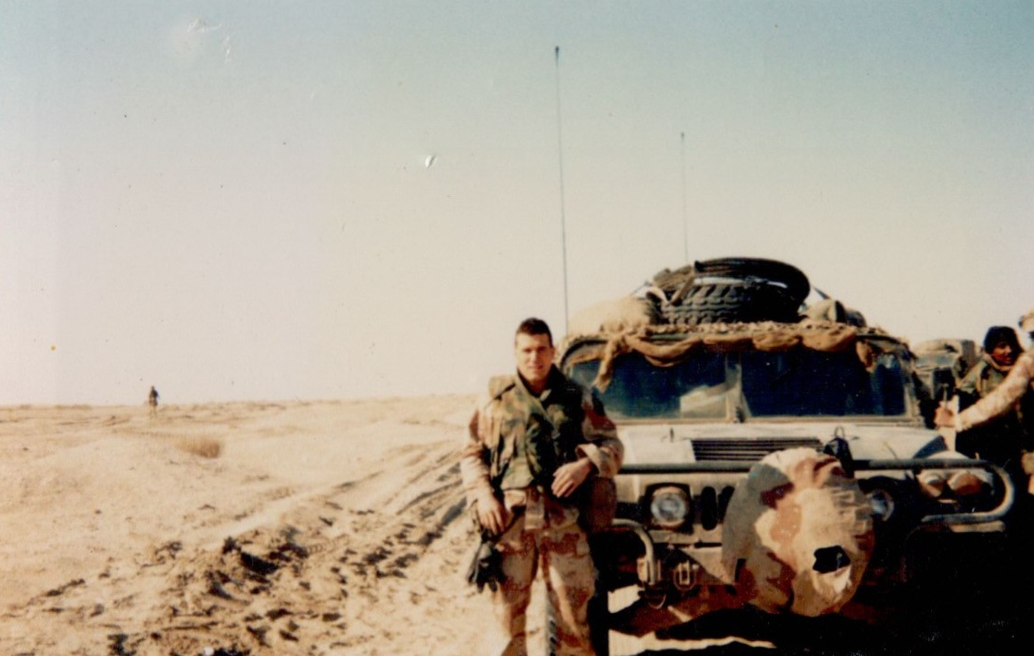
Your background is a little different from the average politician in Washington. You were an executive at the world's largest hedge fund. You are a veteran. How does your background shape your approach to policymaking?
Chapter 1 is where I grew up. In (Bloomsburg), the main employer was the Magee Carpet Company, which fell prey to globalization and went from 3,000 to 100 employees … that upbringing shapes who you are. The military was the second chapter. West Point and the Army opened up the world to me. To serve others, to serve America – those are the values of West Point. Next was the opportunity to serve as a military officer, go into combat, and do all that with a platoon that represented America. There's the kid from rural Alabama, there's the African American kid from Newark, there's the kid from Boston who dropped out of college, there's a Puerto Rican platoon sergeant. All of us were Americans. We didn't talk about religion. We didn't talk about politics. So to me, it's not whether you're Republican or Democrat; it's those values of country, patriotism, the idea that we're all part of something bigger than ourselves.
And then I just had a number of lucky breaks. I ran a tech company in Pittsburgh in the middle of the internet bubble. Then, a chance to serve during the Bush administration during the financial crisis. Then the Bridgewater chapter – that was hugely influential. I led a very complex, very large, very consequential organization. I got fired as CEO and came back to be CEO again – those experiences really hardened me. When I came into the Senate race, it was as someone who had benefited from the American Dream, who had lived beyond my parents’ and my expectations for what was possible for me. I had this calling to serve again, but not because I needed a big title – I was the CEO of the biggest hedge fund. It wasn't fame or fortune. It was genuinely to serve, and that's what gave me the tenacity to do it again when I lost. I kept asking myself, “Why do I want to do this? Because I want to serve and represent.”
How has that translated into policymaking, and what you prioritize?
So, I wrote an annual report. Find me a senator that wrote an annual report. I don't think there are any, but the annual report was to take accountability. What did I promise? Where are we on the promises? Where do we fall short? Stop the flow of fentanyl, unlock energy, help working-class families, bring law and order: That's the starting point. But when you're running a business, you're thinking about two things at the same time – running the day-to-day, delivering on the promises, but then looking out over the horizon, saying, “Where should the company go? What are the big waves of change that are going to create opportunity or could smack us and crush us?” So the second part of that annual report is a vision of where the future is headed – and how I, as the senator of Pennsylvania, can make sure we're in the front of the line.
There's the legislation, the constituent services, running the day-to-day of being a senator – and then there's trying to influence Pennsylvania's future with that vision. That is where the Energy and Innovation Summit came in: There's no legislation associated with that, but it's a huge economic event for Pennsylvania. That's what the Defense and Innovation Summit is – creating a catalyst for businesses, investors, government officials, and the media to seize the opportunity to make real things happen.
What role do you see Pennsylvania playing in building the nation’s ‘Arsenal of Freedom’?
It's already a huge part of it. We have about 190,000 defense-related jobs in Pennsylvania. That's traditional defense, artillery, satellites, next-generation combat vehicles in York – and all sorts of companies pushing the next generation of warfare. I think we learned during COVID we have to define national security a little more expansively. Energy security is national security. Rare earth minerals are national security.
Pennsylvania is uniquely positioned on traditional defense. We have the Scranton ammunition plant … that's mostly the stuff that's being shot in Ukraine. Ridley Park, where Boeing makes the Chinook. We have a lot to add to the next concentric circle of national security, which is rare earth minerals, powdered metals, steel and huge energy capabilities. The third thing is the emergent technologies: robotics, drones, and hypersonics. We have unbelievable research capability going on at Penn State, where a lot of the naval research is underway. We have robotics research and development going on at Carnegie Mellon. We have drone manufacturers in a number of places that are investing, building capacity. The rebirth of shipbuilding at Hanwha and submarine components at Rhoads – they are the main producers for the majority of our subs. We have the nuclear power lab here, which is the sole research facility for the nuclear sub force. So as the defense budget goes up a lot and the transformation of defense moves from old platforms to new ones, I think Pennsylvania is uniquely positioned to be at the forefront.
What is your take on the growing controversy over data center development in Pennsylvania and the rest of the country?
The ultimate decision-making power is going to reside with the communities – township supervisors, county commissioners and the people. But humbly, I think those decisions need to be well-informed. We now have a problem with a lot of misinformation; China is behind much of it. AI and data centers have an 85% popularity rating in China. They have a 20% popularity rating in America. I don't think that's an accident.
Generally, there's anxiety about AI. Totally understandable. Any time there's change, there's anxiety. My basic view is we have to win the AI race with China. The consequences of them setting the rules for AI and the global economy is not good for America. So we need to be the leader. You can't say AI without saying energy, so energy dominance is a prerequisite of AI leadership. Pennsylvania is uniquely positioned to be the point of the spear for America because of our energy, our skilled workforce, because of our location geographically. We’ve got great universities. And (data centers) are an economic engine: thousands of jobs to build them, hundreds of jobs to run them, thousands of jobs to upgrade them, hundreds of jobs to support them logistically, hundreds of jobs for restaurants and hotels and so forth. They are net significant economic drivers.
But for them to work for most communities, five things need to be addressed, and this is what I call the AI covenant: You need to protect rates for the people in the community. They need to give them rate protection or bring more energy than you use. You need to protect the water. The way to do that is via a closed loop – it's 95% recyclable. Third, you need to make clear what the impact on the tax base is. In almost all cases, it will be a dramatic influx of new tax revenue that could offset property taxes and other costs. Fourth, they need to promise they'll build with community labor … We need to make sure those jobs go to Pennsylvanians. The fifth thing is that whatever icing they're going to put on the cake – new schools, roads, whatever – needs to be clear: $25 million for a new school, $50 million for a new highway, or $100 million for a new septic system.
Then, with those pieces of the covenant decided, the community can say, “That's not for me.” My only question to those people who say, “Not for me” – then what are you for? What is the thing that's going to bring back jobs? What's going to make your kids want to stay in your community? If there's a good answer to that question, great. But if there's no good answer to that question, I hope you'll consider these investments as a possible answer.
You appear to have solid relationships with major figures across the aisle, like Sen. John Fetterman and Gov. Josh Shapiro. How do you find common ground?
When I ran, I promised people I'd vote as a conservative; I told them what my positions are. No. 1, I do what I said. People shouldn't think that because I can work with people, that means I'm not conservative. But I also promised I'd work hard to get things done, and getting things done rarely involves just all the people who agree with you. Almost always, getting things done requires working with people who don't necessarily agree with you on other matters. I look for opportunities to introduce legislation that's good for Pennsylvania, good for America, that's bipartisan. I've got a 100% voting record on conservative issues, and I'm the most bipartisan of the freshman senators – I think I'm No. 2, in the Senate, maybe No. 3 in terms of bipartisanship. That's not accidental: That's a way of thinking.
I've talked to Gov. Shapiro regularly on things that we do – Eli Lilly is a good example. We worked very closely on it. But I'm a Republican; he's a Democrat. I've also endorsed his opponent and supported her. I say, “Governor, I'd like to work with you on this,” and if we disagree, we just respectfully disagree. I try not to take potshots at people I disagree with, and I try to be very trustworthy: If I say that we're going to have a private conversation, I keep it private. I'm not trying to be bipartisan to be bipartisan; I'm trying to be bipartisan to get things done – and I think people expect that, particularly in Pennsylvania. So my view is, people will judge me when my time comes on whether I got things done – and in the end, I judge myself on whether I got things done. So if I am the purest of the pure, and I'm against the other team and for my team, but I don't get things done, then that's a failed senator, I think.
What role do you see Pennsylvania playing in the country's next chapter?
I don't think there's a more important state in America's history than Pennsylvania. It’s where America was born, the hallowed fields of Gettysburg, the Arsenal of Democracy in World War II. Name me another state that has been so incredibly instrumental to America's success; there is not one. America's history and Pennsylvania's history, they're the same. It was inconceivable to me that we wouldn't have a booth (at the Great American State Fair). When it was announced – the governor said that he didn't want to spend taxpayer dollars, which I understood – I made a bunch of calls, talked to Sen. Fetterman, and people came out of the woodwork to help. It took on a life of its own – 55 sponsors – and turned out to be an incredible booth because the business community, the farmers, everybody came together. I don't feel like it was partisan at all … We're just all proud of Pennsylvania. That's one thing I hope we can agree on, is we're proud of the place we came from.
Pennsylvania has been at the leading edge of America, and that's where I believe we will stay. We’ve got to cast a vision for America's future and for how Pennsylvania fits into it. These areas of great innovation and change – energy and AI, defense and innovation, life sciences – they require the most profound, best inventors and thinkers in the world at places like Penn and Carnegie Mellon. They also require people who can build things: the next generation of infrastructure for energy, data centers, shipbuilding, or robotics. That's where Pennsylvania is unique: We have the skilled labor, the patriotism, the incredible universities, and the natural resources. And we're politically relevant; that's an asset.
One thing I want to note about the Energy Summit and the Defense Summit is that Gov. Shapiro came to both; Sen. Fetterman came to both; the president's there. Winning for Pennsylvania is a team sport. I don't agree with everything the Building Trades have, but I wouldn't think of doing it without them. I don't agree with Gov. Shapiro on everything, but I wouldn't think of doing something so important for Pennsylvania without inviting the governor. That's what it takes to win; that's what it takes to lead. I think our future is bright. I'm trying to be a force for good by laying out that vision and then actually making things happen in support of it.