

News & Politics
Philadelphia voters approve ballot measures focused on the arts, small businesses
The two ballot measures continue the recent trend of amending the city’s Home Rule Charter
Mark Makela/Getty Images

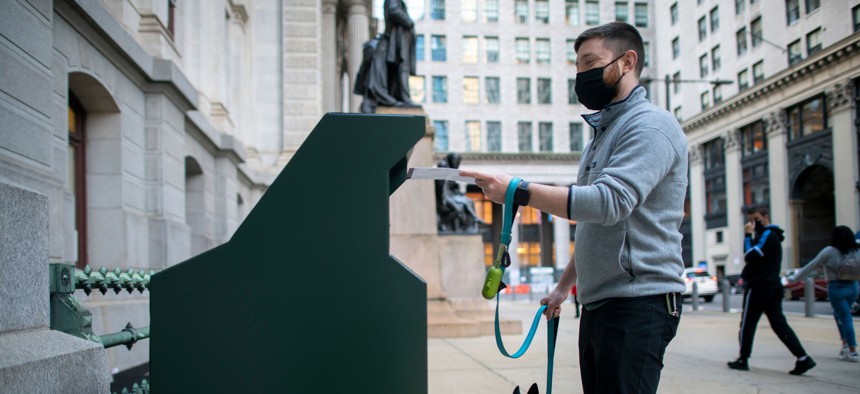
Philadelphia voters are on pace to pass both ballot measures on the Nov. 3 ticket, paving the way for the city to create a permanent arts and culture office and prioritize small and local businesses when awarding contracts.
The ballot measures, originally passed by City Council and signed by the mayor, will amend the city’s Home Rule Charter after voters approve them.
The first ballot initiative would revise the city’s contracting procedures to allow and modify bid preferences and set-asides for small businesses, and to give the Procurement Department and City Solicitor discretion over bond requirements for certain construction projects.
In short, the law wouldn’t guarantee small and local businesses will be granted city contracts but will ensure that the size and location of the business – rather than its status as a minority-owned business – is considered during the bidding process.
The measure, originally introduced by City Council Majority Leader Katherine Gilmore Richardson on behalf of Council President Kenyatta Johnson, would change procurement rules to allow the city to contract with businesses on contracts between $75,000 and $500,000, even if the companies don’t make the lowest bid.
Last year, Philadelphia Mayor Cherelle Parker signed an executive order modifying the city’s approach to prioritizing small and local businesses – a move that came after the city’s contracting processes and the way they prioritized women- and minority-owned businesses were challenged in federal court. The city ultimately settled the case and agreed to rewrite the rules, ensuring contracting considers size and location rather than race or gender.
The second ballot initiative would establish and define the functions of Creative Philadelphia, an office led by the mayoral administration’s Chief Cultural Officer to promote the city’s arts, culture and creative economy. This measure, proposed by Councilmember Isaiah Thomas, would make the Chief Cultural Officer role, which was previously established through executive order, permanent and consolidate all arts- and culture-related programs into one central office overseen by the mayor.
Historically, voters have almost always approved ballot questions, and amendments to the city charter have spiked since the turn of the millennium. According to Pew, Philadelphia has passed more than 80 charter amendments since 2000 – including two dozen since the COVID-19 pandemic.
Still, there have been some notably unsuccessful campaigns for charter changes. In 1978, then-Mayor Frank Rizzo’s attempt to seek a third consecutive term faced widespread opposition, with voters ultimately rejecting the amendment by a 2-1 margin. More recently, in 2007 and 2014, voters denied two separate attempts to repeal the city’s resign-to-run rule.