

Technology
Flock blockers: 5 proposals seeking to regulate Flock cameras and ALPRs in Pennsylvania
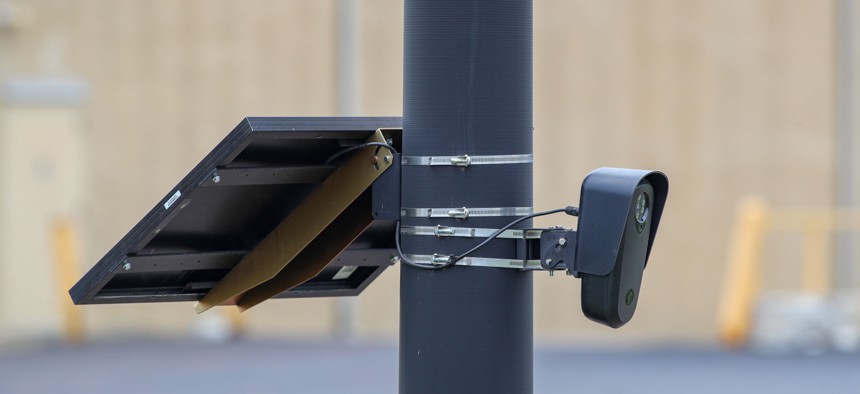
Lawmakers in the General Assembly plan to introduce a number of bills looking to regulate automated license plate reader technology in Pennsylvania.
Paul Weaver/SOPA Images/LightRocket via Getty Images

The use of Flock cameras and automated license plate readers, or ALPRs, has quickly become one of the most divisive issues in American politics. What started as a useful tool for law enforcement has become a national political flashpoint over privacy and surveillance concerns that have united Democrats and Republicans alike.
With more than 120,000 Flock cameras installed across the country, and an estimated 1,700 ALPRs in Pennsylvania, the technology has deeply unsettled Americans amid reports of law enforcement officers and others using the technology to stalk and surveil everyday people. According to an August survey by YouGov, Americans are largely split over whether they would support the installation of license plate cameras in their community: When asked about whether they would want an ALPR on the street where they live, 44% said they would oppose an ALPR on their street, compared to 40% who would support such an installation.
While Flock Safety, the company behind one of the most widely used ALPR brands, has made internal changes to curb misuse of its cameras, Pennsylvania state lawmakers believe new laws are needed to prevent ALPR abuse.
In recent weeks, state lawmakers have signaled a desire to regulate ALPRs in a variety of ways, from banning their use entirely to setting parameters for how and when they can be used. Below, City & State examines some of the latest proposals introduced by members of the General Assembly seeking to regulate Flock cameras and ALPRs.
Prohibiting Flock cameras and ALPRs in Pennsylvania
Republican state Sen. Dan Laughlin recently sent a co-sponsorship memo to colleagues outlining his plan to introduce legislation prohibiting the use of ALPRs connected to a network that automatically identifies and stores vehicle information. His bill would not prohibit the use of ordinary security cameras or vehicle-mounted license plate readers.
“The concern is not simply the camera. It is the creation of a searchable network capable of tracking and reconstructing a person’s movements over time,” Laughlin’s memo reads. “The overwhelming majority of individuals captured by these systems are not suspected of any crime. Yet their movements can still be recorded and stored, potentially revealing where they work, worship, seek medical care, spend their time and who they associate with,” Laughlin wrote. “That is a level of surveillance that should concern everyone.”
Moratoriums and safeguards for ALPRs
State Reps. David Rowe and Josh Bashline, both Republican lawmakers in the state House, plan to introduce a two-bill package aiming to protect Fourth Amendment rights from ALPRs, facial recognition systems and other new technologies. “Without clear guardrails, these emerging technologies could transform limited investigative tools into an Orwellian system of mass surveillance,” their co-sponsorship memo reads.
The first bill in the package would require government entities to obtain a warrant before using ALPRs to search for or track a specific person or license plate, while also limiting the retention of ALPR data to the “shortest period reasonably necessary.” The bill would also require ALPRs to be clearly identified via signage similar to existing automated speed-enforcement systems. The second bill in the package would allow local governments to adopt moratoriums on the installation and use of ALPRs within municipal boundaries.
Prohibiting the use of ALPRs for ‘routine, suspicionless collection’ of motorists’ movements
Doug Mastriano is another GOP state senator who plans to introduce a bill to regulate ALPRs and Flock cameras. According to a memo he sent to his Senate colleagues, Mastriano’s forthcoming legislation would “prohibit the mass, suspicionless collection and retention of Pennsylvanians’ movements” by ALPR systems. Mastriano’s proposal would prohibit using ALPR technology as a “general purpose system” for continuously collecting information about a motorist’s movements or travels, and establish penalties for intentionally using ALPR technology to stalk, harass, intimidate or improperly monitor another person.
According to the co-sponsorship memo, Mastriano’s bill will give law enforcement the ability to use ALPRs for specific public safety-related uses, including for investigations into stolen vehicles; AMBER Alert and missing person cases; investigations into a wanted or dangerous individual; and to find and identify vehicles related to a criminal investigation. “Police should investigate people when there is a legitimate reason to suspect wrongdoing,” Mastriano wrote. “Government should not surveil everyone in hopes of finding wrongdoing. That distinction will be at the heart of my legislation.”
Setting parameters on the use of ALPRs and ALPR data
Democratic state Rep. Tarik Khan introduced a proposal to regulate ALPRs by setting parameters on who can use ALPR data and how long it can be stored, along with establishing transparency requirements. The legislation would also create civil penalties for those who misuse data from Flock cameras and other ALPRs, and give the Pennsylvania attorney general and local district attorneys the ability to investigate violations and bring civil enforcement actions.
“We have to make sure that there are clear guardrails in place so that people’s rights are not being violated – that people are not being spied on and surveilled,” Khan told City & State in an interview. Khan’s bill has bipartisan support – one cosponsor is GOP state Rep. Robert Leadbeter, the chair of the Pennsylvania Freedom Caucus. Khan said that concern around the misuse of ALPRs is adding fuel to the public’s existing concerns about a “rapid expansion of tech without clear guardrails.”
Banning the unauthorized use of ALPRs and automated surveillance systems
In the Senate, Democratic state Sen. Lisa Boscola has also circulated a co-sponsorship memo for legislation that would ban knowingly using an ALPR or Flock camera for personal, unauthorized and unlawful purposes. Boscola cited a recent Washington Post report that found that, across the nation, at least 50 law enforcement officers have been charged or accused of misusing ALPRs to stalk or surveil people. “The same capabilities that make these systems valuable to law enforcement also create opportunities for serious individual misuse,” Boscola wrote. Under Boscola’s proposal, use of ALPRs for criminal investigations, missing-person cases, court-authorized uses and other legitimate public-safety purposes would not be prohibited.