

News & Politics
Prediction markets go all in on PA elections
The dramatic rise in popularity of sites like Polymarket and Kalshi is now drawing increased scrutiny from politicians and industry watchdogs.

Photo Illustration by Alex Law

Prediction markets seem to be everywhere. Platforms like Polymarket and Kalshi allow users to bet on pretty much anything: sports, reality TV, the United States 2026 midterm elections, even the number of tweets Elon Musk will post in a given week.
The platforms are financial markets that allow users to buy and sell shares in the outcome of future events – and they are unquestionably popular. Trading volume on prediction markets surpassed $60 billion in 2025, and data from the investment firm Bernstein suggests that prediction market volumes could hit $1 trillion by 2030.
And since prediction markets have opened the door for people to bet on politics and elections (not to mention whether the second coming of Jesus will occur by 2027), proponents argue that the markets may offer a more accurate picture of current events than traditional polls.
In Pennsylvania, for example, traders can put their money where their mouth is on a range of political topics: Will John Fetterman leave the Democratic Party? Forty-nine percent of traders on Kalshi think he will by the beginning of 2028 – a market that currently has a trade volume of more than $73,000. As for this year’s gubernatorial race, traders on Polymarket give Democrats a 92% chance of winning the governor’s office, while traders on Kalshi give Democrats a 95% chance of retaining the office this year.
On Polymarket, the gubernatorial race market has a trade volume of roughly $17,000, and the trade volume on the Kalshi market for that same race is approaching $30,000.
However, while the platforms can provide new insights into sentiment on elections and political issues, they have also prompted new debates over how – and whether – lawmakers at the state and federal levels should regulate these emerging markets.
Prediction markets are regulated by the Commodity Futures Trading Commission, and prediction market exchanges must clear the CFTC application process to operate. Unlike traditional gambling where participants wager against a “house” with fixed odds, prediction markets offer a “peer-to-peer” exchange where users trade event contracts with each other.
Opinions are mixed on whether prediction markets constitute gambling. Michael Selig, chair of the Commodity Futures Trading Commission, told Axios in a May interview that he views prediction markets and sportsbooks as “two separate things.” Officials at the Pennsylvania Gaming Control Board, which regulates sports betting in the commonwealth, largely disagree with the CFTC’s position, particularly when it comes to sports.
“I believe that what these markets offer is sports wagering – and it’s illegal under the laws of the commonwealth,” Pennsylvania Gaming Control Board Chief Counsel Steve Cook told City & State in an interview, noting that Pennsylvania’s chief gaming law requires anyone offering sports bets to be licensed by the state. “The CFTC and the various companies that make these markets available take the position that all state laws, including Pennsylvania's, are preempted by federal law, which authorizes this under the Commodities Exchange Act.”
“I think everybody acknowledges there’s a conflict of laws, but their position is that federal law preempts state law, and unfortunately for us, the Third Circuit Court of Appeals, to date, have agreed that federal law likely preempts state law, so we're sort of stuck with that decision,” Cook added.
The topic of regulating prediction markets comes at a time when politicians and members of the military have been accused of using insider information for personal profit.
Insider information
While prediction markets are relatively new, public officials are already growing concerned with instances of insider trading.
In April, Gannon Ken Van Dyke, a U.S. Army soldier, was indicted after allegedly using classified information to profit on Polymarket bets. According to the U.S. Department of Justice, Van Dyke reportedly used information regarding the timing of a military operation to capture Venezuelan President Nicolás Maduro to make more than $400,000 on Polymarket.
He’s been charged with unlawful use of confidential government information for personal gain, theft of nonpublic government information, commodities fraud, wire fraud and making an unlawful monetary transaction. Van Dyke pleaded not guilty to the charges in late April.
Additionally, that same month, Kalshi announced enforcement actions against three traders, all of whom were political candidates making trades on their own elections.
In one instance, a Democratic candidate running in the primary for Minnesota’s 2nd Congressional District traded a “small amount” on the outcome of their election. In another case, a candidate running in the GOP primary for Texas’s 21st Congressional District did the same thing. Both candidates reached a settlement with Kalshi, agreeing to pay fines and accept a 5-year suspension from the site.
Meanwhile, in Virginia, a Democrat running in the state’s U.S. Senate election allegedly traded in two separate markets related to their campaign, resulting in a $6,229.30 fine and a 5-year suspension from Kalshi.
Kalshi attributed the detection of three congressional candidates trading on their own races to its new internal safeguards, which include preemptive screenings to catch politicians and athletes from trading on their own races and games, respectively.
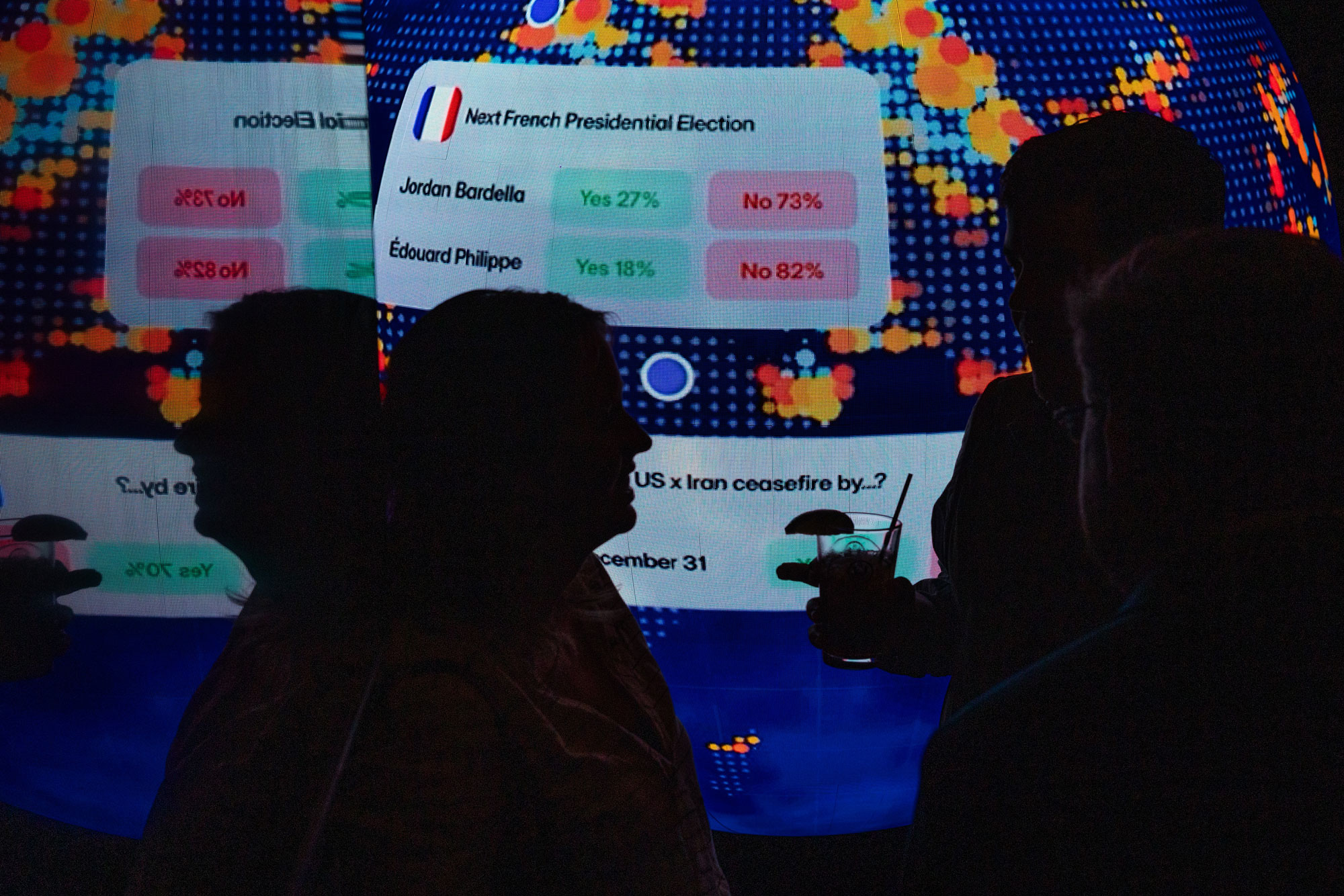
“We've been very forward-leaning on preventing insider information, non-public information, from being used on our platform,” Sara Slane, Kalshi’s head of corporate development, told City & State in an interview.
In April, the U.S. Senate took action to bar its members from trading on prediction markets – a move supported by leaders at both Polymarket and Kalshi.
Slane added that Kalshi, which is regulated by the Commodity Futures Trading Commission, prohibits members of Congress from trading on its platform, and that members are rejected during the application process.
“We have them all flagged and identified in our system,” Slane said. “Whoever’s getting on to Kalshi, we know who you are before you even are able to place a trade on our platform.”
The race to regulate
Lawmakers at the state and federal levels alike still want to see legislative guardrails on the burgeoning prediction market industry.
At the congressional level, Pennsylvania’s Republican U.S. senator, Dave McCormick, has joined forces with U.S. Sen. Kirsten Gillibrand on bipartisan legislation that would create a regulatory framework for prediction markets.
The bill would require individual review of specific event contracts; prohibit lawmakers and high-ranking government officials from owning event contracts; create a new Office of Retail Advocate within the CFTC to represent the interests of retail customers; and establish an advisory council focused on consumer protection.
In a statement released at the end of April, McCormick said the legislation would create guardrails that would allow prediction markets to grow responsibly.
“Prediction markets are already changing how Americans understand and manage risk,” McCormick said. “This legislation gives these markets the clear rules they need to grow responsibly, protects everyday investors who are participating in them, and ensures the United States remains the global leader in financial innovation.”
In Harrisburg, Democratic state Rep. Tarik Khan is introducing a bill that would impose civil penalties on those who engage in insider trading through prediction markets. His bill, which has yet to be introduced, would prohibit the use of “material nonpublic information” in prediction markets for financial benefit.
“The thing that really bothers me is the fact that there are people who are gaming the system right now that are making thousands, and in some cases, hundreds of thousands of dollars by placing wagers on the outcome that either they have access to, or even they control,” Khan told City & State in an interview. “People should not be insider trading. If you have inside information, it's just wrong to use that information.”
“We need to make sure that there are clear boundaries for these markets,” he added.
Khan expressed particular concern that there are political candidates out there seeking to win money off of their own elections: “This is happening in real time, where people are actually able to bet on their own races. There have to be clear penalties for engaging in this type of behavior, which is unacceptable,” he said. “We have to give the power to our attorney general and our district attorneys … to go after these individuals.”
Khan’s legislation would also prohibit prediction market platforms from allowing trades on youth sports, and would ban markets that relate to the life or health of an individual – including so-called “death markets,” which allow consumers to trade on the death, assassination or attempted killings, including war-related deaths.
Khan said his bill has attracted a bipartisan collection of co-sponsors, including four Democrats and three Republicans. “The time is ripe right now for us to act,” he said.
Given that the markets are already subject to CFTC regulatory scrutiny, representatives from Kalshi said that state laws seeking to regulate prediction markets may not be necessary.
“When it comes to state regulation, we already are regulated at the federal level,” Slane said. “This has been a very big hot topic – the inside information one, in which our federal regulator has been very vocal about. Working in partnership with them on enforcement actions – we already do it. The state law is really redundant, and it really is unnecessary.”
Slane added that the CFTC is currently developing federal rules around prediction markets, and encouraged states to submit comments to the commission. “If the states have issues that they want to address, they really should be directing them to the federal regulator,” he said, “instead of putting redundant laws on the books at the state level that, quite frankly, they really don't have jurisdiction to do.”
The state’s Gaming Control Board is one such entity that has weighed in on prediction markets during the ongoing CFTC rulemaking process. In a letter to CFTC Secretary Christopher Kirkpatrick at the end of April, PGCB Executive Director Kevin O’Toole argued that the CFTC has allowed prediction market platforms to “masquerade as unregulated sportsbooks” – a move he said could prove detrimental to young adults between the ages of 18 and 21 who are not legally able to bet on sports through traditional means, but are able to participate in prediction markets.
Cook underscored that point, noting that young adults are vulnerable to compulsive gambling and addiction.
“These markets are available to anybody 18 years of age or older, whereby traditional sports betting or wagering in any casino is 21 years and older,” he said. “Statistics and science and studies have shown that they are quite susceptible to problem gambling and risk-taking, and the problems that go along with that.”
Ultimately, when it comes to regulatory conversations and implementing consumer safeguards, Slane said prediction market platforms will proactively address insider trading and other abuses on their platforms, stressing that consumer trust is critical to their business.
“Integrity and trust are so important to our platform. If we did not have that, we would not have customers,” she said. “So if people think Kalshi people are cheating, they’re not going to come to Kalshi. In order for our business to be successful, we have to make sure that we are constantly instilling that level of trust with our customers.”