

Capitol Beat
In bipartisan fashion, PA lawmakers vote to repeal tax incentives for data centers
House lawmakers voted 197-5 on Thursday to pass a bill that would repeal sales tax incentives for data center owners and operators.
Paul Weaver/SOPA Images/LightRocket via Getty Images

In an overwhelmingly bipartisan vote that put Pennsylvania’s shifting data center politics on full display, lawmakers in the state House of Representatives approved legislation on Thursday that would repeal state tax incentives for data centers, reversing course on a policy enacted five years ago.
Lawmakers voted 197-5 to pass House Bill 2198, legislation that would repeal the state’s Computer Data Center Equipment Incentive Program, which provides millions of dollars in tax incentives to data center owners and operators each year.
Democratic state Rep. Greg Vitali, the prime sponsor of the bill, said the program – which is expected to cost the state $188.4 million in the 2026-27 fiscal year and grow to $517 million by 2030 – is unnecessary given the abundance of data centers proposed in communities across Pennsylvania.
“Think of what an additional $517 million can buy as far as budgetary needs,” Vitali said Thursday during debate on the House floor. “We’re giving these sales tax exemptions to companies like Amazon, Microsoft, Alphabet – companies that have net incomes in excess of $100 billion a year. This is not right. This is not needed. This is not what our constituents want.”
Vitali added that the tax incentives were enacted at a time when the state was looking to encourage data center development, but with communities actively organizing and pushing back against data center proposals in nearly every corner of the state, the appetite for such projects has changed.
“Now we are in a situation where we’re working on moratorium legislation with regard to data centers. We’re trying to put the brakes on, so clearly this sales tax exemption is no longer needed,” he said.
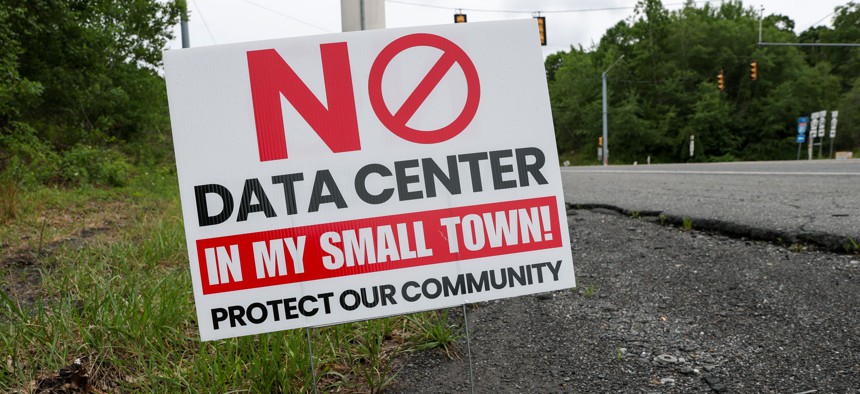
The vote comes at a moment when Pennsylvanians are growing increasingly concerned about the development of data centers in their communities.
According to a December 2025 poll from Emerson College, 42% of Pennsylvanians said they would oppose data centers being built in their communities, while 34% said they would support data center proposals. The survey found that 24% said they would be neutral or have no opinion.
Similarly, a public health survey conducted this year by Muhlenberg College’s Institute of Public Opinion found that 1 in 5 Pennsylvanians identified data centers as a crisis facing the state, while another 43% of respondents said data centers are a problem, but not a crisis.
Data centers have also become a topic of conversation in this year’s gubernatorial race, as both Gov. Josh Shapiro and state Treasurer Stacy Garrity, the GOP nominee for governor, have weighed in on the growing number of data center proposals across the commonwealth.
In his budget address earlier this year, Shapiro outlined a set of standards for data center developers – known as the Governor’s Responsible Infrastructure Development, or GRID, Standards – that data center developers would need to meet to secure faster permitting approvals and other state tax benefits. In order to receive a state-issued GRID Certification, developers must submit a plan outlining how they will power their facilities, commit to hiring local labor, establish community outreach, and seek to limit water usage and air pollution.
“I know Pennsylvanians have real concerns about these data centers and the impact they could have on our communities, our utility bills, and our environment – and so do I,” Shapiro said in his February budget address.
Garrity has called for a pause on data center development, and has held a series of listening sessions across the state to hear from residents about their concerns around data centers.
The House passed two other data center bills this week. One of them, House Bill 2650, would codify Shapiro’s GRID standards in state law. The other, House Bill 2496, would allow municipalities to institute a 180-day pause on data center development applications while they adopt or update land use ordinances.
Those bills, as well as HB 2198, now await consideration in the state Senate.